Nearly two-thirds of Americans born from 1980 through 1984 received at least one form of work-related training outside regular degree-granting schooling between ages 18 and 38, according to a Bureau of Labor Statistics summary published July 27.
The National Longitudinal Survey of Youth 1997 found that 65.4% of the cohort received some form of training during that period. Formal employer training was the most common listed category at 29.1%, followed by vocational, technical or trade training at 26.5%.
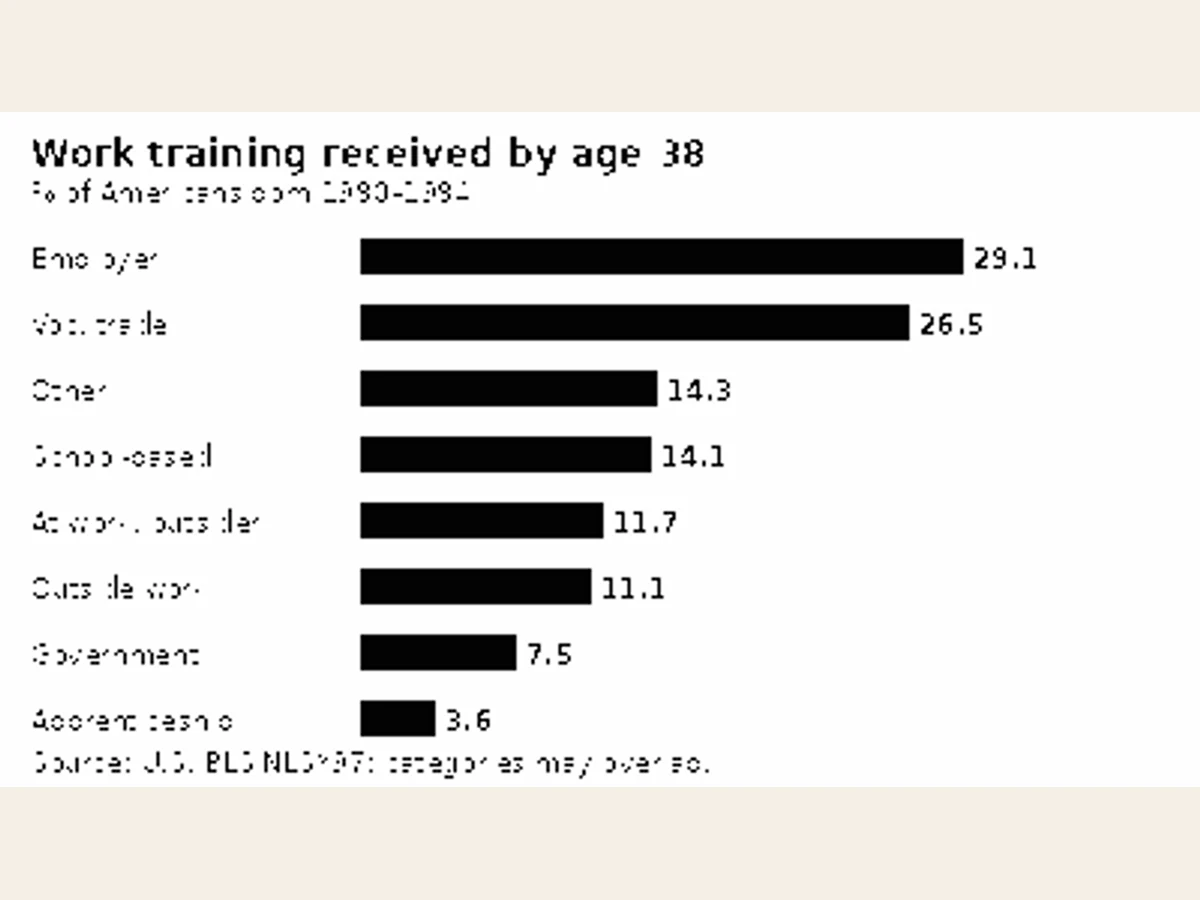
Other reported categories included school-based training at 14.1%, training at work provided by an outside organization at 11.7%, training outside work at 11.1%, government training at 7.5% and apprenticeships at 3.6%. BLS also placed 14.3% in an “other” training category.
Participation differed substantially by educational attainment. BLS reported that 44% of people who had not completed high school received some type of training by their 39th birthday, compared with 61% of high school graduates who had not attended college, 71% of people with some college or an associate degree and 66% of people with a bachelor’s degree or higher.
The type of training also varied with education. Employer training reached 35.7% among people with a bachelor’s degree or higher, compared with 10.5% among people who had not completed high school. Vocational, technical or trade training was more common among high school graduates with no college and people with some college or an associate degree, at 32.3% and 32.5%, respectively.
BLS defines the training measure as instruction outside regular schooling that offers an academic diploma or degree. The category can include vocational and trade programs, apprenticeships, employer programs, government programs and other instruction intended to improve job skills, prepare someone for a new job or make it easier to find work.
The results come from a longitudinal survey that follows the same people over time rather than drawing a new sample each year. About 9,000 participants, born from 1980 through 1984, were first interviewed in 1997 when they were ages 12 to 17. They were interviewed for the 21st time in 2023 and 2024, when they were ages 38 to 44.
That design lets researchers measure whether a person received training at any point across roughly two decades. It does not describe the share of all workers receiving training in a single year, and it does not by itself establish that training caused later changes in wages, employment or job stability.
The survey represents people in this birth cohort who were living in the United States when the study began in 1997. BLS says it does not represent immigrants born from 1980 through 1984 who moved to the United States after 1997.
BLS reissued the underlying news release on July 17 to correct date and age ranges in one table and remove an extra digit from another table’s title. The agency said those corrections did not change any data estimates.
The findings show that training outside degree programs was common but unevenly distributed. Employer-provided training rose sharply with educational attainment, while vocational and trade training was most prevalent among people with a high school education or some college.
The data are cumulative through age 38 and specific to one generation. They provide a long-run view of how often early-1980s-born Americans encountered job training, not a real-time measure of the current labor market or the availability and quality of training programs today.
| Training type | Share of cohort |
|---|---|
| Employer | 29.1% |
| Voc./trade | 26.5% |
| Other | 14.3% |
| School-based | 14.1% |
| At work, outsider | 11.7% |
| Outside work | 11.1% |
| Government | 7.5% |
| Apprenticeship | 3.6% |