
Employer compensation costs for civilian workers rose 0.9 percent in the second quarter of 2026, matching the increase recorded in the first quarter, the U.S. Bureau of Labor Statistics reported Friday. Wages and salaries increased 0.9 percent from March through June, while benefit costs rose 1.0 percent.
Over the 12 months ending in June, total compensation costs increased 3.4 percent. Wages and salaries rose 3.2 percent, while benefits climbed 3.8 percent. The figures show benefit costs rising faster than cash pay over the year, even though the overall pace of compensation growth was unchanged from the 3.4 percent recorded in March.
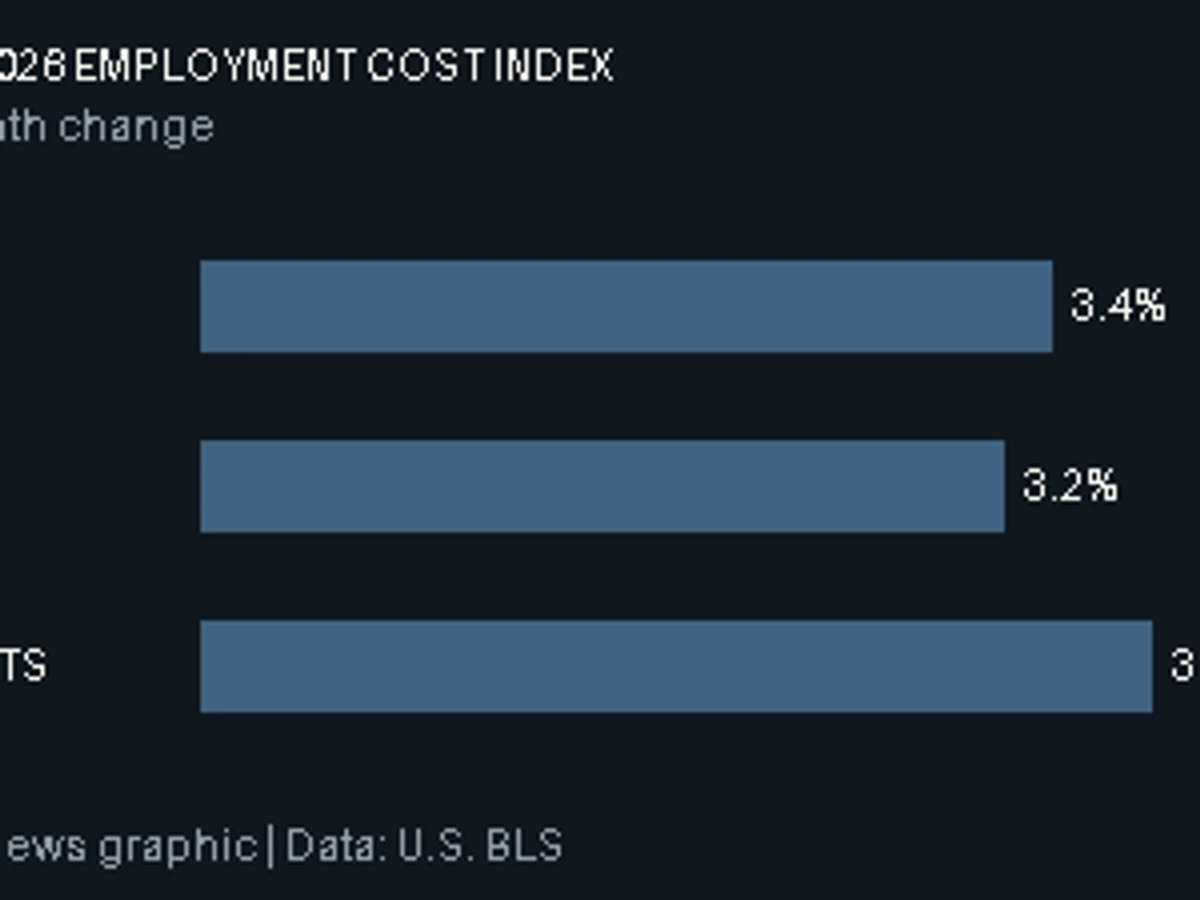
The Employment Cost Index is designed to track changes in employers’ labor costs while holding the mix of occupations and industries relatively constant. That makes it different from average-hourly-earnings data, which can move when the composition of employment changes.
Private-sector wages trailed inflation
Private-industry compensation costs rose 0.9 percent during the quarter and 3.3 percent over the year. Private wages and salaries increased 3.1 percent in current dollars, but fell 0.4 percent after adjustment for inflation, according to BLS. Private benefit costs rose 3.8 percent, and health-benefit costs increased 6.0 percent.
Public-sector benefit costs rose faster
State and local government compensation costs increased 1.0 percent during the quarter and 3.6 percent over the year. Wages and salaries were up 3.4 percent from a year earlier, while benefit costs increased 4.0 percent. Inflation-adjusted wages for those workers declined 0.1 percent.
| Measure | 3-month change | 12-month change |
|---|---|---|
| Civilian compensation | 0.9% | 3.4% |
| Civilian wages and salaries | 0.9% | 3.2% |
| Civilian benefits | 1.0% | 3.8% |
What the index does and does not measure
The index does not mean every worker received the same raise, and it does not measure employment, household income or take-home pay. It measures the change in what employers spend on wages, salaries and benefits across a fixed employment structure.
BLS also began publishing relative-importance estimates for selected ECI series with the June release. The agency said the next quarterly report, covering September 2026, is scheduled for October 30. Seasonally adjusted series may be revised in future annual updates.