
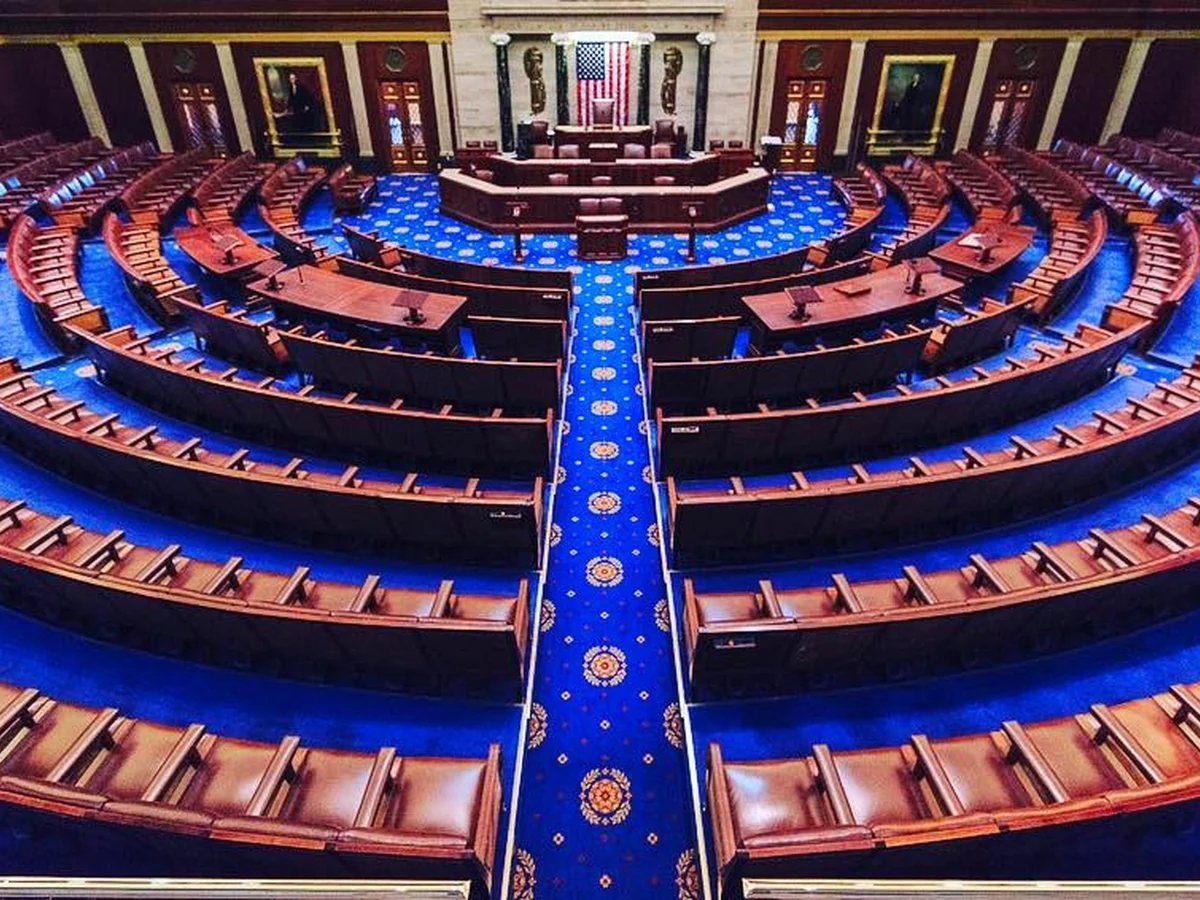
Congress held two Iran war-powers votes on July 23. The House passed a concurrent resolution 214-208. The Senate rejected a motion to discharge a separate joint resolution 47-49.
Neither event, standing alone, ordered the military to stop fighting.

Understanding why requires separating the Constitution, the 1973 War Powers Resolution and the different forms of congressional action.
- The House concurrent resolution records the chamber’s removal directive.
- The Senate would have to act for the concurrent resolution to clear Congress.
- A joint resolution passed by both chambers would go to the president.
- Congress can also use funding restrictions, authorization legislation and oversight.
The Constitution gives Congress powers to declare war, fund the armed forces and make rules governing them. It names the president commander in chief. Presidents and Congress have disputed the boundary between those powers throughout the country’s history.
Congress enacted the War Powers Resolution over President Richard Nixon’s veto in 1973. The statute was designed to require consultation and reporting and to create procedures for ending military action that lacks congressional authorization.
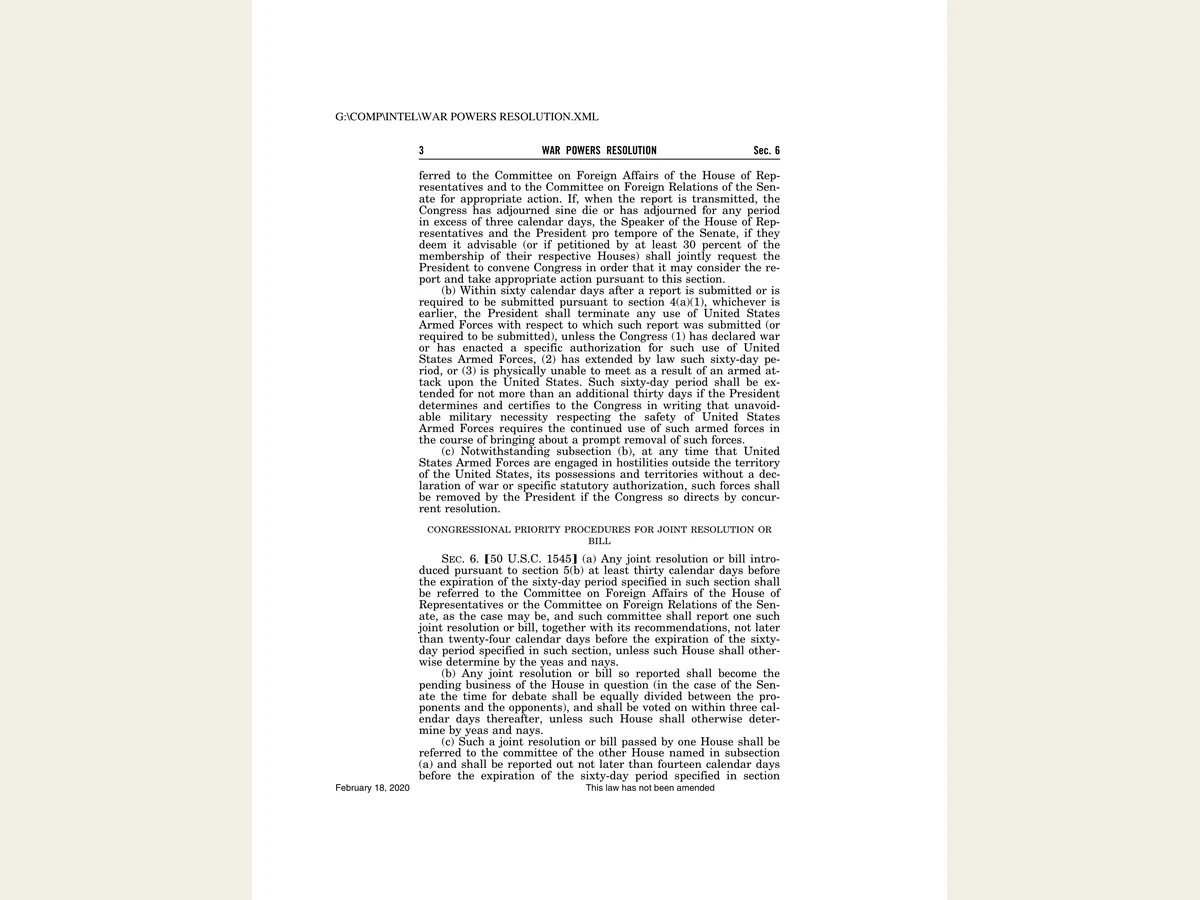
The law generally requires the president to report specified deployments within 48 hours. Section 5(b) then provides a 60-day termination framework, with a possible 30-day period for safe removal, unless Congress declares war, enacts a specific authorization, extends the deadline or is unable to meet because of an attack on the United States.
The House used Section 5(c), which says forces engaged in unauthorized hostilities shall be removed if Congress directs removal by concurrent resolution.
A concurrent resolution must pass both chambers but is not presented to the president. The Senate did not approve the House resolution Thursday.
The Senate vote concerned a different device. S.J. Res. 180 is a joint resolution. If both chambers passed it, it would go to the president. The president could sign it or veto it, and Congress could override a veto only with two-thirds support in both chambers.
The Senate did not reach final passage. It rejected a motion to discharge the joint resolution from committee, preventing that procedural route from moving the measure forward.
The concurrent-resolution mechanism in Section 5(c) also carries a constitutional complication. In 1983, the Supreme Court held in INS v. Chadha that Congress generally could not exercise legislative power through a resolution that bypassed the Constitution’s bicameralism and presentment requirements. Chadha did not decide a War Powers Resolution case, but it cast doubt on the enforceability of Section 5(c)’s original design.
Congress later created expedited procedures for joint resolutions and bills directing removal of forces. Those procedures preserve presidential presentment and the possibility of a veto.
The House vote nevertheless has practical significance. It shows that a majority of the chamber does not accept the hostilities as congressionally authorized. It can shape oversight, appropriations negotiations and the political cost of continuing operations.
The failed Senate motion also matters. It shows that opponents did not have enough votes to force the separate joint resolution out of committee through that procedure.
Congress retains stronger tools than a one-chamber vote. It can prohibit the use of appropriated funds for specified operations, enact a binding joint resolution, pass a limited authorization for use of military force, impose reporting conditions or refuse future funding.
Each option requires more agreement than the House demonstrated Thursday. A funding restriction or veto-proof measure would require durable majorities in both chambers.
The most accurate description of the current position is therefore narrow: the House approved a removal directive, the Senate blocked a procedural path for a separate joint resolution, and military operations did not automatically end.