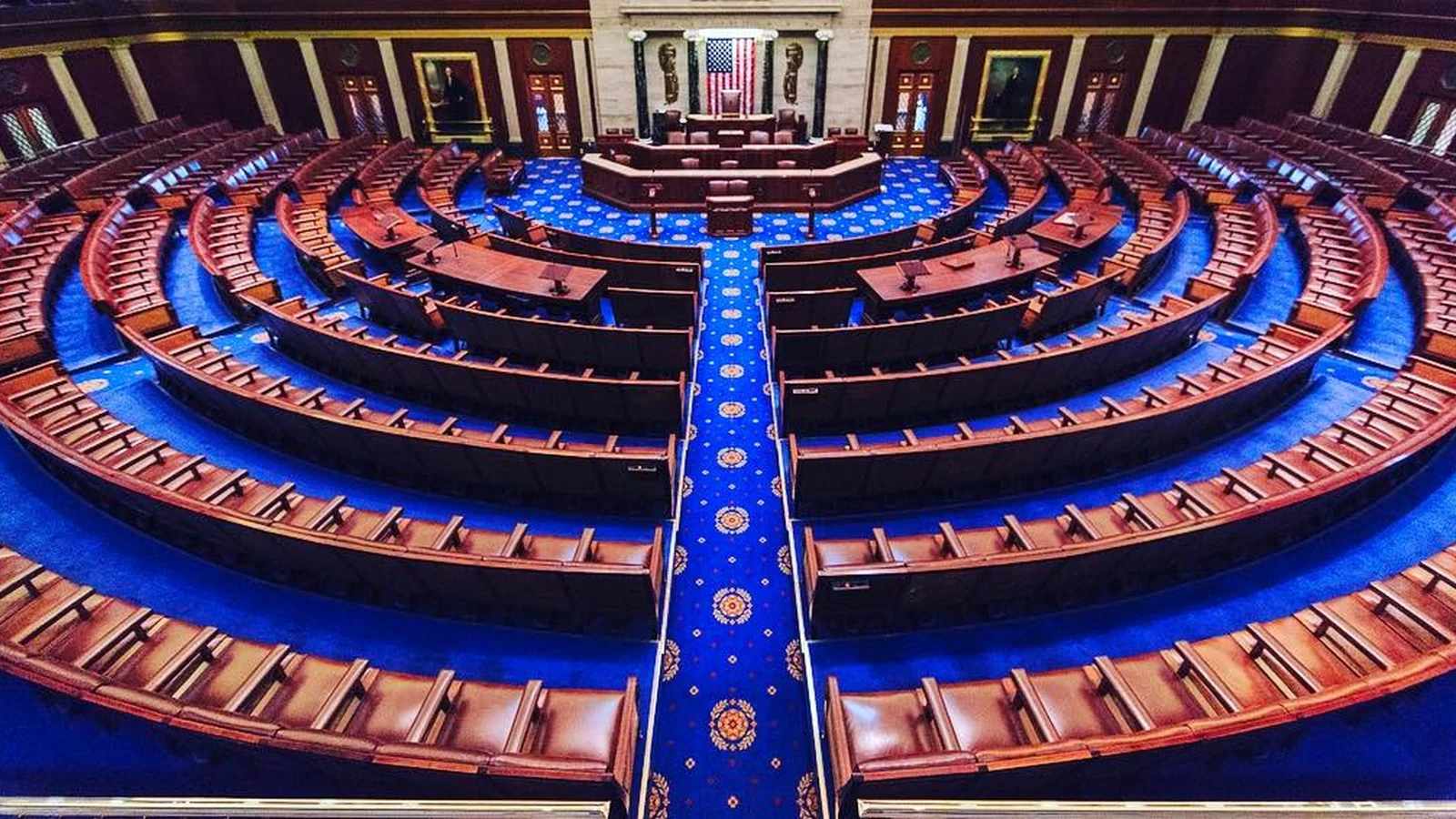
The House voted 214-208 on July 23 to direct the president to remove United States forces from hostilities with Iran, but a separate attempt to advance an Iran war-powers measure failed in the Senate less than two hours later.
The House resolution passed with all 210 Democrats who voted and four Republicans: Reps. Tom Barrett of Michigan, Warren Davidson of Ohio, Brian Fitzpatrick of Pennsylvania and Thomas Massie of Kentucky. Seven Republicans and two Democrats did not vote. The House’s independent member voted no.
The measure, H. Con. Res. 89, invokes Section 5(c) of the War Powers Resolution. It says the president should remove U.S. armed forces from hostilities with Iran that Congress has not authorized.
| Chamber | Action | Result |
|---|---|---|
| House | Passed H. Con. Res. 89 | 214–208 |
| Senate | Rejected motion to discharge S.J. Res. 180 | 47–49 |
The House action did not order an immediate withdrawal. A concurrent resolution must be agreed to by both chambers, and the Senate did not act on the House measure Thursday.
Instead, senators voted on a motion to discharge S.J. Res. 180 from the Foreign Relations Committee. That separate joint resolution also sought removal of U.S. forces from unauthorized hostilities with Iran. The motion failed 47-49, with four senators not voting.
The two votes produced a divided congressional record. A House majority opposed continuing the hostilities without specific authorization, while the Senate declined to bring its own measure to the floor through the attempted discharge.
The House Clerk recorded the House vote at 10:24 a.m. The Senate recorded its vote at 11:51 a.m.
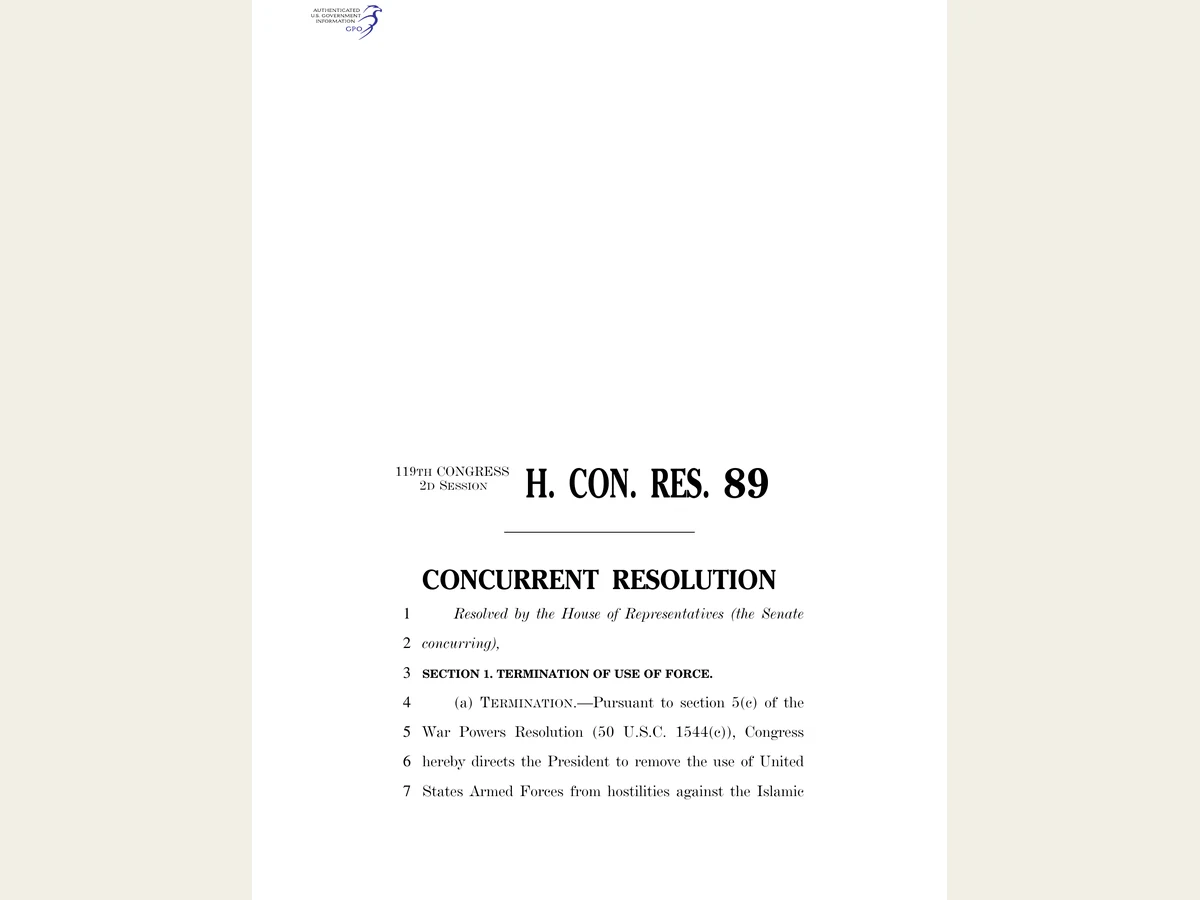
A concurrent resolution is not presented to the president for signature. A joint resolution would be presented to the president if it passed both chambers, creating the possibility of a veto and an override vote.
The distinction matters because Congress has argued for decades about how to enforce the War Powers Resolution against a president who disputes its interpretation. Section 5(c) refers to a concurrent resolution, but the Supreme Court’s 1983 decision in INS v. Chadha cast constitutional doubt on legislative-veto mechanisms that avoid presidential presentment. Congress later created expedited procedures for joint resolutions and bills directing removal of forces.
The House vote still carries political weight. It places 214 representatives on record against unauthorized hostilities and demonstrates that opposition is not entirely partisan. The four Republican votes supplied the margin of passage.
The Senate result shows the immediate legislative limit. Forty-seven senators voted to discharge the joint resolution, two fewer than the 49 who voted against the motion and four short of the 51 votes that would have constituted a full Senate majority.
Neither vote cuts off military funding, enacts a binding prohibition on operations or resolves the administration’s claimed legal authority. Congress could still pursue appropriations restrictions, another joint resolution, a specific authorization for force or further oversight.
For now, the House and Senate have sent different messages: the House approved a removal directive, while the Senate blocked a procedural path for a separate measure.