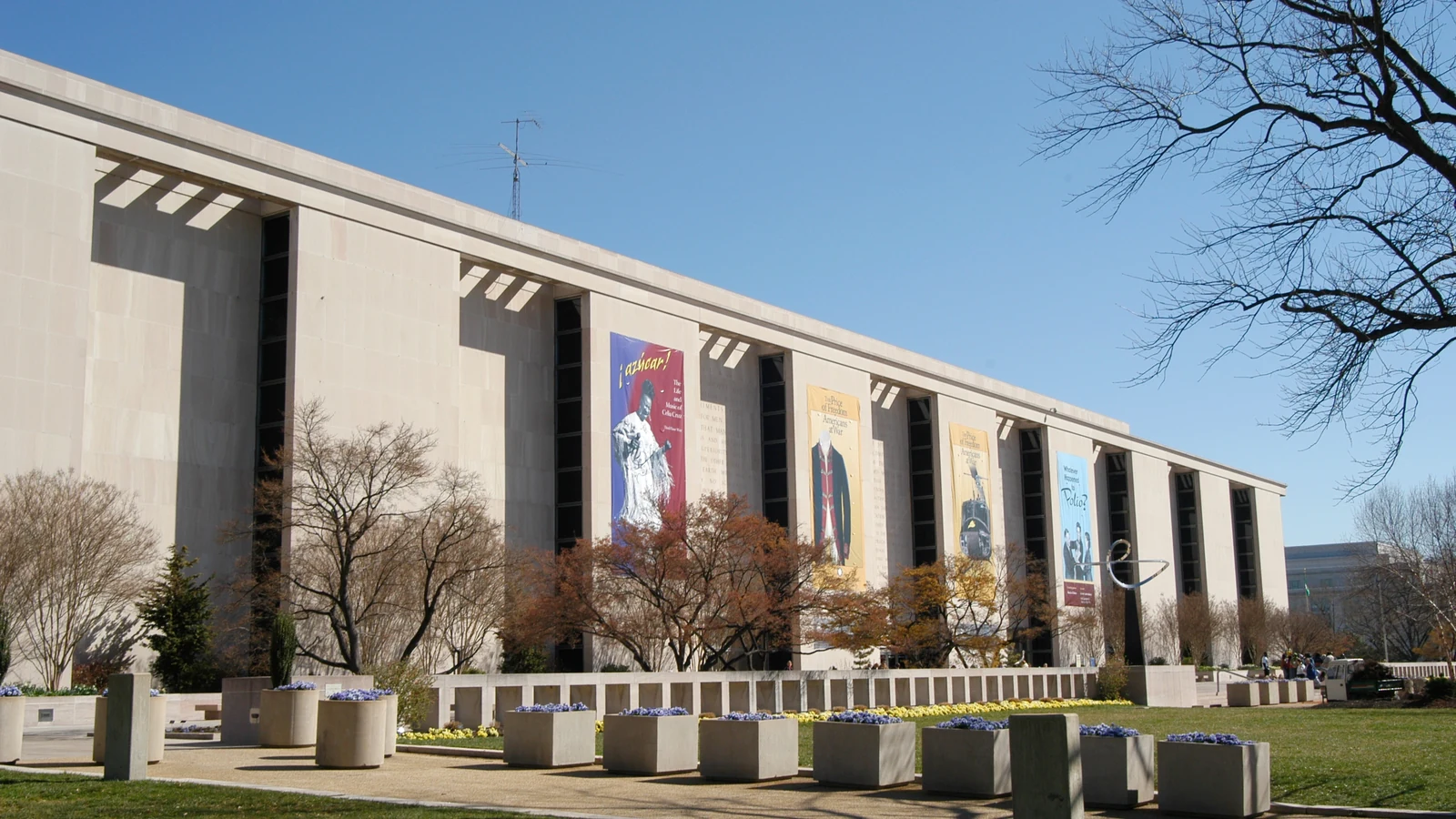
President Donald Trump signed an executive order July 24 directing federal agencies to identify ways to pressure the Smithsonian Institution and ordering temporary signs on federal property used to approach the National Museum of American History.
Executive Order 14415 adopts the conclusions of a White House review that accuses Smithsonian leadership of presenting American history through an ideological framework. Those conclusions are the administration’s claims, not findings from an independent court or adjudicative body.
The order directs the Interior Department, Office of Management and Budget, General Services Administration and White House Domestic Policy Council to identify and use available legal authorities to advance the administration’s policy.
The listed mechanisms include statutes, regulations, executive actions, funding conditions and contract conditions.
The order separately directs the National Park Service to place temporary signs on NPS-maintained sidewalks, walkways and land used by visitors approaching the National Museum of American History.
The signs are supposed to tell visitors about the White House report, state that museum exhibits should be renovated and direct visitors to sources the administration considers accurate.
The order also calls for temporary signs or exhibits on Park Service property addressing the museum’s treatment of the 56 signers of the Declaration of Independence during the country’s 250th-anniversary year.
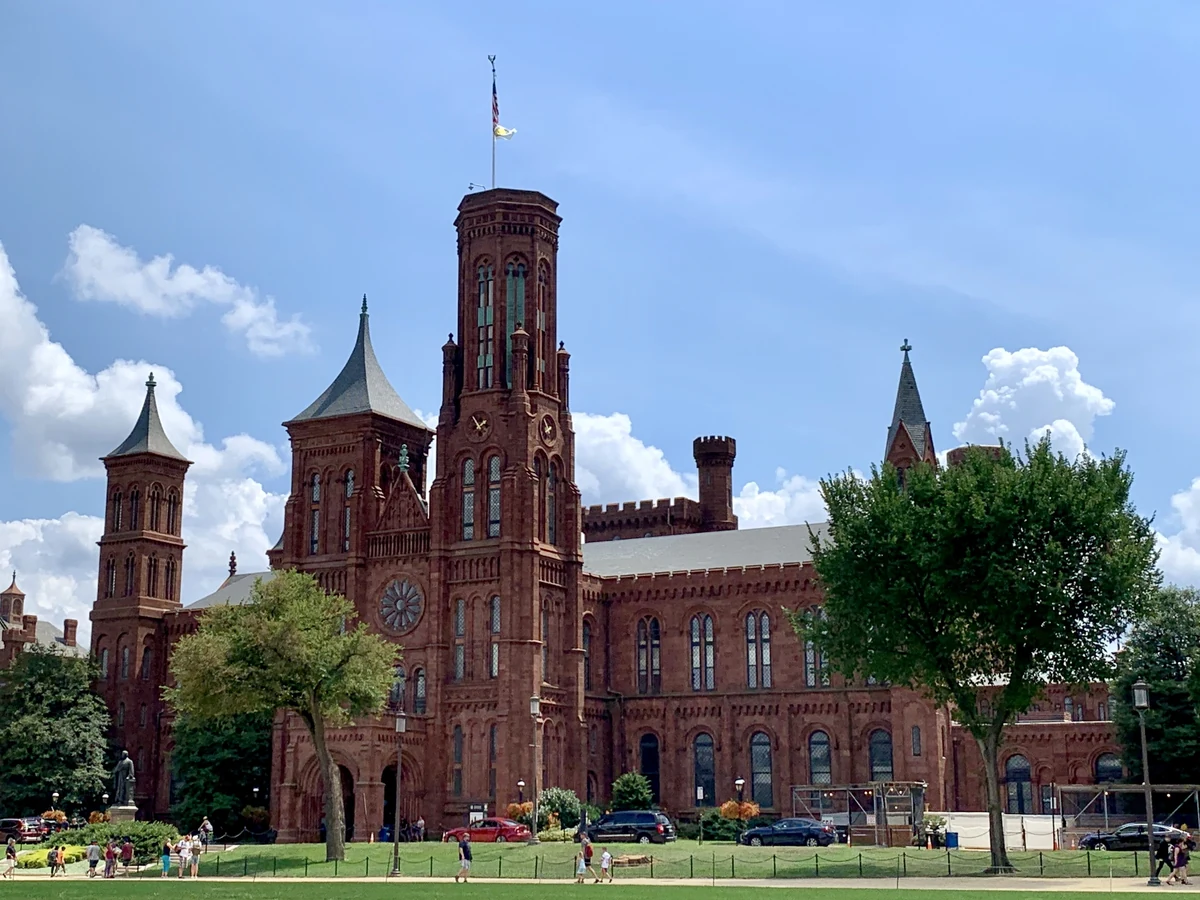

The Smithsonian is not an ordinary executive-branch department. Congress established it as an independent federal trust instrumentality. Its governing authority belongs to a 17-member Board of Regents that includes the chief justice, vice president, members of Congress and private citizens.
The board appoints the Smithsonian secretary and establishes major institutional policies. The president does not ordinarily supervise museum content in the same way the president directs a cabinet department.
The executive order therefore does not simply command the Smithsonian secretary to rewrite an exhibit. Instead, it tells executive agencies to use authorities they already possess and uses a more direct route where executive control is clearer: National Park Service property outside the museum.
That approach can produce disputes over appropriations, contracts, federal property and coercion. An agency may possess authority over a grant or contract without possessing authority to dictate scholarship. Whether a particular condition is lawful will depend on the statute, appropriation and agreement involved.
The Smithsonian’s Board of Regents has described the institution as nonpartisan and defended the secretary’s governing role. The board has also said it expects unbiased content and has directed leadership to report on changes.
The disagreement is therefore larger than a fight over one label. It concerns which institution defines historical neutrality, how executive agencies can use money and property to influence an independent federal institution and whether the administration can place its own interpretive message outside a museum it does not directly govern.
The order says implementation must comply with applicable law and remain subject to available appropriations. Those clauses leave agencies to determine which actions they believe are legally available.
The next meaningful developments will be the wording and placement of the signs, agency implementation plans, the Board of Regents’ response and any congressional or legal challenge.