
The Federal Reserve’s preferred broad inflation gauge fell 0.1% in June while inflation-adjusted consumer spending increased 0.4%, according to estimates released July 30 by the U.S. Bureau of Economic Analysis.
The monthly decline in the headline personal consumption expenditures price index contrasted with a 0.1% increase in the index excluding food and energy. Compared with June 2025, the headline index was up 3.7% and the core index was up 3.3%. Monthly and year-over-year readings measure different periods and should not be treated as interchangeable.
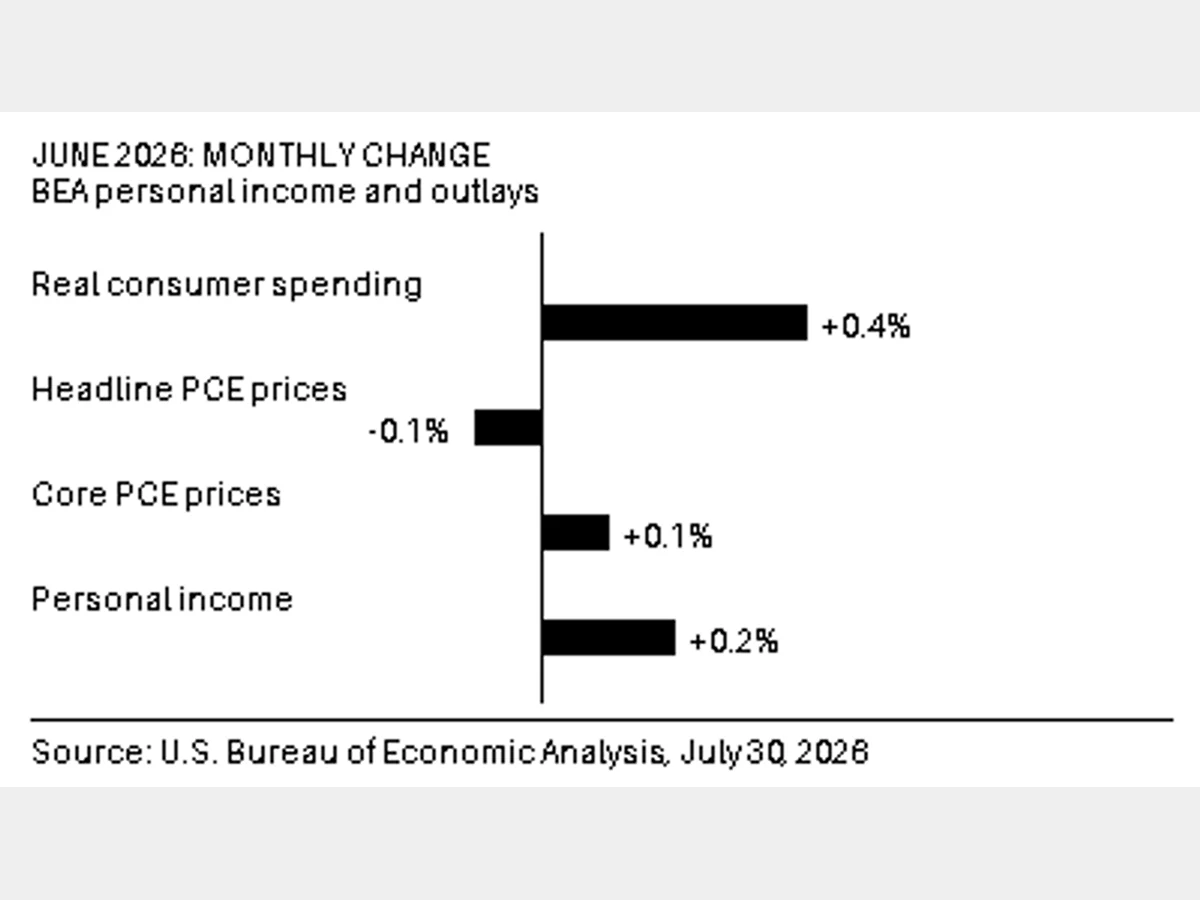
Current-dollar personal consumption expenditures rose by $65.2 billion, or 0.3%, in June. BEA attributed $58.2 billion of that increase to services and $7.0 billion to goods. After adjusting for price changes, real consumer spending increased by $68.0 billion, also reported as a 0.4% monthly gain.
Personal income increased by $54.9 billion, or 0.2%, while disposable personal income rose by $48.3 billion, or 0.2%. Real disposable income increased 0.3%. Personal saving was $646.1 billion, and the personal saving rate was 2.7% of disposable income.
| Measure | Monthly change |
|---|---|
| Headline PCE price index | -0.1% |
| Core PCE price index | +0.1% |
| Real consumer spending | +0.4% |
| Personal income | +0.2% |
The combination of rising real spending and a lower headline price index is not contradictory. Current-dollar spending measures the amount paid, while real spending removes estimated price changes. A negative monthly headline reading also does not mean every consumer price fell; it means the weighted PCE price index declined overall from May to June.
BEA said the increase in personal income primarily reflected higher compensation, income from assets and government social benefits, partly offset by lower farm proprietors’ income. The compensation increase was led by private wages and salaries using Bureau of Labor Statistics employment data.
The agency also revised estimates for April and May after receiving updated employment, Medicaid and Treasury data. Like other monthly national-account estimates, the June figures are preliminary and can change as more complete source information becomes available.
The June report therefore shows a one-month decline in the broad PCE price index alongside continued growth in real consumer spending, but it does not establish that inflation has permanently reversed. The 12-month measures remained positive, and the next Personal Income and Outlays release is scheduled for August 26.