
The U.S. economy grew at a 1.5 percent annual rate in the second quarter of 2026, slowing from a 2.1 percent pace in the first quarter, according to the Bureau of Economic Analysis’s advance estimate released Thursday.
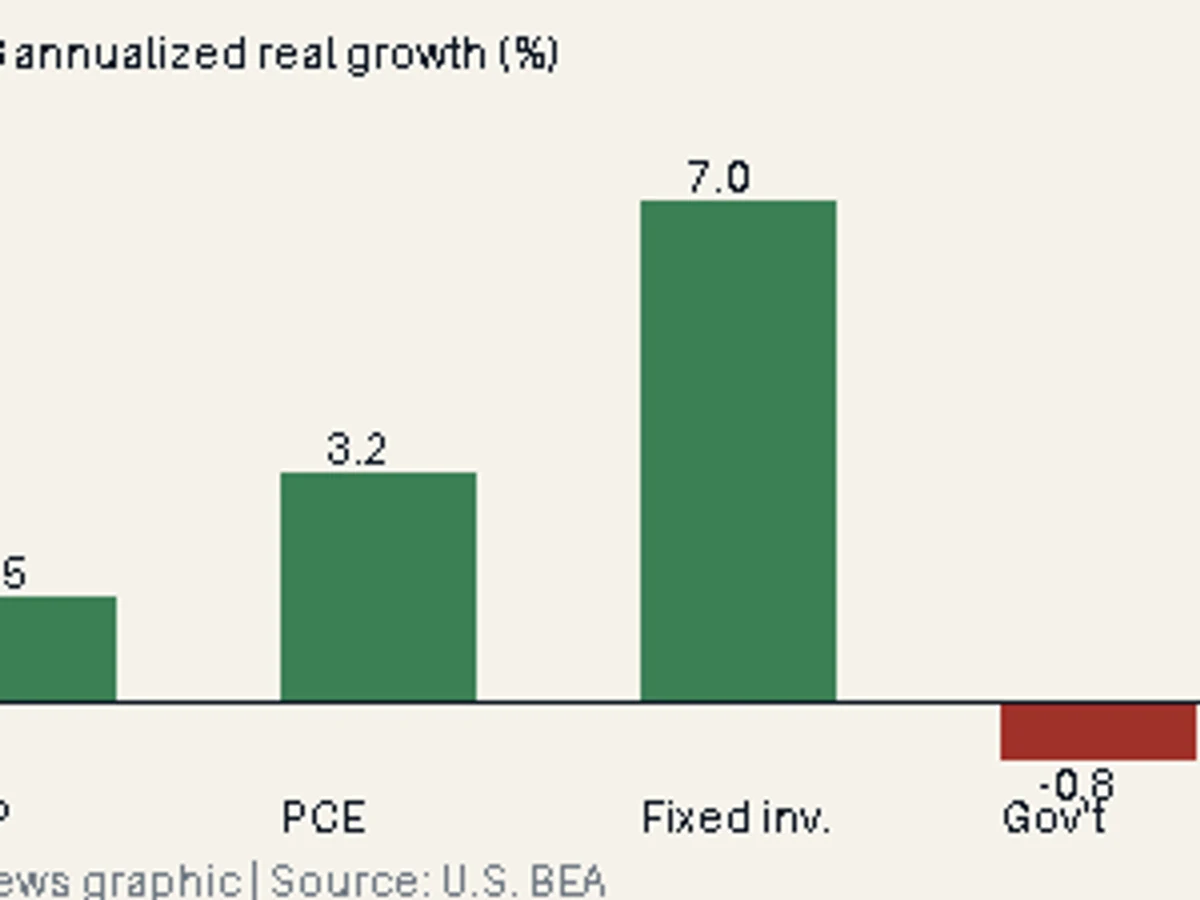
The headline slowdown masked a sharper rebound in household demand. Real personal consumption expenditures increased at a 3.2 percent annual rate after rising 0.5 percent in the first quarter. Spending on goods rose 5.2 percent, while spending on services increased 2.2 percent.
Consumers and fixed investment accelerated
Fixed investment also remained strong, increasing 7.0 percent. Equipment investment rose 15.2 percent and investment in intellectual property products increased 8.8 percent. Nonresidential structures fell 5.0 percent, while residential investment increased 1.5 percent after declining in the first quarter.
Government spending turned negative
Government consumption expenditures and gross investment fell 0.8 percent after rising 4.4 percent in the first quarter. Federal spending declined 4.1 percent, driven by a 12.9 percent drop in nondefense spending, while state and local spending increased 1.1 percent.
BEA said the decline in federal nondefense spending primarily reflected sales of crude oil from the Strategic Petroleum Reserve. In the national accounts, those sales reduce government consumption expenditures, but the oil is reflected elsewhere in GDP, so the transactions do not directly reduce total GDP.
Exports increased 4.5 percent, while imports rose 11.5 percent. Imports are subtracted in the calculation of GDP, so faster import growth weighed on the headline rate even as it reflected continued U.S. demand for foreign goods.
Price growth accelerated
Price growth accelerated during the quarter. The price index for gross domestic purchases increased 5.7 percent, compared with 3.6 percent in the first quarter. The personal consumption expenditures price index increased 5.1 percent, while the index excluding food and energy rose 3.4 percent.
One measure of underlying private demand looked stronger than the headline GDP figure. Real final sales to private domestic purchasers, which combines consumer spending and private fixed investment, increased 3.9 percent after rising 1.7 percent in the first quarter.
| Measure | Annualized change |
|---|---|
| Real GDP | 1.5% |
| Consumer spending | 3.2% |
| Fixed investment | 7.0% |
| Government spending | -0.8% |
| Exports | 4.5% |
| Imports | 11.5% |
What the advance estimate can and cannot show
The figures are an advance estimate, not a final count. Quarterly growth rates are seasonally adjusted and expressed at annual rates, meaning the 1.5 percent figure describes the quarter’s pace if it continued for a full year. BEA is scheduled to publish its second estimate, along with an initial estimate of corporate profits, on August 26.
The report therefore shows slower overall output growth alongside firmer private domestic demand and faster prices. It does not, by itself, establish whether the economy is entering or avoiding a recession; that judgment requires a broader set of employment, income, production and sales data.