About this series: Part 1 examined the 97-page external investigation released by Interlochen in July 2026: how investigators counted roughly 70 firsthand accounts involving 47 adults, what the report says about institutional responses, and what the report could not establish. This installment asks a narrower historical question: before Jeffrey Epstein began donating to Interlochen in 1990, what signs of misconduct or unsafe boundaries existed inside the institution, and what could parents, journalists or other outsiders actually have found?
Interlochen's investigators gathered and chronicled historical reports but did not determine whether each reported event occurred as described. Boho News identifies retrospective accounts as such and distinguishes them from contemporaneous records. Anonymous former students and unnamed respondents remain unidentified.
One of the central figures in the 2026 report is Byron Hanson, a longtime Interlochen faculty member and administrator. Interlochen says Hanson worked there from 1960 to 2015 and identifies him as Respondent 1, the person whose case prompted the external investigation. Investigators ultimately recorded seven independent direct reports involving him from the 1960s and 1970s. [S1, p. 12; S2]
The reports involving Hanson also show why the question "Who knew?" becomes difficult almost immediately.
One former student remembered a residence-life employee pulling her aside and warning her about Hanson. The warning was not described as an accusation of sexual misconduct. The student believed the employee knew about her relationship with Hanson and knew that she sometimes stayed overnight at his home because residence staff handled student sign-outs. Other former students remembered the situation differently. Some said they told nobody. Some doubted that adults knew what was happening. Another believed an employee objected to Hanson taking students off campus overnight. [S1, p. 14]
Those accounts sit together in the report, and they describe very different levels of awareness.
They also resemble the larger historical record. Boho News found retrospective accounts of warnings and reports, and investigators said some surviving personnel files contain contemporaneous records of concerns and administrative action. What remains much harder to establish is how far that information traveled.
We found no record showing that Interlochen's Board or senior leadership had assembled the separate allegations into a broader understanding before 1990. We also found no contemporaneous public account in the archives we searched that resembled the history documented by investigators decades later.
At the same time, the Interlochen presented to parents and the public looked remarkably consistent: prestigious, demanding, tightly scheduled and closely supervised.
Some students thought adults could see what was happening
Source note: S1, pp. 12, 14; S2.
Five of the seven direct reports involving Hanson concerned conduct while the person was still a student. The other two described conduct after graduation. [S1, p. 12]
The five student-period accounts varied sharply on whether anyone else knew.
Some former students told investigators they had said nothing at the time and had no reason to think adults were aware of what happened.
Others believed parts of their relationships with Hanson were visible.
One former student said a residence employee would have known about her overnight visits because the employee handled sign-ins and sign-outs. She remembered the same employee taking her aside and offering what investigators called "some word of caution." [S1, p. 14]
Another former student believed a staff member objected to Hanson checking students out overnight. A different former student thought an employee knew about the relationship, although she was unsure whether that awareness came while she was still enrolled or only afterward. [S1, p. 14]
These accounts do not show that residence staff knew sexual conduct was occurring. They do show that several former students remembered adults being aware of relationships, overnight access or circumstances that caused concern.
Other students believed no adult knew.
The evidence varies person by person.
One former student said he went directly to an administrator
Source note: S1, p. 38.
Elsewhere in the report, a former student gave investigators a more direct account of institutional notice.
He said he reported Respondent 20 to an Interlochen administrator. [S1, p. 38]
Boho News has not found a contemporaneous complaint, memorandum or personnel record documenting that report. The investigation does not establish what the administrator understood at the time, whether anything was written down or what happened afterward.
The surviving evidence establishes the former student's account that he told somebody in authority. It does not establish what the institution did with the information.
Investigators say personnel files contain a stronger paper trail
Source note: S1, pp. 29–30, 50, 52. Boho News has not obtained the underlying personnel files and attributes these chronologies to the 2026 investigators.
Three other sections of the report describe records that could provide firmer evidence of what administrators knew.
In those cases, the evidence reportedly comes from personnel files rather than memory alone.
For Respondent 14, investigators said the file documented administrative meetings concerning reported conduct and subsequent employment actions. [S1, pp. 29–30]
For Respondent 31, they described contemporaneous reports, communication with administrators and later employment action in the personnel record. [S1, p. 50]
For Respondent 32, investigators said the file contained reports from the 1980s, conversations with the former student and respondent, contemporaneous denials, a later warning concerning professional conduct and additional developments recorded afterward. [S1, p. 52]
Those could be among the most important pre-1990 records in the investigation.
Boho News has not seen them.
The Sanghavi report summarizes what investigators say they found, but the underlying personnel files were not included with the public report. That leaves basic questions unanswered: who wrote the records, when they were created, who received them, what else was in the files and whether the surviving documents were complete.
We asked Interlochen and Sanghavi Law Office for records or privacy-safe source information that could allow us to check those descriptions independently.
They had not been provided by Aug. 13, when this draft was finalized.
For now, those cases remain investigator descriptions of historical records that Boho News cannot independently inspect.
What parents were told
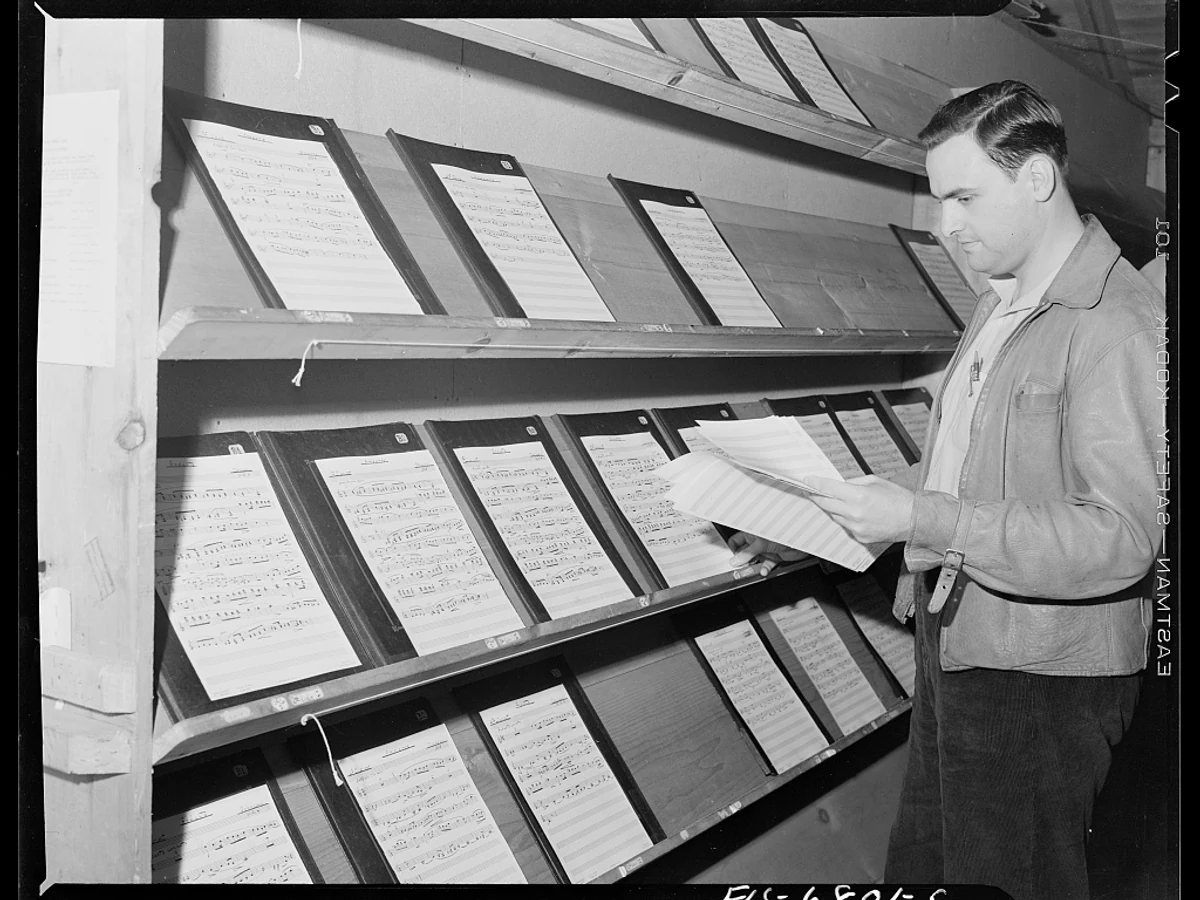
Source note: S3, PDF p. 8; S4, newspaper p. 4; S5, printed p. 42; S6, printed p. 278; S7, printed pp. 639–640; S8; S18, printed pp. 24–26; S19, printed p. 5.
The public record from the same decades tells a much cleaner story.
Official publications and newspaper features repeatedly described Interlochen as a highly organized residential institution with substantial adult supervision.
A 1959 University of Michigan bulletin for students attending its All-State Sessions at Interlochen said 16 to 20 students lived in each cabin under the direct supervision of one or more counselors. Cabins were assigned by age. Swimming and boating were described as carefully supervised, and students needed written permission from home to leave camp. [S3, PDF p. 8]
Those rules applied to the U-M program described in the bulletin, not necessarily every program at Interlochen. But they record what participating families were officially told.
A 1966 Michigan Daily feature described National Music Camp as regimented from morning until night. Students wore uniforms. Days began with early calisthenics and ended with lights-out at 10 p.m. The article described sex-separated living arrangements, fences, chaperones and other social controls. [S4, p. 4]
Two years later, LIFE gave Interlochen a glowing national profile.
The magazine described close supervision and an unusually low teacher-student ratio, about one teacher for every four students. It also described faculty advisers inviting students to their homes. [S5, printed p. 42]
Michigan's two U.S. senators liked the story enough to place it in the Congressional Record. Sen. Robert Griffin did so on Jan. 18, 1968. Sen. Philip Hart followed five days later. [S6, p. 278; S7, pp. 639–640]
George C. Wilson, then director of National Music Camp, described the philosophy behind the institution in an April 1968 article that survives in a modern publisher-hosted republication. Wilson emphasized the independence young people gained from living away from home, the close relationships they formed at camp and the importance of counseling and guidance in daily life. [S8]
The public picture remained familiar two decades later.
A 1987 Detroit Jewish News feature quoted camp personnel describing uniforms that distinguished campers from visitors, divisions by age and sex, a curfew and serious sanctions for smoking, drinking or drug use. [S18, pp. 24–26]
In 1989, the Charlevoix County Press described Interlochen as attracting more than a quarter-million visitors a year and said visitors could observe classes, rehearsals, theater, dance, readings, concerts and visual-arts activities. [S19, p. 5]
The visitor figure appeared in promotional-style copy and has not been independently verified.
Taken together, these sources show what outsiders were being shown: a demanding arts institution with extensive rules, intensive supervision and a national reputation for excellence.
It was also a place built around close contact
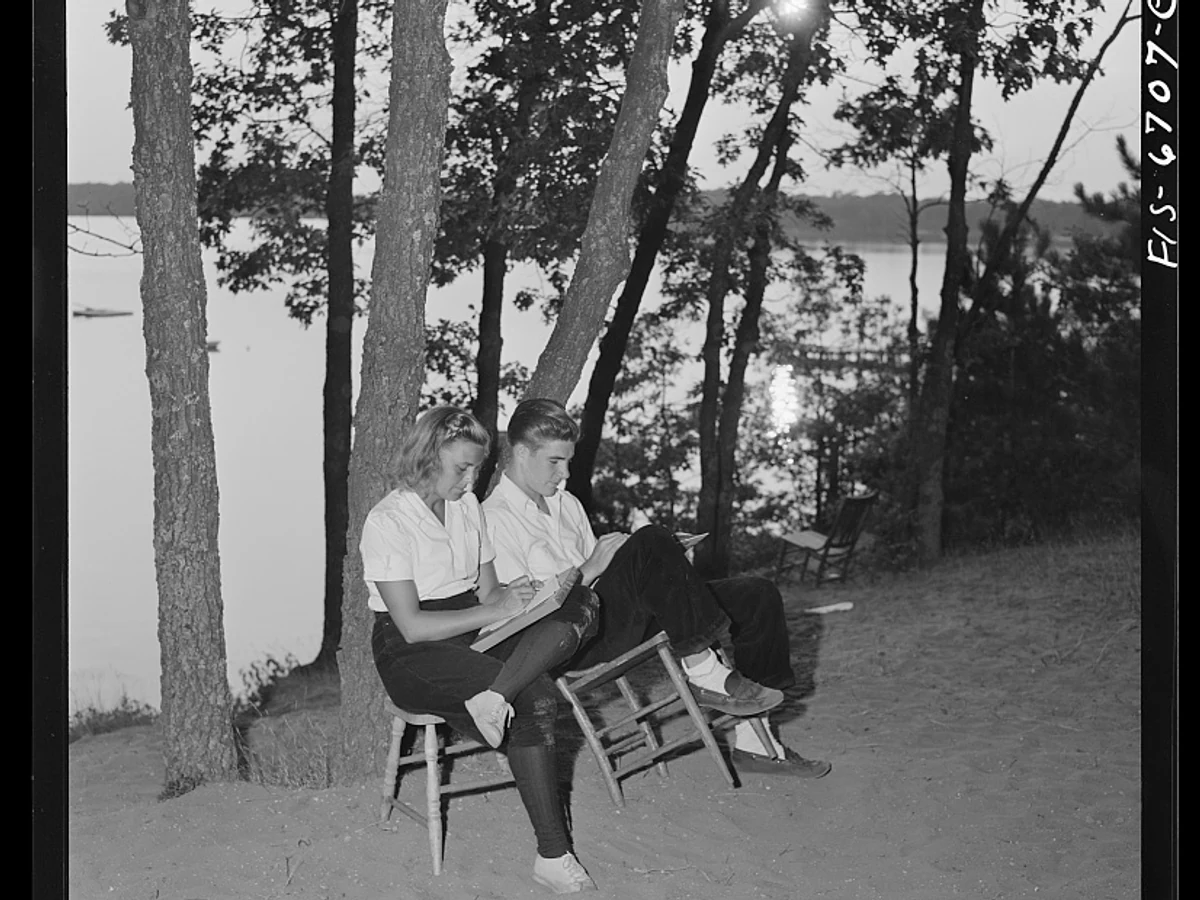
Source note: S5, printed p. 42; S9, PDF p. 24 / printed p. 16; S10, source PDF p. 21; S11, bulletin PDF pp. 8, 11–12.
Interlochen was never described as a place that kept students isolated from adults.
The educational model depended on interaction with teachers, counselors, visiting artists, university faculty, administrators and public audiences.
A 1960 University of Michigan dissertation examining its counselor-education program said counselors-in-training worked under three full-time U-M faculty supervisors who lived on the camp grounds and devoted their full time to the program. [S9, PDF p. 24; printed p. 16]
A 1975 Interlochen brochure preserved in Gerald R. Ford Presidential Library records invited visitors to stay in guest accommodations while attending concerts and observing rehearsals. [S10, source PDF p. 21]
University Division materials from the same period described family and friends staying at the Student Center, parties for adult campers, supervised beach activities and moonlight swims, overnight trips and activities organized by dormitory residents. [S11, bulletin PDF p. 8; printed pp. 12–13]
Older students had more freedom.
Women 18 and older in the University women's dorm had no specified dormitory closing hour. Younger women had deadlines that could be changed with written parental permission. [S11, bulletin PDF p. 8]
Some University Division students worked in camp departments for roughly 24 hours a week. Advanced students could be given limited teaching responsibilities. Students under 18 needed work permits. [S11, bulletin PDF pp. 11–12]
These were ordinary parts of a large residential arts institution. They matter because they show how the place worked.
Interlochen combined strict schedules and formal supervision with a culture that prized mentorship, independence and close interaction between young artists and adults. A great deal of contact was expected. The response to questionable boundaries therefore depended heavily on the judgment of individual employees and administrators.
The University of Michigan was deeply involved in some Interlochen programs
Source note: S12, p. 1601; S13, p. 223; S14, p. 2005; S15, newspaper p. 3.
The University of Michigan's relationship with National Music Camp went well beyond lending its name to a summer program.
U-M's own institutional history says the Regents approved credit-bearing courses at Interlochen in 1941. The University Division became a branch of the Summer Session, with courses offered through the School of Music, School of Education, College of Architecture and Design and Department of Speech. [S12, p. 1601]
Administrative responsibility for that University Division was shared between University officials and camp administrators. [S12, p. 1601]
Another U-M history traces the formal agreements behind the program. The initial agreement was reached in October 1941, renewed in 1944 and again in 1949, when an advisory committee of deans was added. Further renewals followed in 1954 and 1957. After the 1957 agreement, the College Division became permanent. [S13, p. 223]
U-M also ran a counselor-education program at Interlochen beginning in 1944. [S14, p. 2005]
Contemporaneous newspaper coverage shows how that arrangement worked on the ground.
A 1958 Michigan Daily article reported that U-M students served as assistant counselors and that four of National Music Camp's nine trustees were U-M faculty members. The same story described the University Division as a "camp within a camp," reflecting both the close institutional relationship and the fact that the U-M program was a distinct operation within the larger camp. [S15, p. 3]
The records reviewed by Boho News do not show that U-M controlled every Interlochen program or employee. We found no evidence that University leadership received the misconduct allegations later assembled in the 2026 investigation.
U-M's role remains important because it points to another body of records. University administrators, faculty members, trustees and counselor-training programs generated files of their own. Some of those materials survive in university archives and have not yet been reviewed for this investigation.
Hanson and Hood appear in contemporaneous records as people working directly with students
Source note: S16, official PDF pp. 15, 51–52, 66, 80, 108–109; S2.
A federally funded Interlochen project from 1968 provides a snapshot of the institutional positions held by two people later publicly identified in the 2026 investigation.
The final project report lists John "Jack" Hood as chair of the science department and Byron Hanson as a project instructor. It describes Hanson participating directly in the instructional program. [S16, pp. 15, 66, 80, 108–109]
The same report describes counseling staff living in dormitories, a headmaster with disciplinary authority in certain matters and a Student Council that worked with administrators on student rules. [S16, pp. 51–52]
The document establishes their roles at the time. It does not contain a misconduct complaint.
Interlochen now identifies Hanson as Respondent 1 and Hood as Respondent 8. The institution also identifies Charlie McWhorter, a trustee from 1970 through 1999, as Respondent 19. [S2]
Those are the only respondent identities Boho News uses. Other respondents remain unnamed.
By 1984, Michigan had detailed rules for covered children's camps
Source note: S17, source PDF pp. 66–69 / original printed pp. 54–57.
Michigan's regulatory record adds another piece of historical context.
Rules filed on May 31, 1984, and effective 15 days later set requirements for covered children's-camp licensees. [S17, original printed pp. 54–57]
Among them were staff screening before assignment, personnel files, reference checks, staff training, written discipline policies and sufficient staffing to provide continual care, guidance, protection and supervision. [S17, original printed pp. 54–57]
Personnel records were to include prior youth-camp employment, references and information about nontraffic criminal convictions. Covered licensees also needed a written plan addressing compliance with Michigan's Child Protection Law. [S17, original printed pp. 54–57]
What we still do not have is the licensing record necessary to determine which Interlochen programs were covered by those provisions in a particular year.
Without that record, this article does not claim that Interlochen violated a specific 1984 rule.
We found no pre-1990 exposé in the archives we searched
Source note: S20.
For parents and other outsiders, the available public record remained overwhelmingly favorable through the end of the 1980s.
Boho News has not found a contemporaneous pre-1990 article exposing the misconduct later described in Interlochen's 2026 investigation.
Our newspaper search was substantial, but incomplete.
The most systematic local search covered 33 surviving Traverse City Record-Eagle index PDFs. Those indexes produced 106 potentially relevant date-and-page references. [S20]
We did not obtain the 106 underlying newspaper pages during that phase of the research.
There were also major gaps in the available indexes. General indexes were missing for 1950, 1971, 1977 and 1986 through 1989, with additional partial or category-specific coverage during parts of 1983 through 1985. [S20]
The result is a limited finding: no contemporaneous Interlochen misconduct exposé was identified in the public archives searched.
Historical newspaper collections are incomplete, and a story that was never digitized or poorly indexed can disappear from an online search without disappearing from history.
A parent and an administrator did not have access to the same information
By the late 1980s, an ordinary outsider could have learned a great deal about Interlochen.
A parent could read about counselors and curfews. A prospective student could learn about the close relationships between faculty and young artists. Visitors could see performances and rehearsals. Newspapers identified prominent teachers and administrators. University publications documented U-M's long involvement.
What we have not found is a public source from that period giving those outsiders anything resembling the account released in 2026.
An Interlochen administrator potentially had access to a very different record.
Personnel files, complaints, parent correspondence, administrative notes, disciplinary records, recommendation letters and Board materials would not ordinarily have been available to a parent or journalist.
The investigators' descriptions of several personnel files suggest that at least some case-specific information existed inside institutional records. [S1, pp. 29–30, 50, 52]
We do not have enough of those records to determine whether anyone in senior leadership ever put separate incidents together.
That remains one of the largest holes in the story.
Important records remain in archives
Source note: S21.
The historical record is far from exhausted.
The Bentley Historical Library holds a large Interlochen collection covering 1927 through 2005, with most material concentrated between 1935 and 1994. [S21]
Its finding aid lists administrative files, correspondence, governing-board records, printed material, photographs, recordings and other records.
The Boards series runs through 1989.
Bentley's Camp subseries also runs through 1989 and contains rosters, forms, memoranda, statistics, reports, planning and recommendation files, student-government materials and other operational records. Bentley describes its coverage as especially strong from the late 1930s through the late 1960s. [S21]
We have not examined all of those folders.
Potentially relevant material identified during this reporting includes files associated with McWhorter and Hood, executive records, historical conduct policies, rules-enforcement material and oral histories involving Hanson and Hood.
Their existence tells us where further evidence may be located. It does not tell us what the files say.
Boho News still does not have the underlying personnel records summarized by the investigators. We do not have all of the Record-Eagle pages identified through the newspaper indexes. We do not have a complete historical Interlochen licensing and inspection record. We do not have enough Board and senior-management records to reconstruct institutional knowledge year by year.
Those gaps prevent a definitive answer to some of the most important questions in this story.
Interlochen had not provided the requested records by Aug. 13
Boho News sent Interlochen, Sanghavi Law Office and the University of Michigan detailed messages about the findings under consideration for this article on Aug. 3.
Interlochen was given the material factual conclusions we planned to report and invited to identify anything it disputed. We asked for records that could clarify the personnel-file evidence, historical complaints, policies, Board or leadership knowledge and historical licensing.
Sanghavi Law Office was asked specifically about the evidence behind several personnel-file chronologies in its report.
Elizabeth Sanghavi replied that her standard practice is not to comment on an investigation and that she would share media inquiries about the matter with Interlochen.
She did not provide the requested records or additional source information.
Interlochen's investigation inbox separately acknowledged receiving our message and said it would respond shortly.
No substantive response or requested records had been received by Aug. 13.
The University of Michigan had not responded by Aug. 13.
What the record shows before 1990
The historical evidence does not provide one neat moment when Interlochen became aware of a broader problem.
It shows individual cases.
Some students said they never told anyone.
Others remembered staff seeing relationships or overnight access.
One remembered receiving a warning.
Another former student told investigators that he went to an administrator.
Investigators say several personnel files contain contemporaneous reports and administrative responses, although those files have not been released for independent review.
Outside the institution, the picture was very different.
For decades, Interlochen was publicly celebrated as a prestigious and carefully supervised place where talented young people could live, study and work closely with accomplished adults.
Nothing Boho News has found shows that parents or the general public before 1990 had access to a broader account of the allegations now documented in the 2026 investigation.
We also have not found evidence that the institution's Board or senior leadership assembled the separate concerns into a comprehensive understanding before 1990.
The record remains incomplete. It is sufficient to show that information existed in more than one place.
Exactly who knew what, and when that knowledge moved beyond individual cases, remains one of the central unanswered questions.
The records reviewed for this story do not establish that Jeffrey Epstein knew this earlier history.