The World Bank approved a $1.02 billion financing package tied to energy and water reforms in the Philippines, pairing a large policy loan with a performance grant and targets for renewable power, offshore wind and local water utilities.
The Second Energy Transition and Climate Resilience Development Policy Loan consists of a $1 billion loan from the International Bank for Reconstruction and Development and a $20 million performance-based grant from the Livable Planet Fund.
Unlike a construction loan assigned to one plant or pipeline, development-policy financing supports an agreed package of policy and institutional actions. The announced measures include operating the Renewable Energy Market, incorporating electric-vehicle charging into utility planning and launching the country’s first offshore-wind auction.
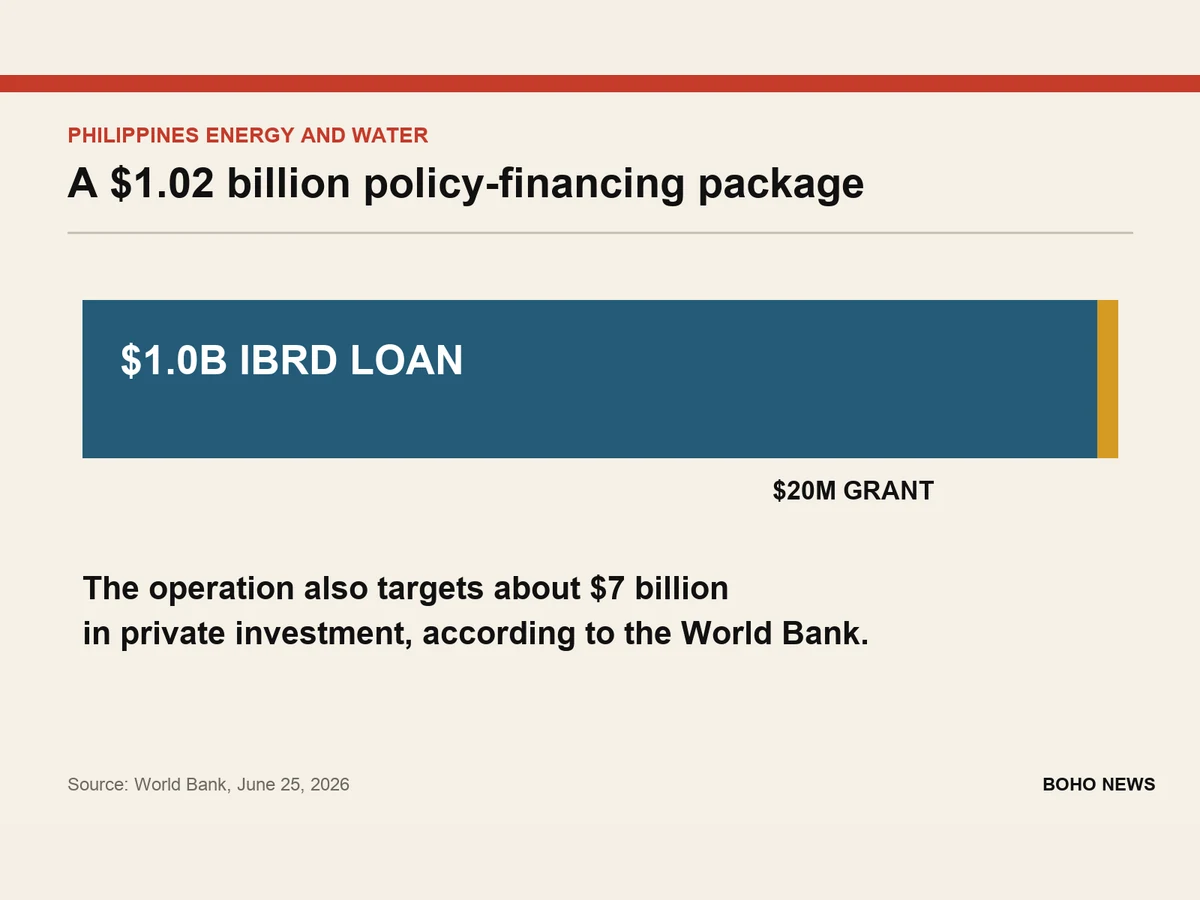
That auction targets 3.3 gigawatts of contracted offshore-wind capacity by 2030. The World Bank said the broader reforms are expected to mobilize about $7 billion in private investment, a forecast that depends on investors responding to the new market rules.
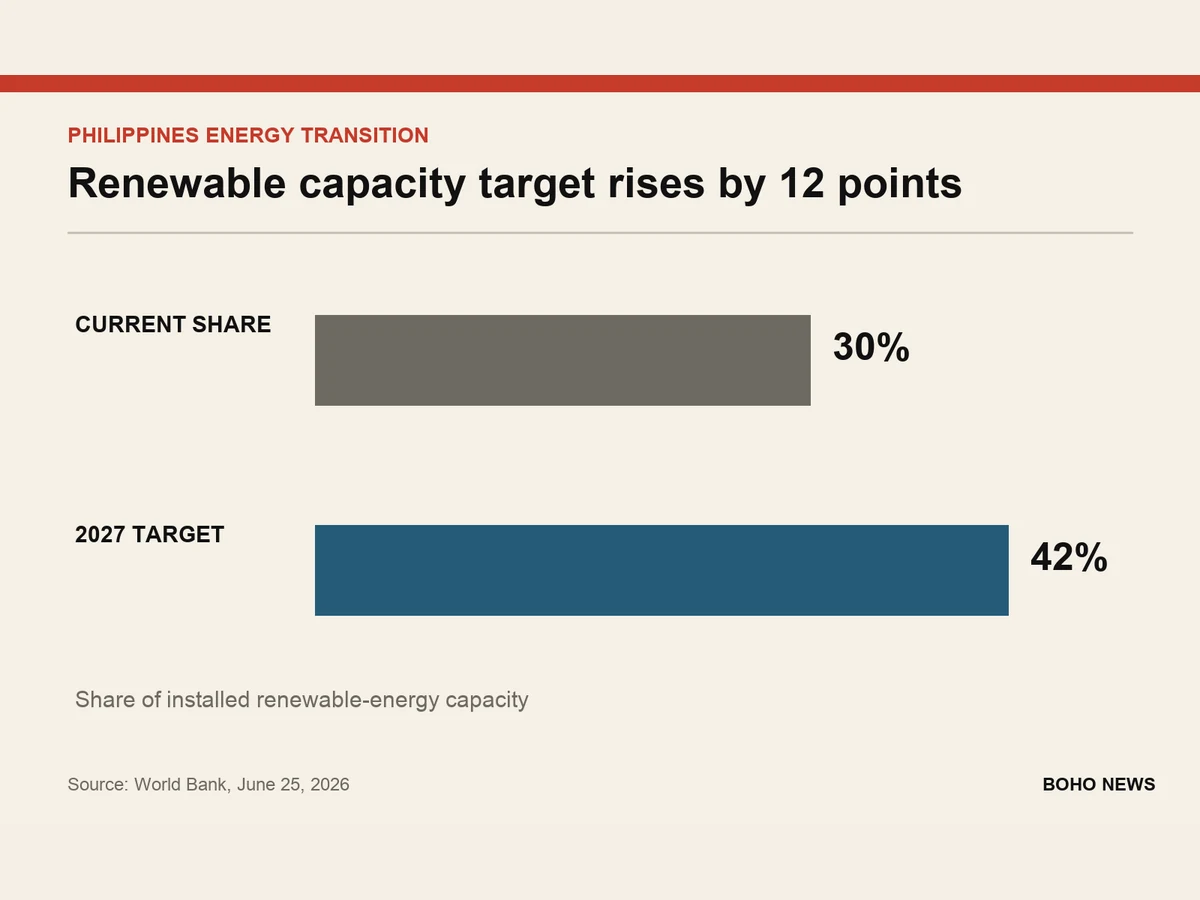
The energy target is specific: renewables would rise from 30% to 42% of installed generating capacity by 2027. Installed capacity is not the same as electricity actually generated, because output varies by technology, weather, fuel availability and plant use.
The operation also addresses local water services. More than 1,600 local government units are responsible for provision, according to the World Bank, but many lack financing or institutional capacity. The reforms support cost-recovery tariff frameworks, a unified financing structure and bulk-water pricing regulations.
By 2027, the program aims to expand the number of local water providers with sustainable business plans from 10 to 100. The financing structure is designed to prioritize poor and climate-vulnerable communities, but the announcement does not list every provider that will qualify.
The policy loan builds on an earlier operation that established a legal framework for offshore wind, launched a reserve market, expanded retail-energy competition and created institutional groundwork for more sustainable local water service.
The numbers should be read as different categories: $1.02 billion is the approved public financing package; roughly $7 billion is expected private mobilization; 42% is a 2027 installed-capacity target; and 3.3 gigawatts is the offshore-wind auction goal for 2030. Delivery will depend on implementation beyond the approval itself.