The World Bank has approved $375.9 million for equipment intended to stabilize Pakistan’s transmission grid and move wind power that existing bottlenecks keep from reaching customers.
The financing, approved July 9, covers the first phase of a 10-year program called Boosting Energy Security through Transmission in Pakistan, or BEST-PAK. Its immediate engineering focus is voltage control at high-capacity substations rather than construction of a new wind farm.
World Bank estimates say the upgrades can unlock 640 megawatts of wind generation now being curtailed and enable the full use of 1,840 megawatts of wind capacity in southern Pakistan. Those are project objectives, not power already delivered by newly installed equipment.
Voltage-control equipment at 29 substations
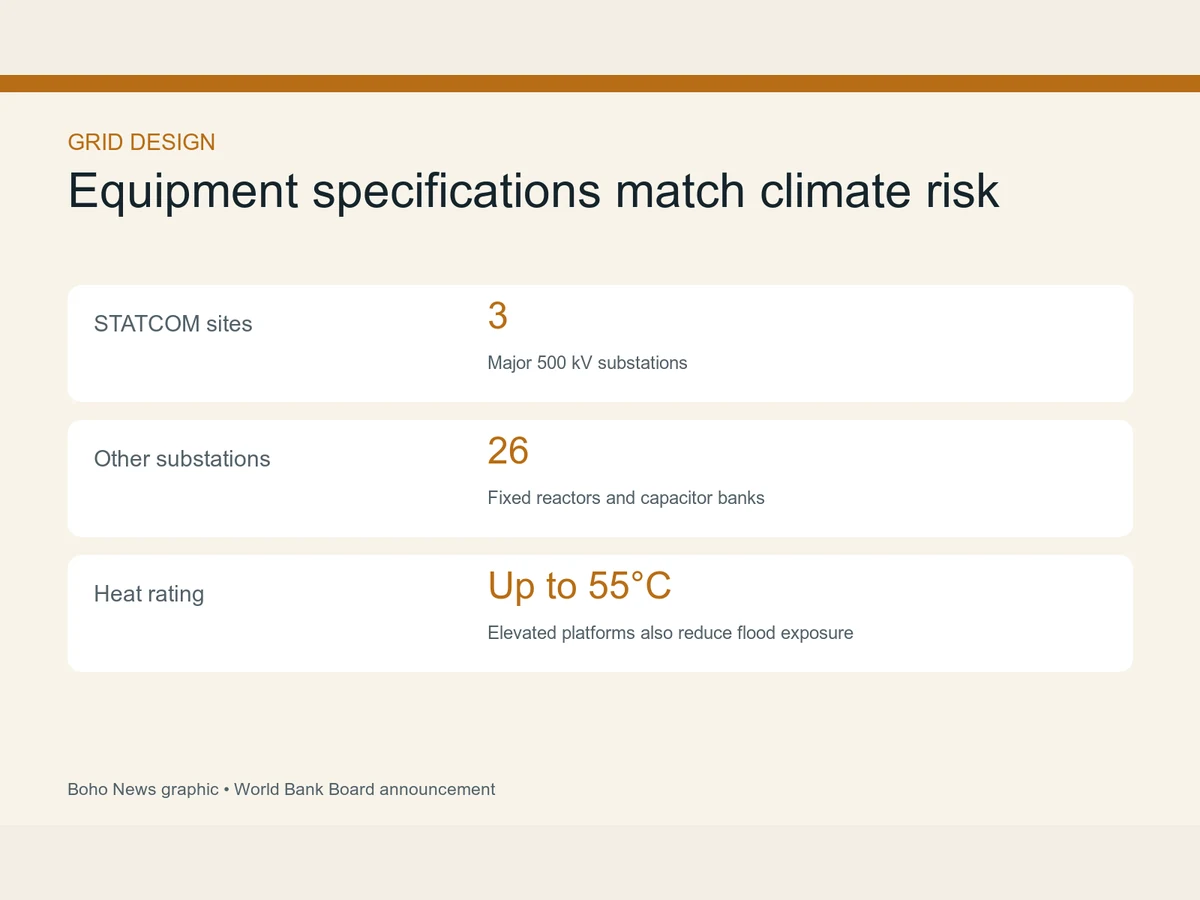
Plans call for static synchronous compensators, known as STATCOMs, at three major 500-kilovolt substations. These power-electronics systems inject or absorb reactive power quickly, helping operators keep grid voltage within limits when supply and demand change.
Fixed reactors and capacitor banks are planned across 26 additional substations. Reactors can absorb reactive power when voltage is too high; capacitor banks can supply it when voltage is too low. Together, the devices address stability limits that can force operators to reduce generation even when turbines are available.
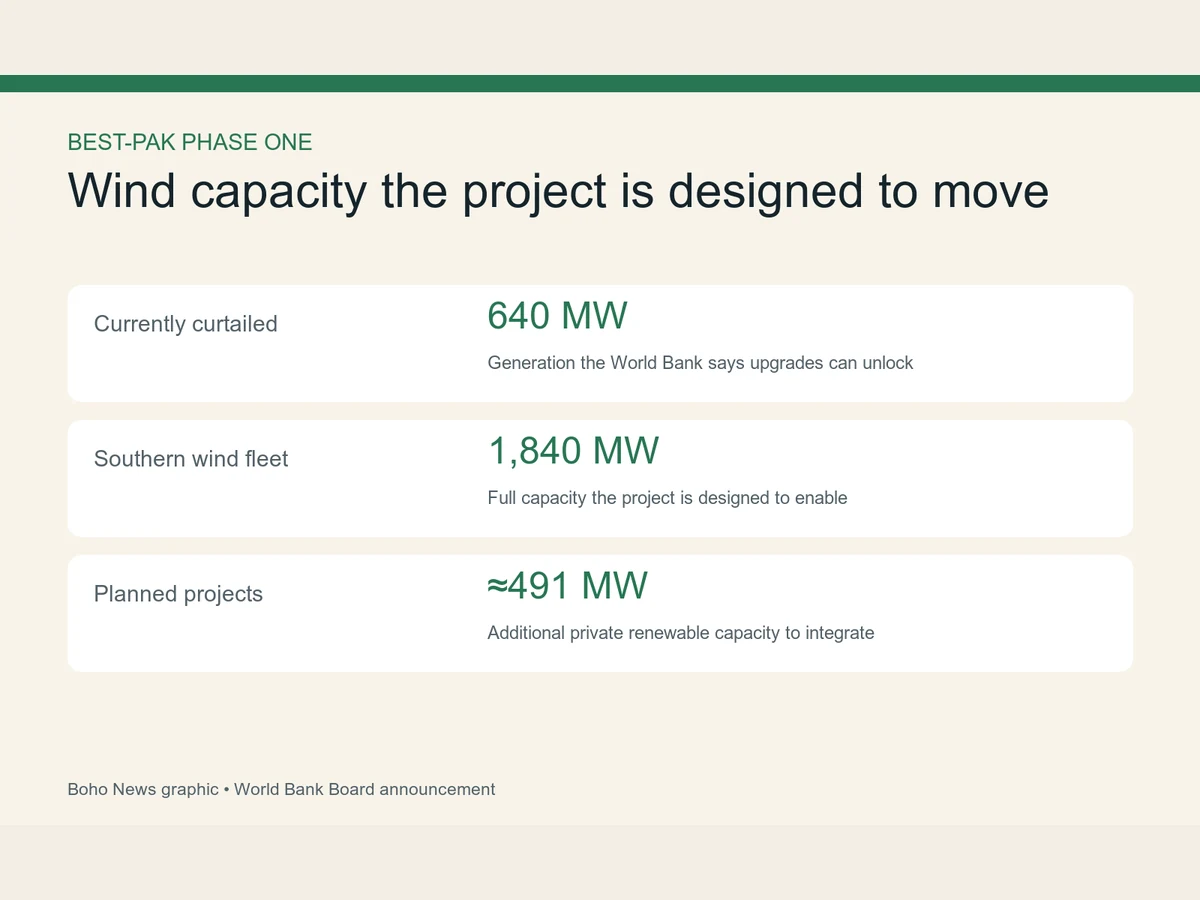
The project is also designed to make room for about 491 megawatts of planned private-sector renewable projects. Whether all of that capacity is built and connected depends on decisions beyond this World Bank financing.
Pakistan has committed to a 60% renewable share in its electricity mix by 2030 under its climate plan. The grid project can support that goal, but it does not by itself guarantee the target, determine future demand or resolve every financial problem in the power sector.
A grid designed for monsoons and extreme heat
The physical specifications respond to two hazards that can disable substations: flooding and heat. New installations are to use elevated platforms where flood exposure demands it, and equipment must be rated to operate at temperatures up to 55 degrees Celsius, or 131 degrees Fahrenheit.
Those standards matter because transmission equipment loses performance and ages faster when temperatures exceed its design envelope. Elevation can protect critical gear from inundation, but it cannot eliminate every flood risk to access roads, communications or connected lines.
The World Bank estimates the project could avoid about 832,500 metric tons of carbon dioxide a year, or more than 20.8 million tons over 25 years. That is a modeled impact. It depends on the upgrades being completed, wind power displacing more carbon-intensive generation and the grid operating as assumed.
The first phase of a longer restructuring
BEST-PAK is framed as more than an equipment purchase. The first phase also supports Pakistan’s plan to restructure the National Transmission & Dispatch Company into specialized successor organizations and strengthen governance and operating performance.
Institutional reform introduces its own execution risk. Dividing responsibilities can clarify accountability, but only if staffing, control-room authority, maintenance budgets, data and emergency procedures remain coordinated across the new entities.
The approval is therefore a financing milestone, not completion evidence. Procurement, installation, commissioning and measured reductions in curtailment will determine whether the project produces its advertised capacity and reliability gains.
The most useful public checks will be operational: which substations receive equipment, when each system enters service, how often wind is still curtailed and whether voltage and outage indicators improve. Until those data arrive, the World Bank figures are a detailed plan with explicit engineering targets.