The World Bank Group's Board of Executive Directors has discussed a new six-year partnership framework for China that would place greater emphasis on knowledge sharing, selective financing and lessons intended to apply beyond the country itself.
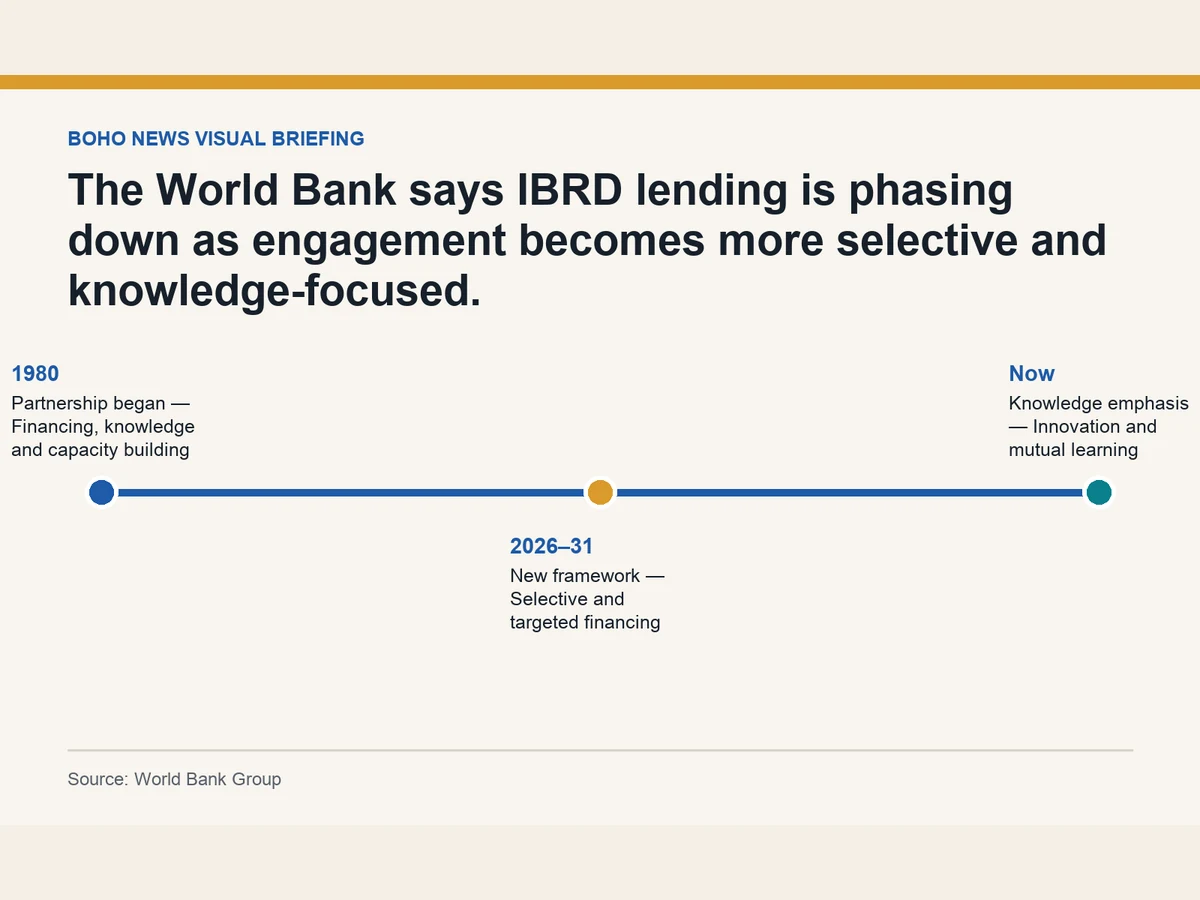
The Country Partnership Framework covers fiscal years 2026 through 2031. The World Bank described it as a new phase in a relationship that began in 1980 and has gradually shifted as China's economy and development needs changed.
The framework identifies three priority areas: enabling productivity-led growth and better jobs; strengthening human capital and social protection as the population ages; and expanding resilient, sustainable infrastructure while protecting and restoring natural ecosystems.
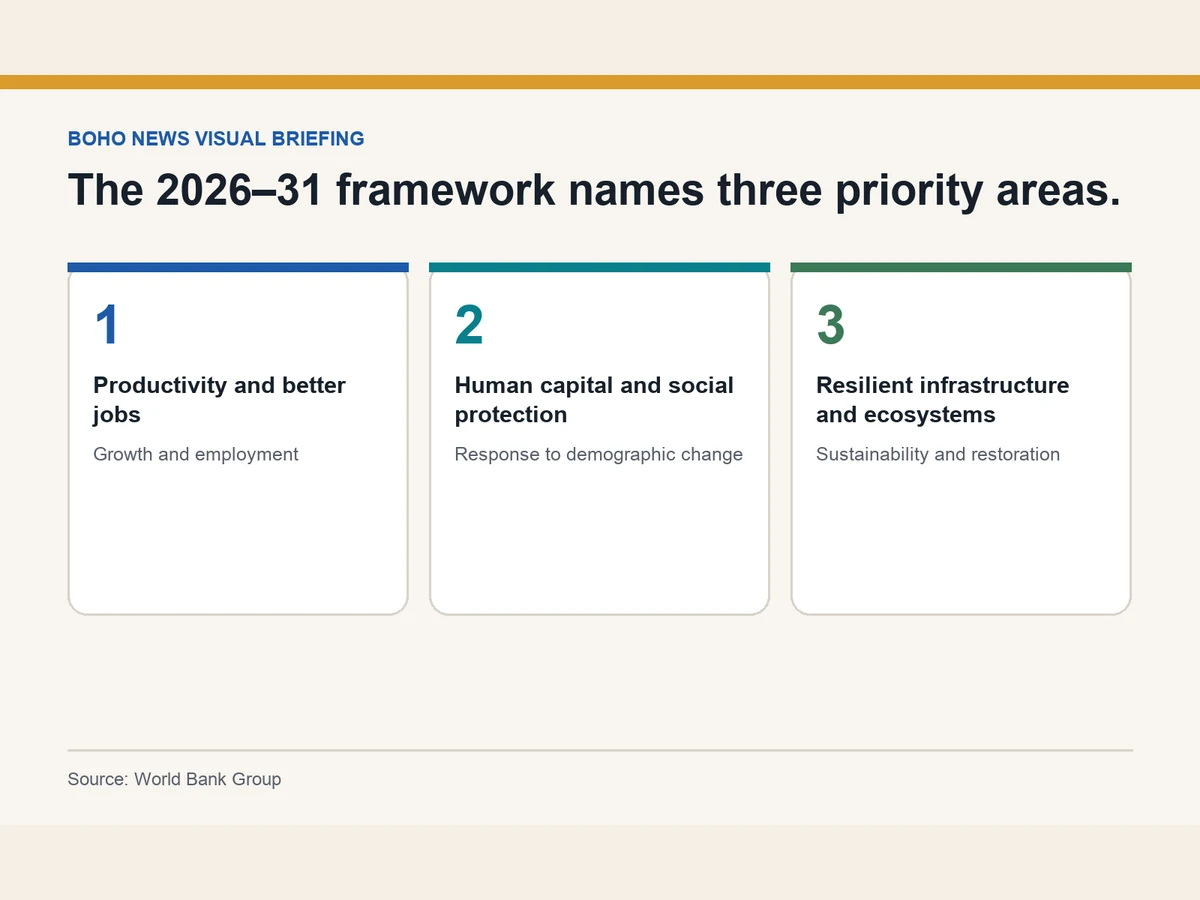
Those themes track priorities in China's 15th Five-Year Plan, including stronger domestic demand, job creation, updated social protection and the country's stated goals of peaking carbon emissions before 2030 and reaching carbon neutrality by 2060.
The World Bank said lending from the International Bank for Reconstruction and Development is phasing down. The relationship is expected to rely more heavily on policy knowledge, innovation, mutual learning and targeted financing rather than broad development lending.
One part of that shift is the sharing of China's experience in areas such as ecosystem restoration, water management and agricultural productivity when other World Bank Group countries request it. The bank said those efforts would be linked to its Knowledge Bank and the China-WBG Global Center for Ecological Systems and Transitions.
The board discussion establishes the framework for cooperation, but it does not by itself set the value or terms of every future project. Individual operations and financing decisions would still require their own review and approval processes.
The World Bank said China is increasingly both a user and provider of development knowledge, as well as a contributor and donor to the institution. That evolving role is central to the framework's focus on ideas and practices that could be useful in other emerging markets.
The practical effect of the framework will become clearer as specific projects, advisory work and knowledge-sharing programs are announced during the 2026–31 period.