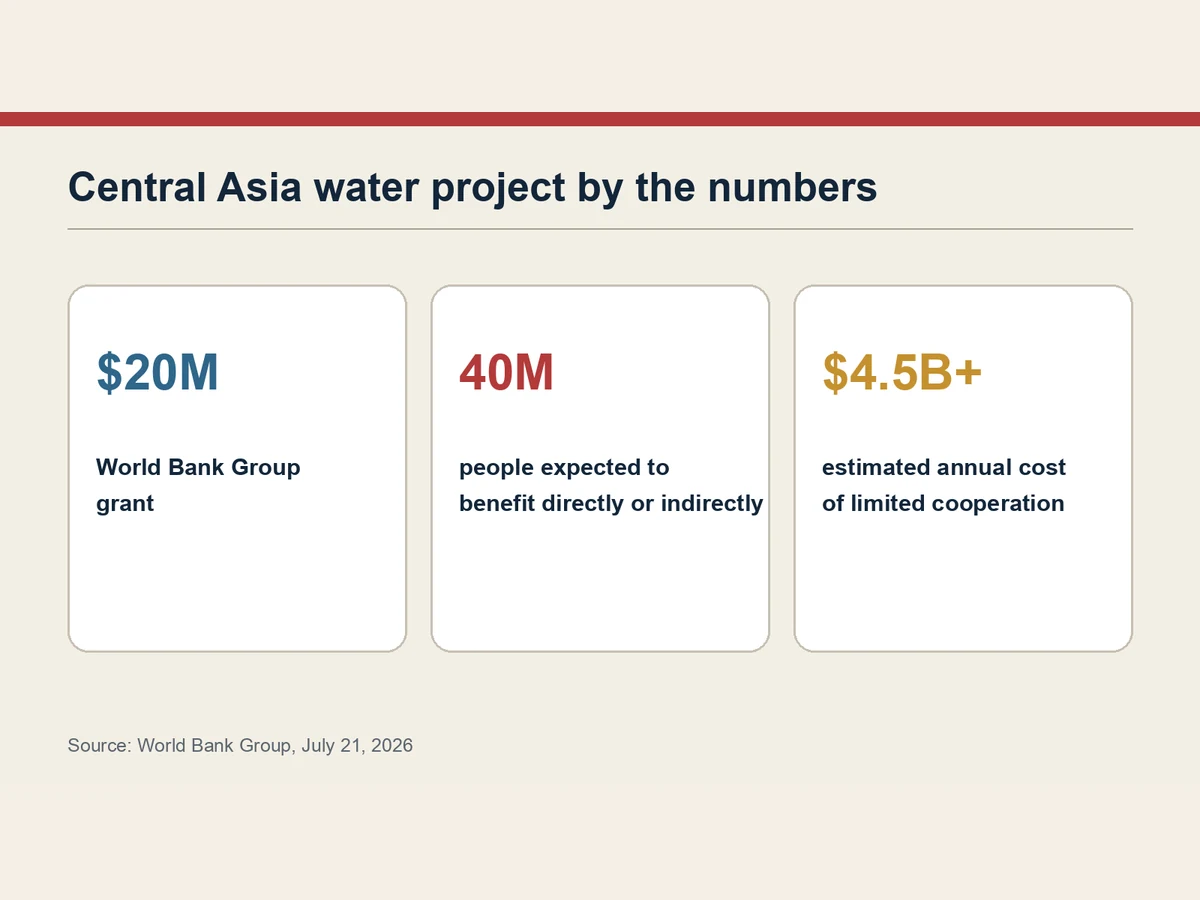
The World Bank Group approved a $20 million grant for a Central Asia water-cooperation project intended to strengthen shared data, prepare cross-border infrastructure investments and train regional institutions through 2031.
The Central Asia Water Efficiency Cooperation Project will be implemented by the Executive Committee of the International Fund for Saving the Aral Sea in coordination with participating countries.
The World Bank expects around 40 million people to benefit directly or indirectly from better regional water management. That is a projection tied to regional improvements, not a count of people already receiving a new service.
The underlying problem crosses borders. Aging infrastructure, weak regional institutions and limited data sharing affect the Amu Darya and Syr Darya basins, while droughts, floods and other extreme weather add pressure.
The bank says glacier surface area in the region has declined 30% over 60 years. It also estimates that limited cooperation among national water systems costs more than $4.5 billion annually through inefficiency.
By 2031, the project aims to prepare as many as six transboundary water-infrastructure proposals involving two or more countries. The areas include irrigation modernization, conservation, storage and coordinated operation of shared resources.
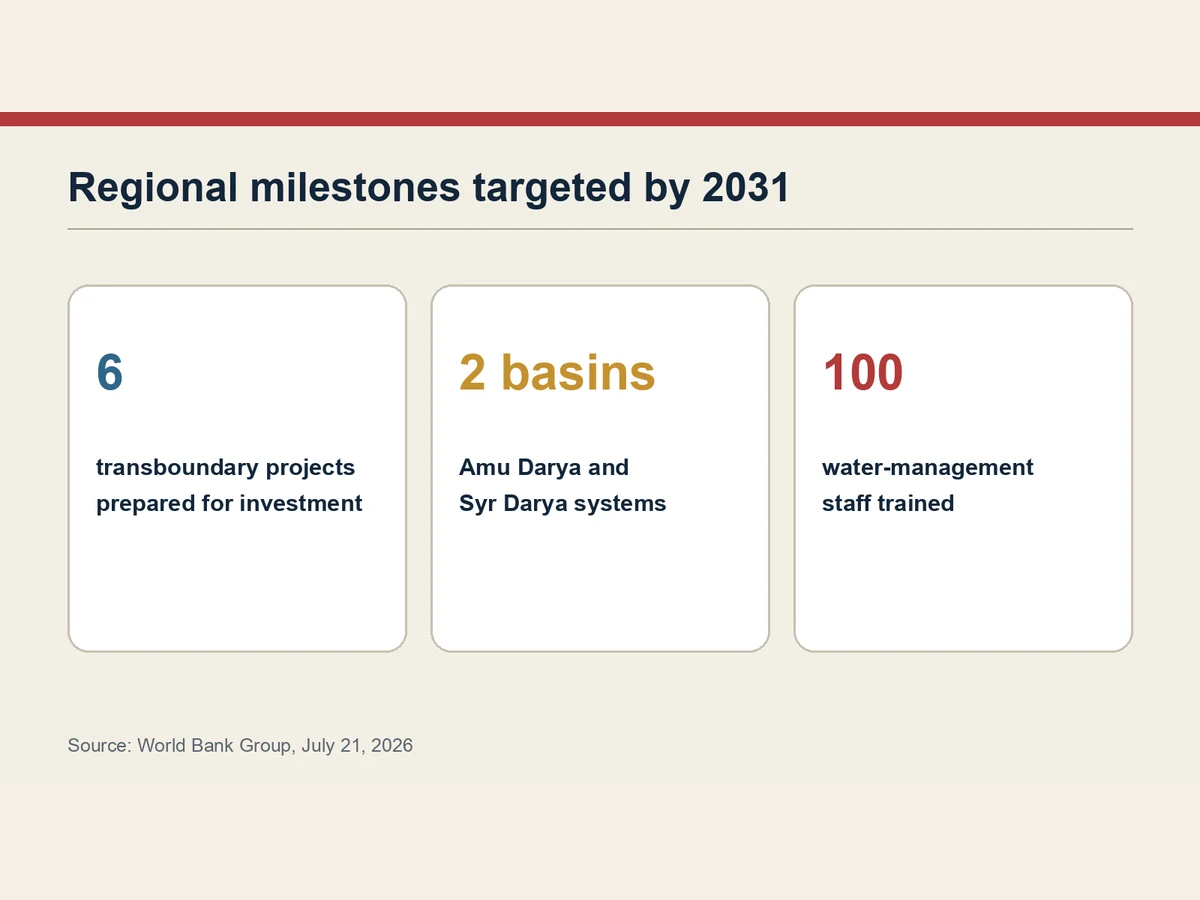
The program will also digitize water accounting and modernize information systems in both major basins. Up to 100 staff members from regional water-management organizations are slated for training.
Planning is not construction. A prepared project still needs technical review, financing, agreements and implementation, and the World Bank release does not guarantee that all six proposals will proceed.
The most immediate test is institutional: whether countries can produce compatible data, use shared platforms and make operating decisions across basin boundaries.
If that coordination improves, the $20 million grant could unlock larger investments. If it does not, the headline beneficiary and savings estimates will remain projections rather than measured results.
Public reporting should therefore separate institutional outputs from regional outcomes. Training 100 staff and preparing six proposals can be verified directly; economic savings, water reliability and benefits to 40 million people require longer-term measurement across participating countries.