No health-related Sustainable Development Goal is fully on track, and the information needed to measure some of the largest gaps still arrives too slowly, the World Health Organization says in its 2026 global statistics review.
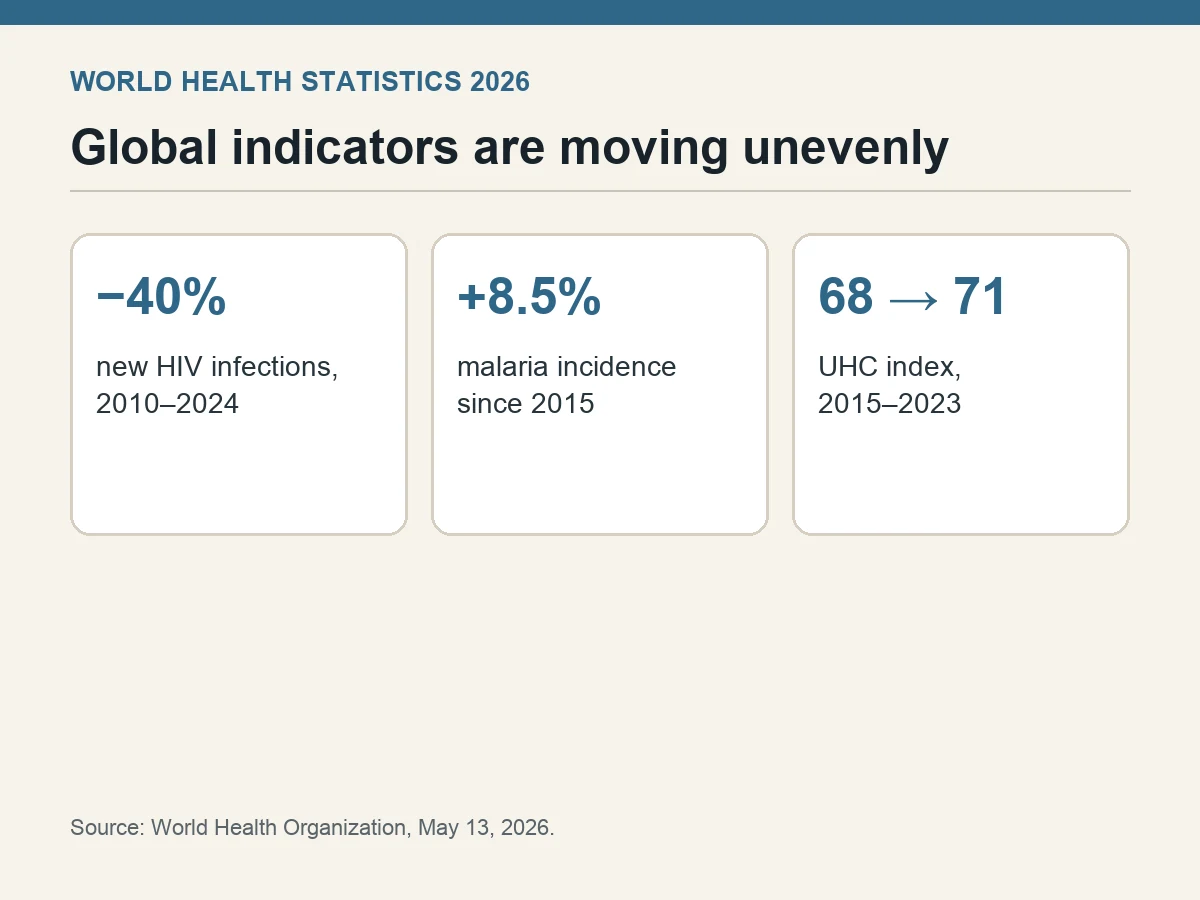
The report is not uniformly bleak. New HIV infections fell 40% between 2010 and 2024. The universal health coverage service index increased from 68 in 2015 to 71 in 2023.
Other indicators moved backward. Global malaria incidence rose 8.5% from 2015, and WHO warns that disruptions, financing pressure and widening inequality threaten gains made in maternal, child and infectious-disease health.
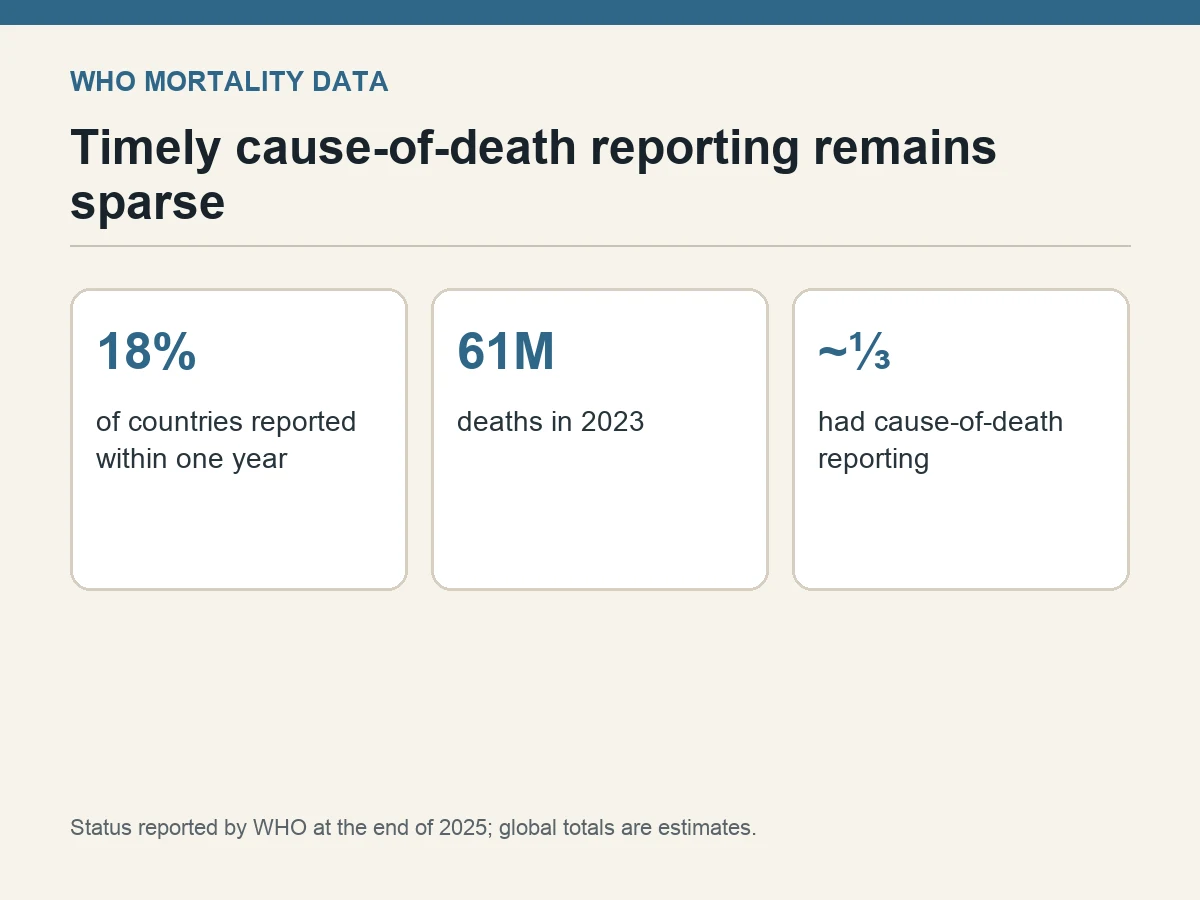
The data system is itself part of the problem. At the end of 2025, only 18% of countries had reported mortality data within one year, limiting the speed at which new patterns can be detected and compared.
WHO estimates that 61 million people died in 2023. Only about one-third of those deaths had a reported cause, leaving models to fill large gaps in what should be a basic public-health record.
Cause-of-death information directs more than statistics. It affects how governments prioritize prevention, clinical capacity, vaccination, road safety and chronic-disease programs. Delayed data can keep an emerging problem invisible until later.
The pandemic’s full impact also extends beyond confirmed certificates. WHO estimates 22.1 million excess deaths from 2020 through 2023—deaths above the number expected without the crisis, whether directly or indirectly associated with COVID-19.
Those estimates carry uncertainty because countries differ in registration completeness and reporting speed. A modeled global total is necessary when records are missing, but it should not be presented as though every death was individually documented.
The 2026 scorecard’s sharpest conclusion is that progress and measurement cannot be separated. HIV prevention shows that sustained improvement is possible; rising malaria and incomplete mortality records show why targets can drift out of reach without financing, services and timely civil-registration systems.