
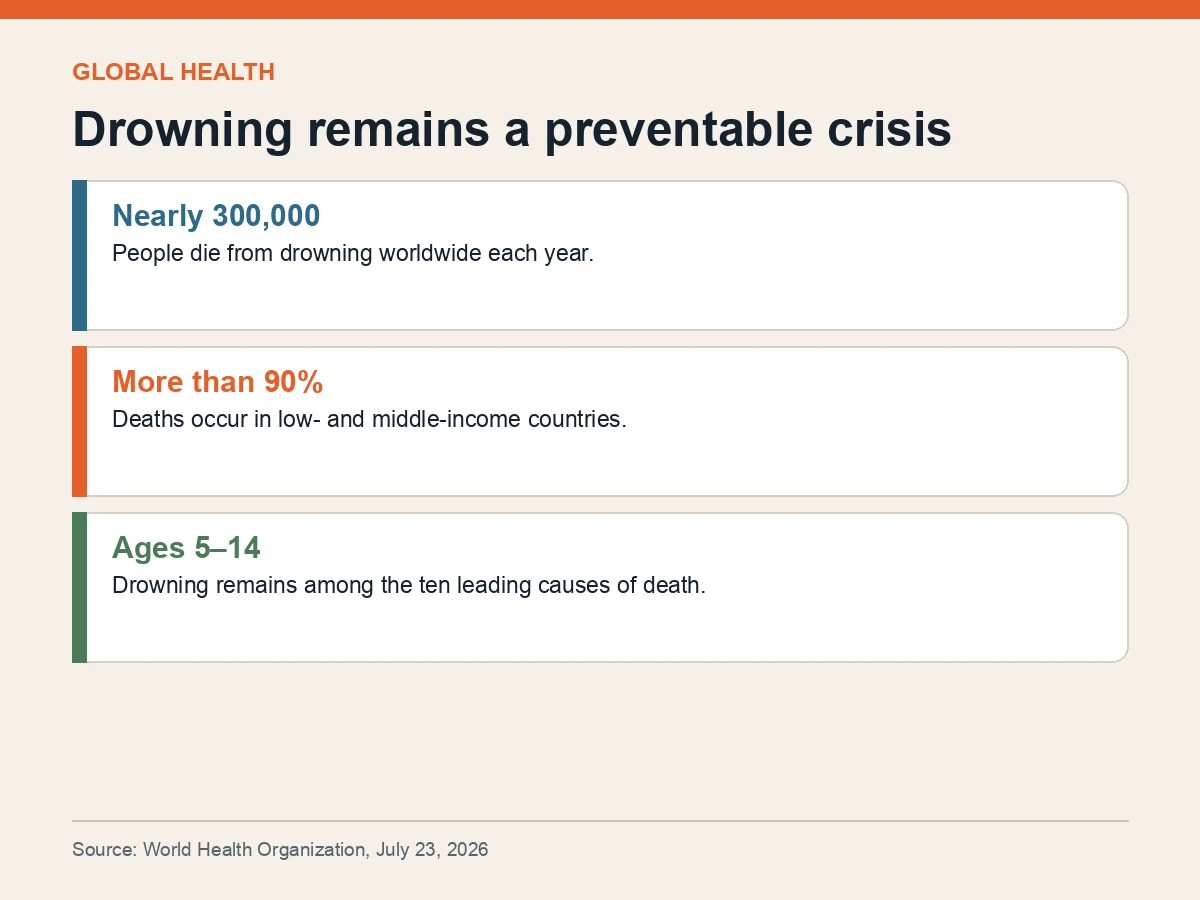
The World Health Organization has launched a seven-part policy package to reduce drowning, a preventable cause of nearly 300,000 deaths worldwide each year.
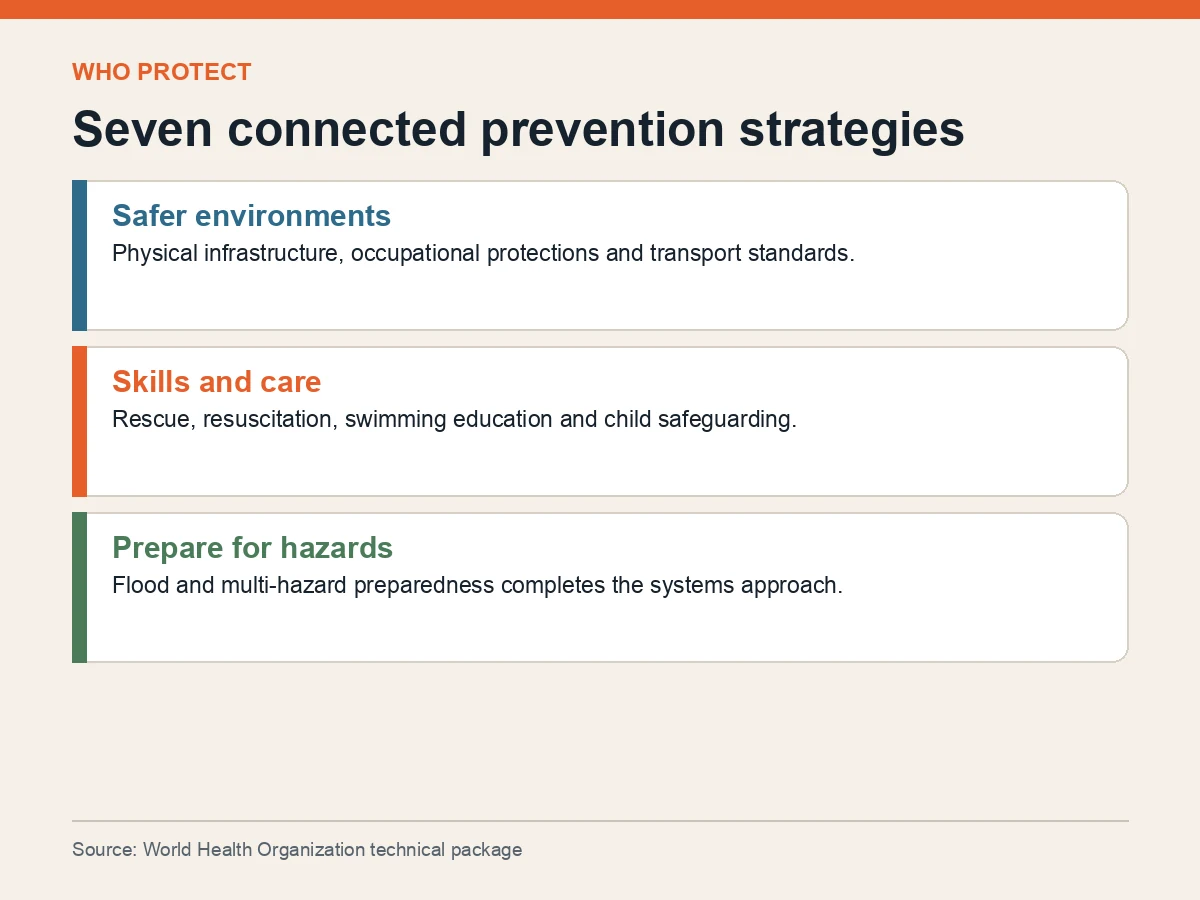
Called PROTECT, the package moves beyond a single intervention such as swimming lessons. It combines physical infrastructure, rescue and resuscitation, occupational safeguards, water-transport standards, swimming education, child-care systems and preparation for floods and other hazards.
More than 90% of drowning deaths occur in low- and middle-income countries, WHO said. Drowning also remains among the ten leading causes of death for children ages 5 to 14, placing the problem at the intersection of public health, transportation and child safety.
The infrastructure component covers safer interaction with water. The transport component addresses standards for travel by boat, while occupational rules focus on people whose work regularly exposes them to water.
Skills remain central. WHO includes bystander and professional rescue capacity, resuscitation and basic swimming and water-safety education. Child-care and safeguarding policies are treated as a distinct layer because supervision failures can turn ordinary household or community water into a hazard.
The final component is threat preparedness. Floods, storms and other hazards can expose entire communities at once, and WHO says climate change is increasing that risk. The framework therefore links emergency planning with routine prevention.
WHO launched the package in Ghana, where it estimates about 1,100 drowning deaths a year—roughly three each day—with children and young adults disproportionately affected. The location highlights the burden but does not make the guidance Ghana-only.
A technical package is not evidence that deaths have already fallen. Governments still must adapt its recommendations, fund services, enforce transport and workplace rules, and measure outcomes consistently.
PROTECT’s main contribution is organizational: it makes drowning a systems problem rather than an isolated accident. That creates a clearer accountability test—whether countries build coverage across all seven domains and whether mortality declines where implementation is sustained.