
The World Health Organization has recommended a 14-day treatment regimen for many visceral leishmaniasis patients in eastern Africa, shortening the previous 17-day course and reducing daily injections from two to one.
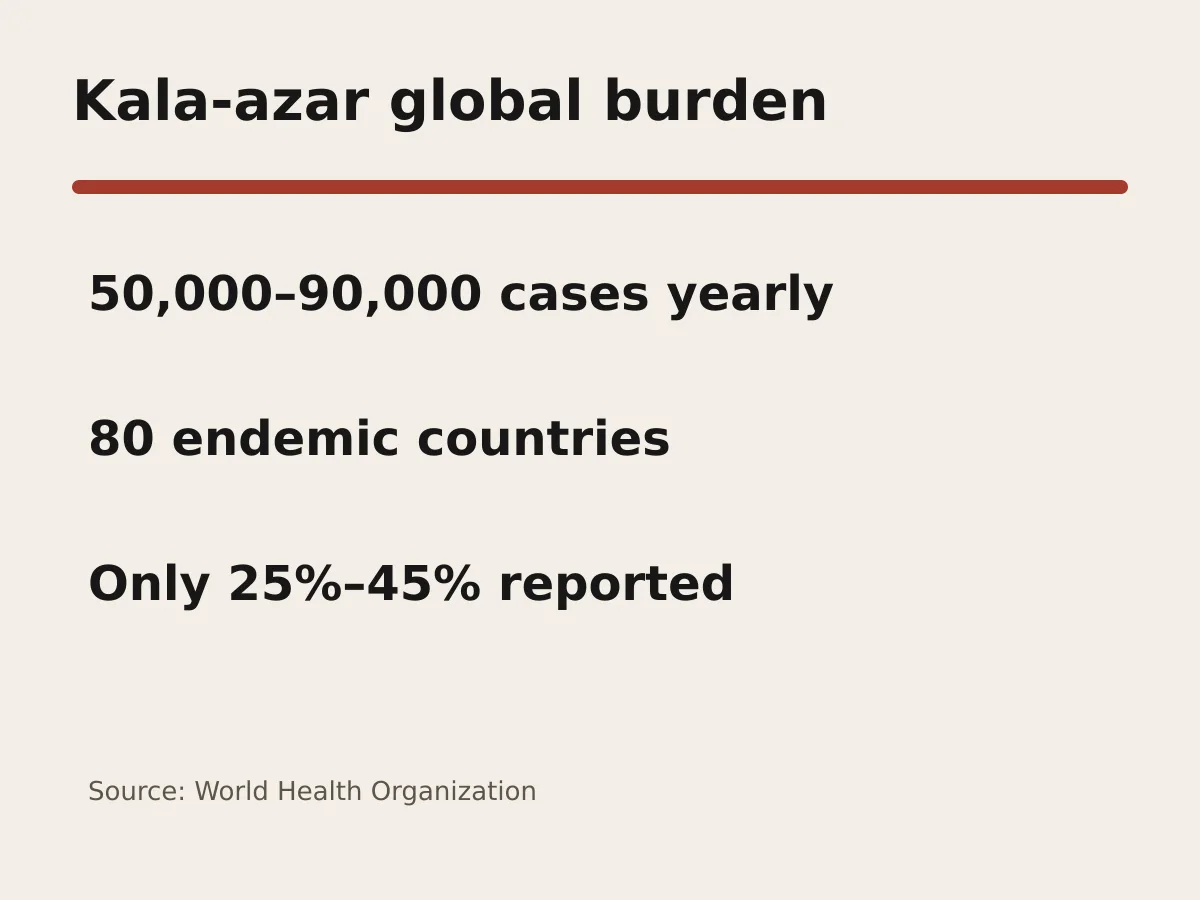
Visceral leishmaniasis, also called kala-azar, is transmitted by infected sandflies and can cause fever, weight loss, anemia and enlarged organs. WHO estimates 50,000 to 90,000 cases a year across 80 endemic countries, with only 25% to 45% reported.
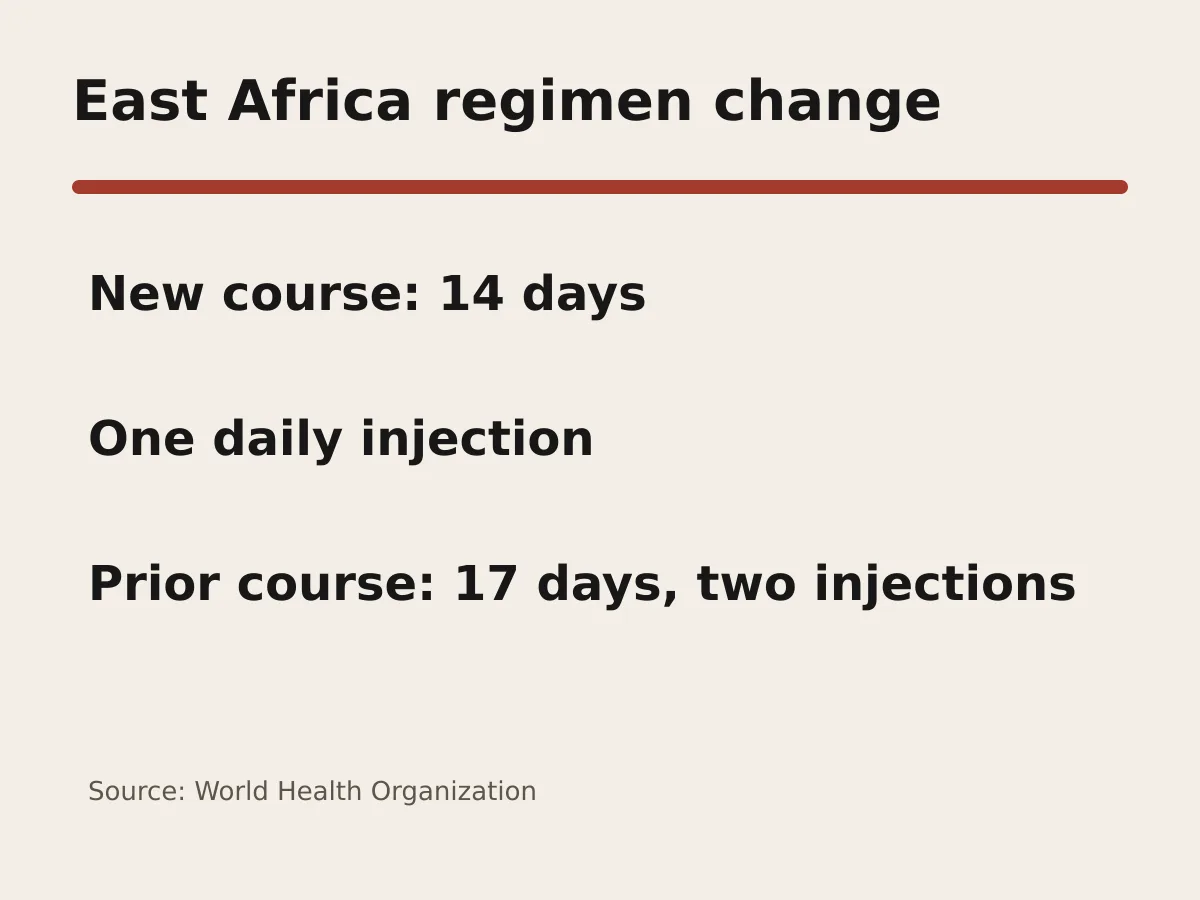
For the first time, WHO recommends regimens that do not use sodium stibogluconate for eligible patients. In eastern Africa, the new option combines oral miltefosine with injected paromomycin.
Sodium stibogluconate remains an option for patients who are not eligible for the new combinations. WHO says treatment still depends on disease form, immune status, parasite species, other conditions and geography.
The guidance also updates treatment for post-kala-azar dermal leishmaniasis, a skin condition that can follow apparent cure. PKDL is not usually life-threatening but may maintain transmission and can cause stigma and social isolation.
For eastern Africa, WHO recommends shorter combinations for PKDL; in South-East Asia, the options include liposomal amphotericin B alone or with oral miltefosine. The document also gives clearer guidance for relapse in immunocompetent patients in South-East Asia.
WHO expects almost half of primary visceral-leishmaniasis patients and all PKDL patients to be potentially eligible for the new recommendations. That estimate describes potential clinical eligibility, not guaranteed access to medicines or completion of treatment.
The 55-page guideline applies to HIV-negative patients and incorporates clinical trials, systematic reviews, safety evidence and implementation considerations. National health authorities must still translate it into local protocols and supply systems.
The changes are clinical guidance for trained health systems, not instructions for self-treatment. Diagnosis and regimen choice require medical evaluation because the recommended drugs carry important risks and are not interchangeable across regions or patients.