
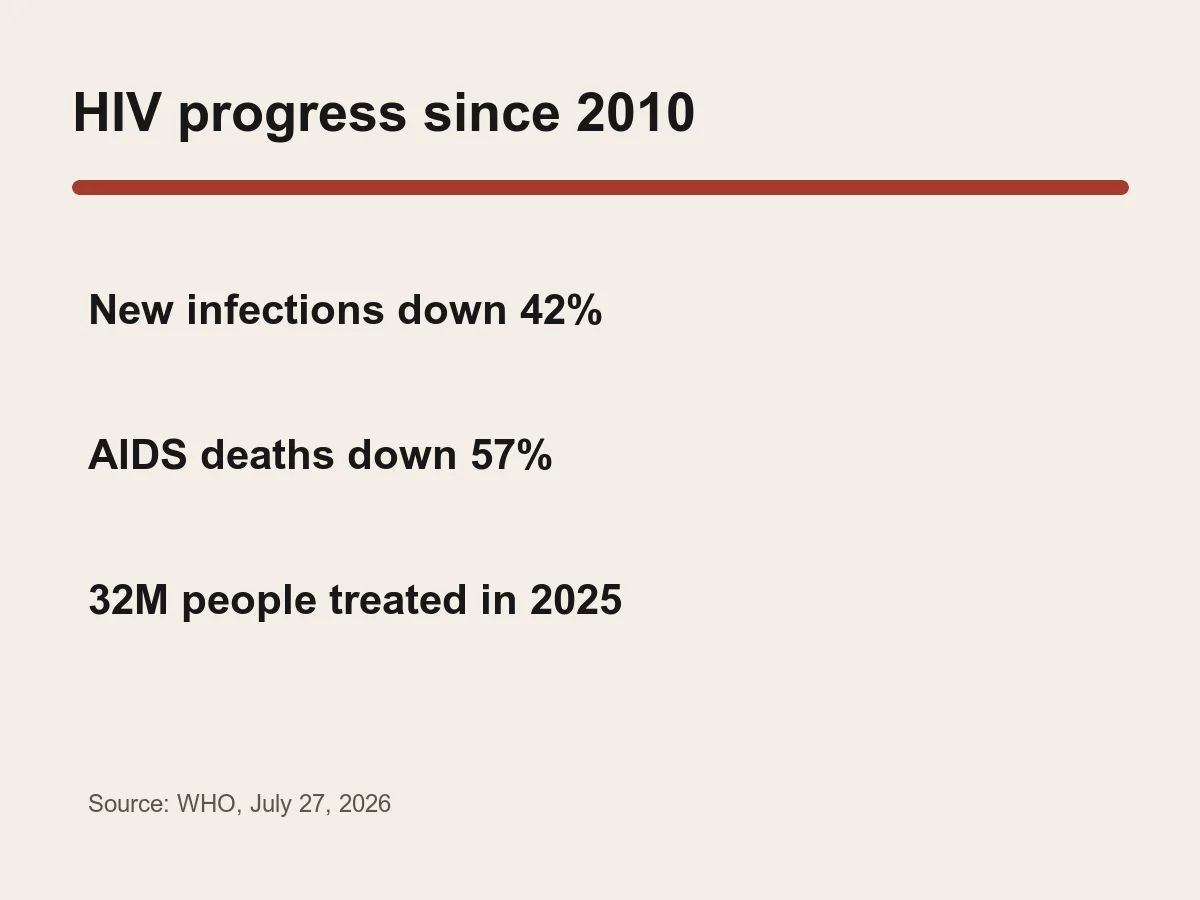
About 32 million people living with HIV were receiving treatment by the end of 2025, the World Health Organization said in a new assessment of global strategies for HIV, viral hepatitis and sexually transmitted infections.
WHO reported that new HIV infections fell 42% and AIDS-related deaths fell 57% between 2010 and 2025. Those global trends show substantial progress, but they do not mean access or outcomes are equal within every country or population.
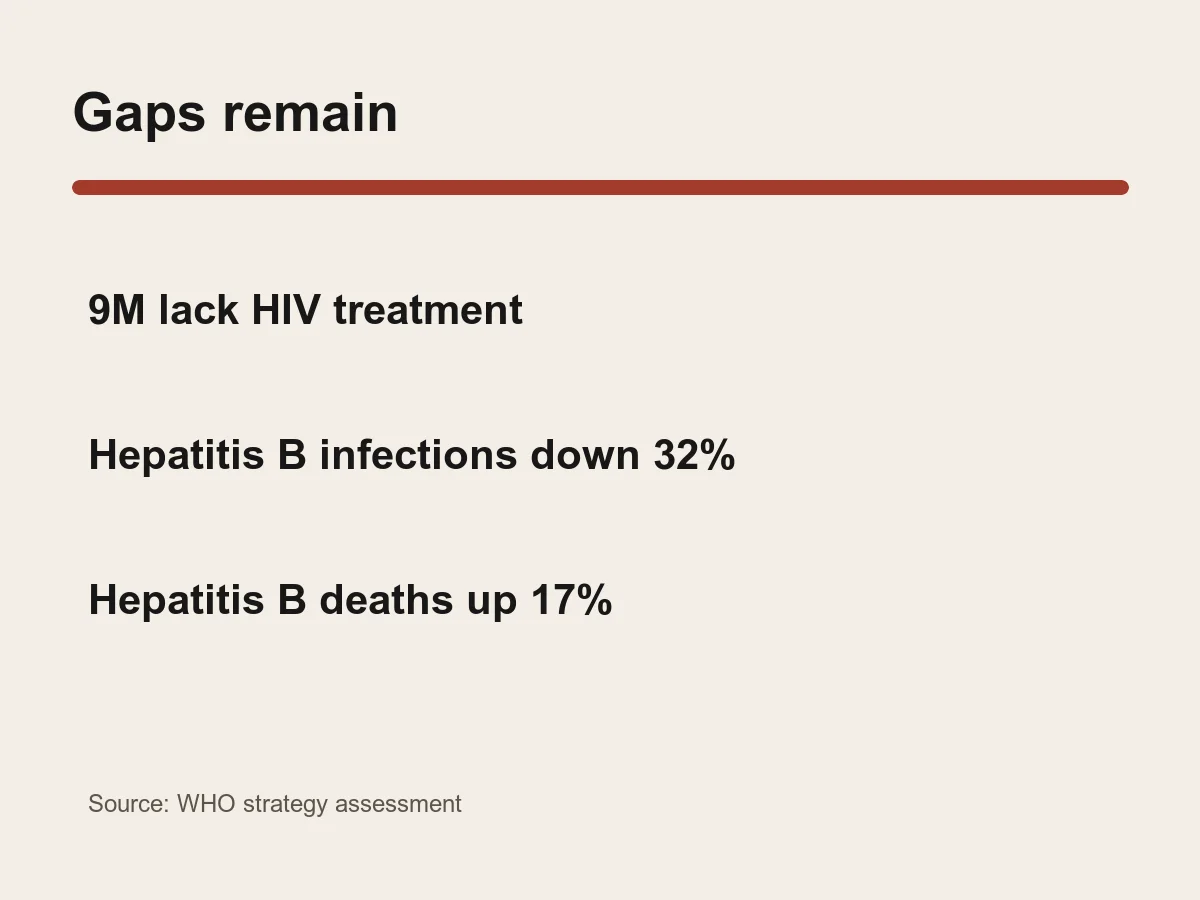
Roughly 9 million people living with HIV still lacked treatment at the end of 2025, according to the agency. Closing that gap requires diagnosis, affordable medicines, durable supply chains and services people can reach without stigma or discrimination.
The hepatitis picture is mixed. Since 2015, WHO says new hepatitis B infections declined 32% and hepatitis C deaths declined 12%, while deaths associated with hepatitis B increased 17%.
Those percentages use different conditions and outcome measures, so they should not be collapsed into one combined trend. WHO's point is that prevention gains coexist with persistent gaps in testing, treatment and mortality reduction.
The assessment highlights service integration: offering HIV, hepatitis and STI prevention, testing and treatment through connected programs rather than requiring people to navigate separate systems for related needs.
WHO also cited new prevention tools. Injectable lenacapavir had been introduced in 10 countries, with 14 more planning introduction, but rollout, affordability, eligibility and supply will determine how broadly the option changes prevention access.
The figures are population-level public-health indicators, not guidance for an individual's treatment. Clinical decisions require a qualified health professional and the protocols available in the patient's country or health system.
WHO's next global strategies will be judged not only by aggregate declines but by whether countries reach the people still outside care, sustain financing and document reductions across HIV, hepatitis and STIs without leaving high-burden communities behind.