
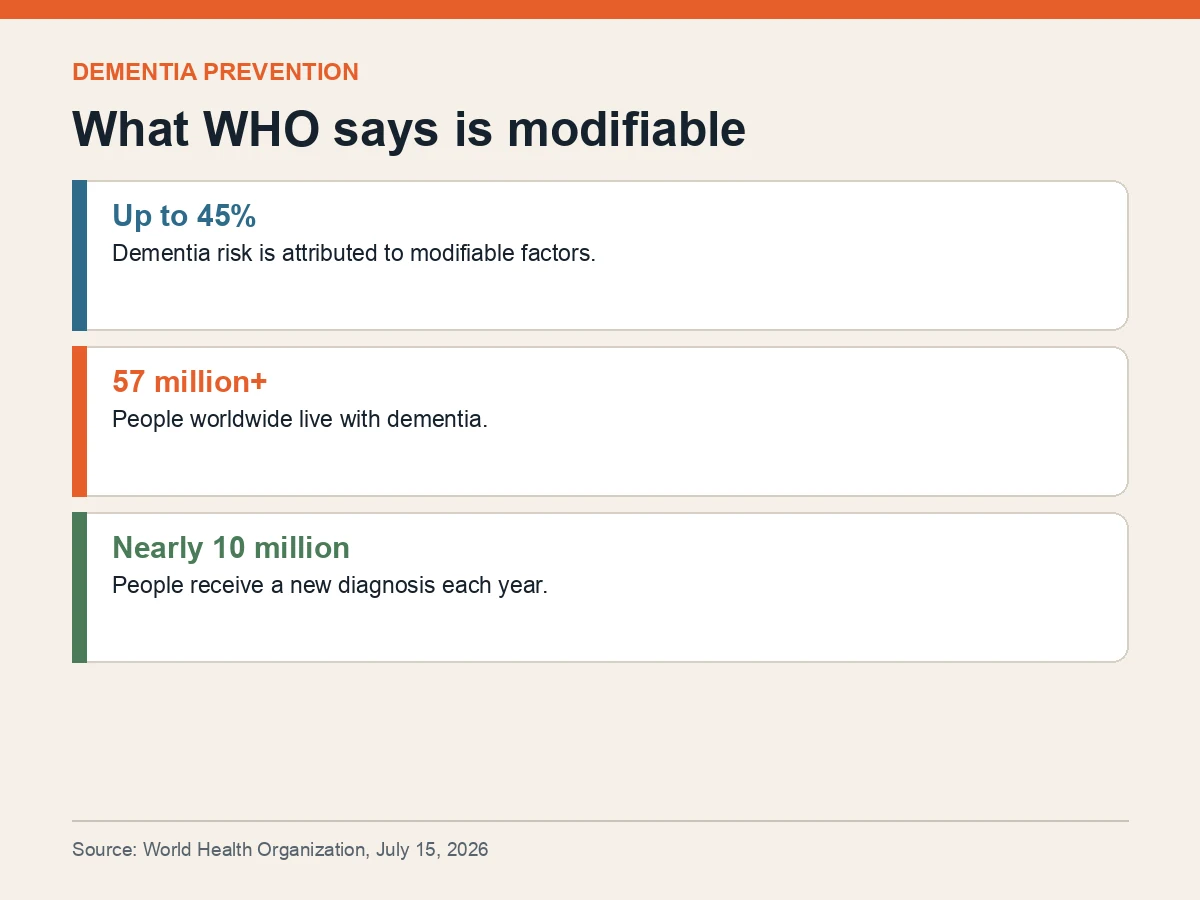
The World Health Organization has updated its dementia risk-reduction guidance, saying up to 45% of risk can be attributed to modifiable factors across the life course.
That figure is a population estimate, not a promise that an individual can prevent dementia. More than 57 million people live with the condition worldwide, and nearly 10 million are newly diagnosed each year.
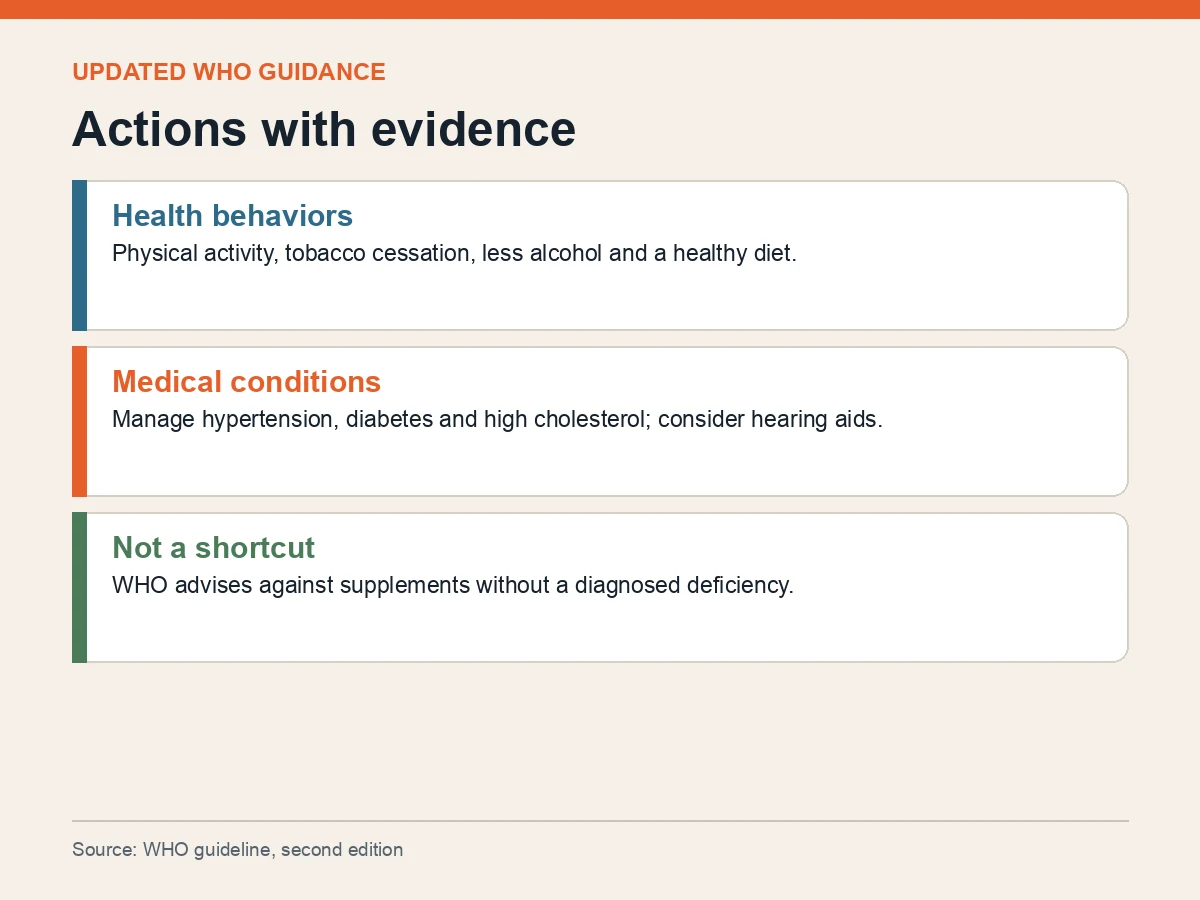
The guideline recommends familiar health behaviors—physical activity, stopping tobacco use, reducing alcohol consumption and eating a healthy diet—alongside cognitive stimulation and social engagement for adults with normal cognition or mild cognitive impairment.
It also emphasizes medical risk management. Treating hypertension, diabetes and high cholesterol can reduce risks that affect both cardiovascular and brain health. Hearing aids may be offered as part of a broader strategy.
A new recommendation addresses air pollution, extending the guidance beyond clinical care and personal habits. Exposure depends partly on housing, transportation and environmental policy, so not every risk can be managed by individual choice.
WHO explicitly rejects several shortcuts. In the absence of a diagnosed deficiency, it does not recommend vitamins B or E, omega-3 polyunsaturated fatty acids, or multivitamin and mineral supplements for reducing cognitive decline or dementia risk.
The organization estimates dementia’s annual global economic cost at $1.3 trillion, about half driven by unpaid care from families and friends. That burden gives prevention policy significance even when no intervention eliminates risk.
The updated edition expands the evidence base used in WHO’s 2019 guidance and adds environmental exposure and tailored multidomain interventions. It also identifies areas where evidence remains insufficient.
For readers, the practical lesson is modest rather than magical: risk can be shifted through sustained health, social and environmental measures, but cognitive symptoms still warrant professional evaluation and risk reduction does not equal a cure.
Because the guideline targets health systems as well as clinicians, implementation also depends on whether services and environmental policies make recommended options realistically available.