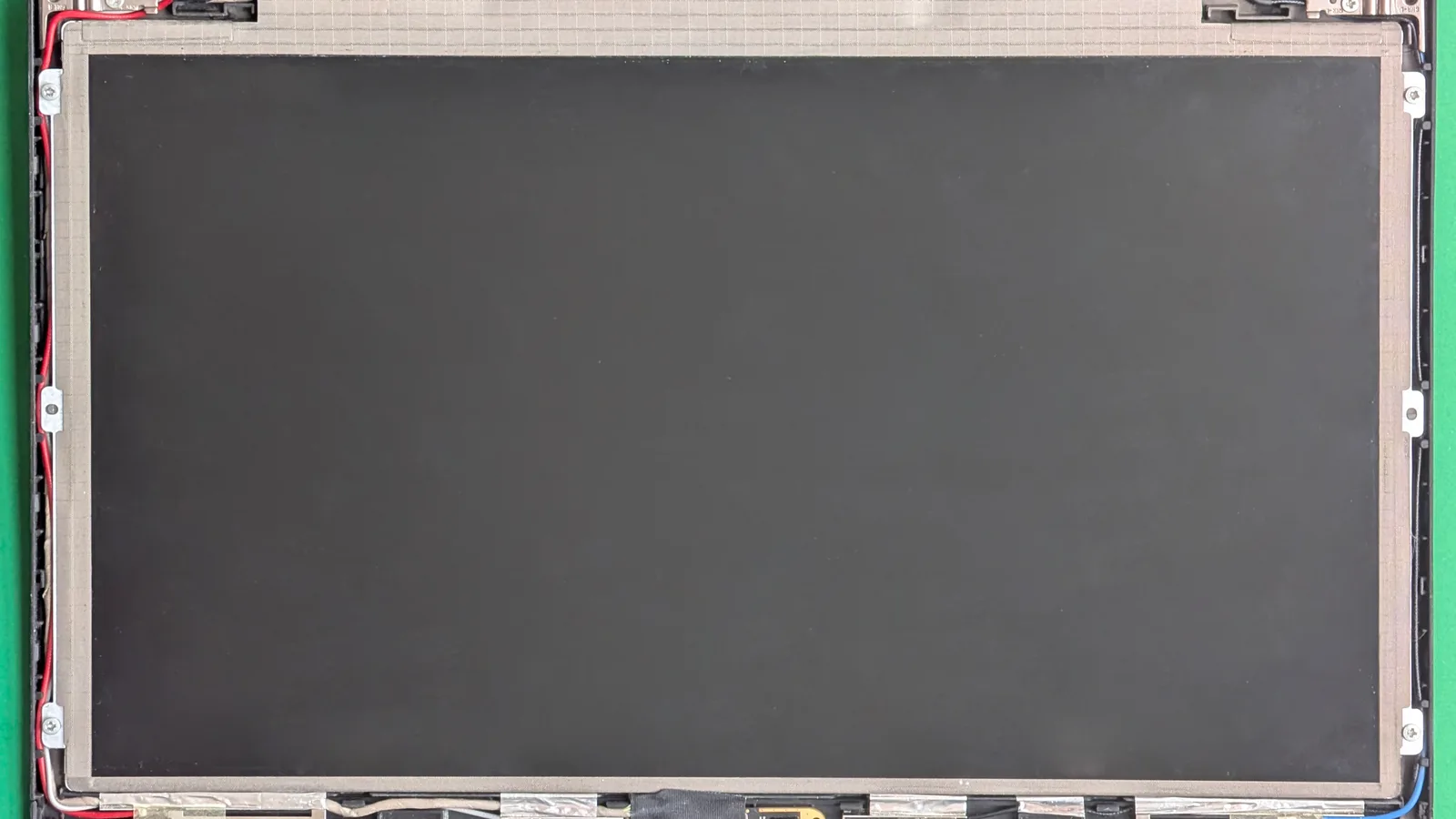
The U.S. International Trade Commission has issued a limited exclusion order covering specified infringing LCD glass substrates and related products after finding a violation of Section 337 of the Tariff Act.
The commission's Aug. 6 vote concerned remaining claims of U.S. patents 8,642,491 and 8,640,498 held by Corning. The public notice was published in the Federal Register on Tuesday.
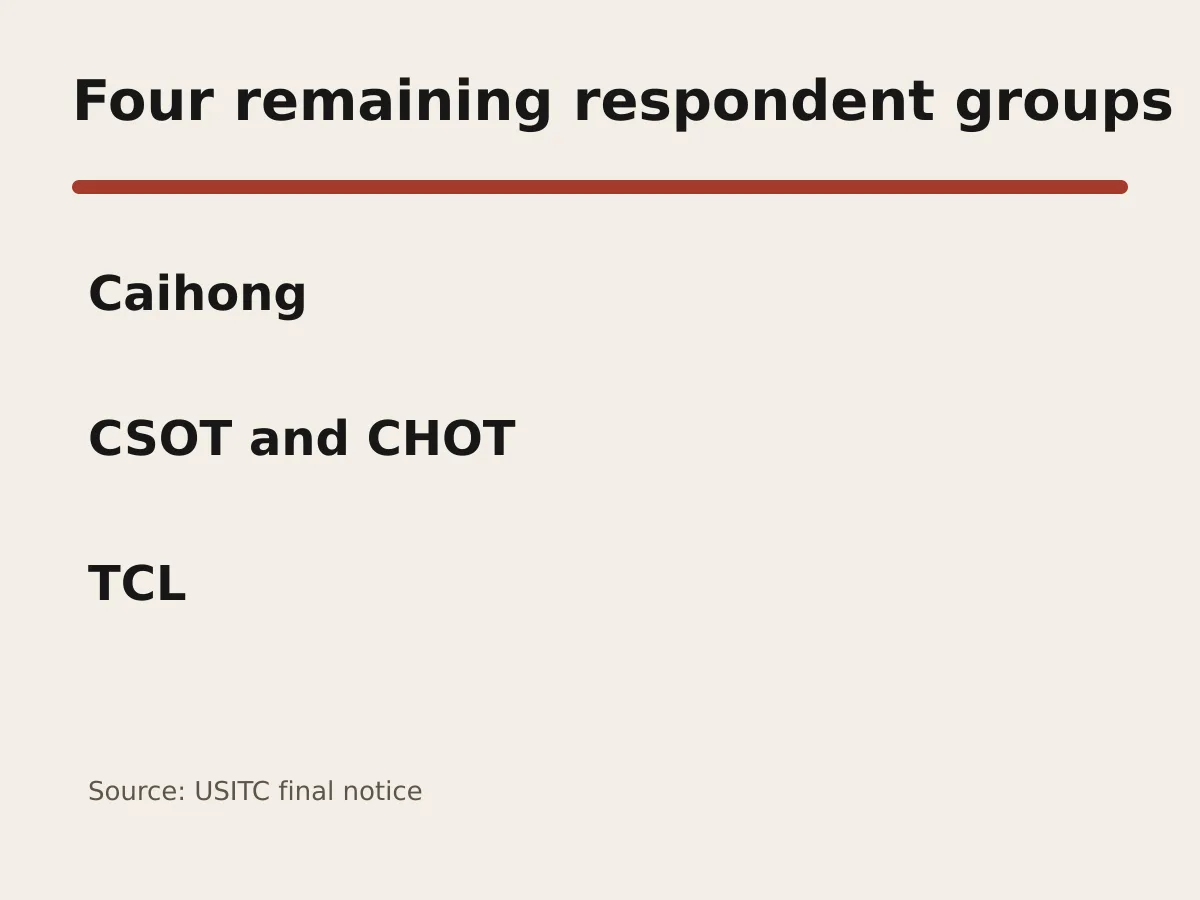
The exclusion order applies to unlicensed infringing articles imported for four remaining respondent groups identified in the notice: Caihong, CSOT, CHOT and TCL. It is not a blanket prohibition on all LCD panels, televisions or computers.
The commission also issued a cease-and-desist order against TTE Technology, which does business as TCL North America. That order addresses specified domestic commercial conduct involving covered articles.
During the presidential review period, covered imports may enter under a bond set at zero percent of entered value. The bond rate does not cancel the exclusion order; it is the commission's term for the review period.
The investigation originally named additional respondents, including companies later removed through settlements or other terminations. Those earlier departures are distinct from the final merits determination concerning the remaining respondents.
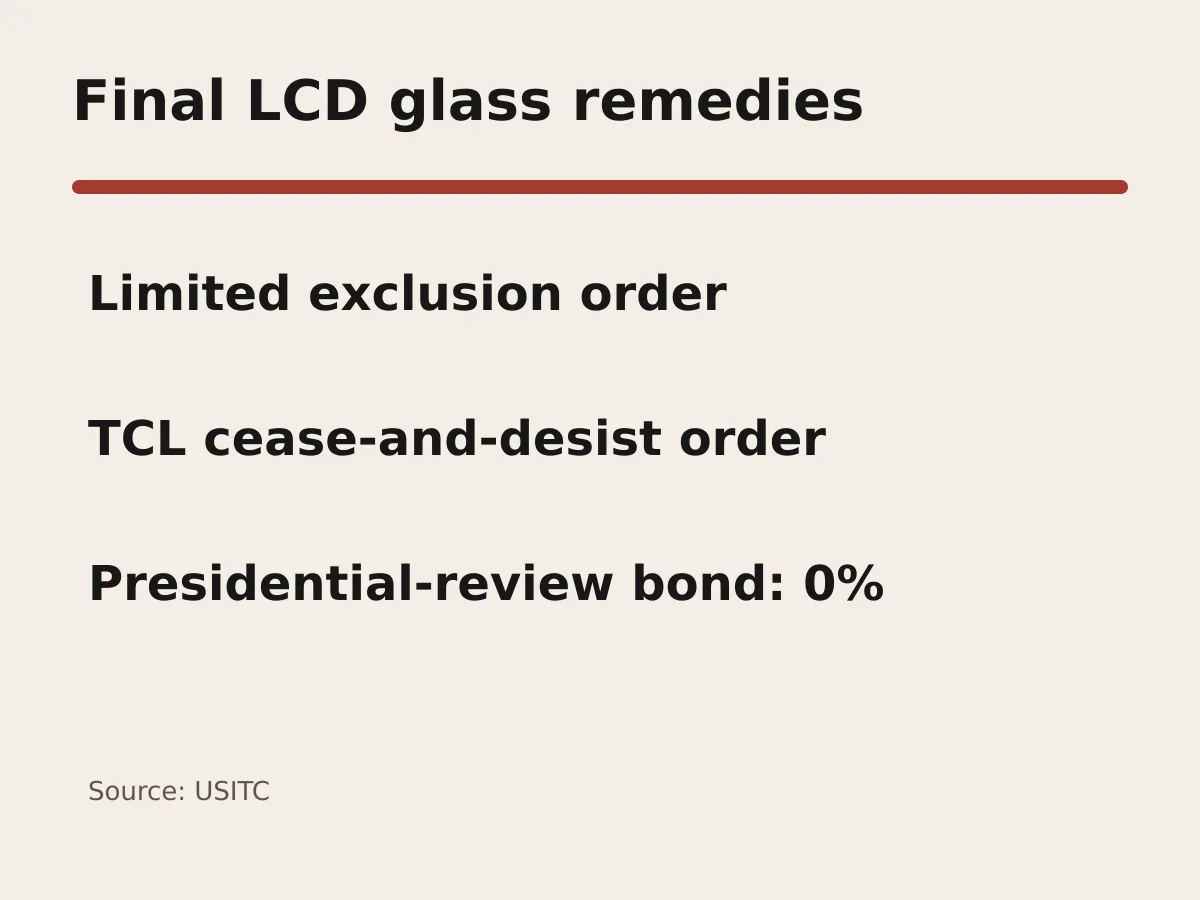
A limited exclusion order is narrower than a general exclusion order. Its scope turns on the patent claims, the products and the respondent relationships described in the commission record.
The notice does not predict how many products will be stopped at the border or whether retail availability will change. Customs administration, licensing and product-specific infringement questions can affect the practical result.
The commission terminated the investigation after issuing the final remedial orders. Parties may pursue the review options available under federal law, but the published notice records the commission's current final action.