The United States will impose minimum import prices on polysilicon and several downstream solar products beginning at 12:01 a.m. Eastern time on Dec. 4, 2026, under a presidential proclamation published Tuesday.
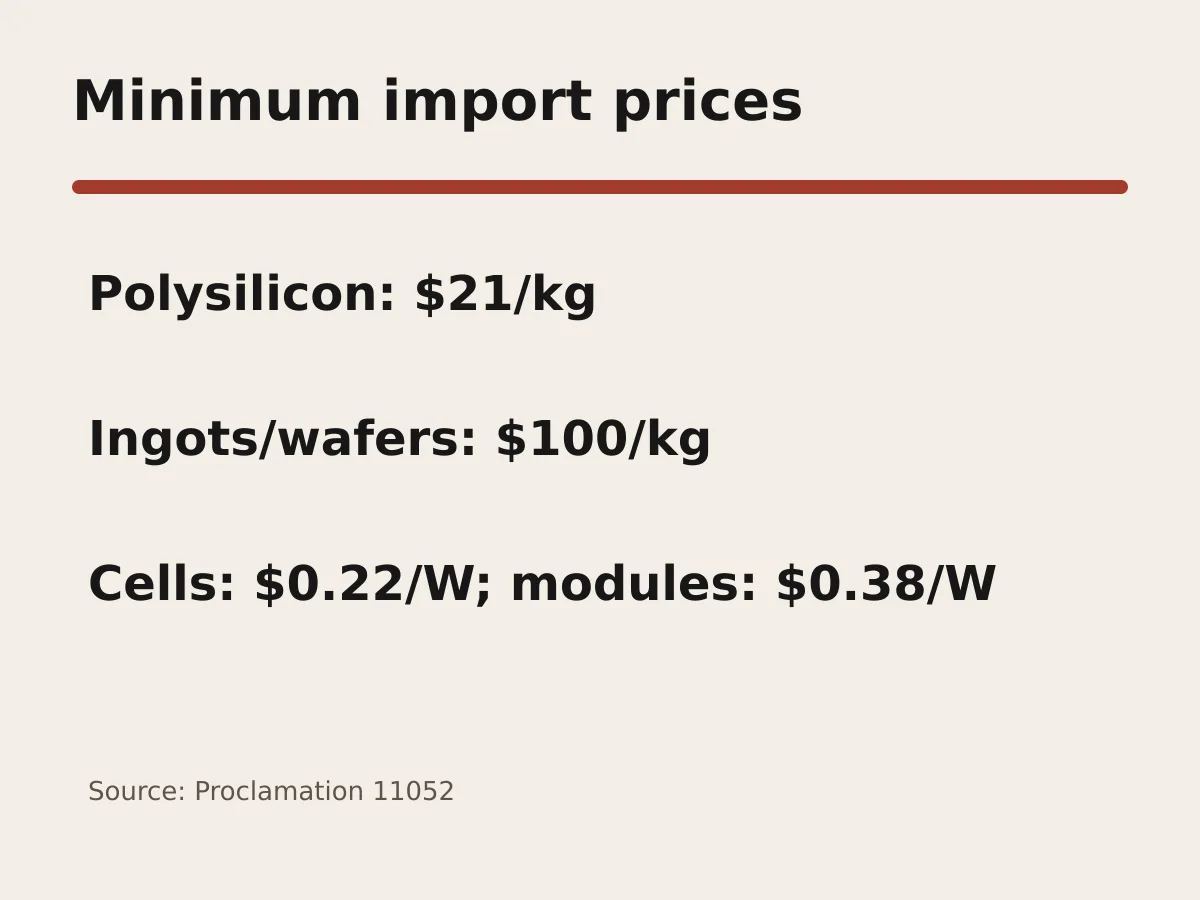
The floors are $21 per kilogram for raw polysilicon, $100 per kilogram for polysilicon ingots and wafers, 22 cents per watt for solar cells and 38 cents per watt for solar modules. Products entered below the applicable floor will be valued at that minimum for the remedy described in the proclamation.
The action also generally adds a 15% ad valorem duty to covered imports. The proclamation contains country-specific treatment and an annex of tariff classifications, so the headline rates do not by themselves determine the charge on every shipment.
The effective date matters: the measures were announced in August but are not scheduled to begin until December. The document directs Customs and Border Protection to administer the remedy and Commerce to monitor imports and market conditions.
The administration says global polysilicon production capacity has increased by more than 270% since 2020 and inventories reached about 400,000 metric tons at the end of 2024. Those figures are executive-branch findings supporting the action, not independent forecasts of future demand or prices.
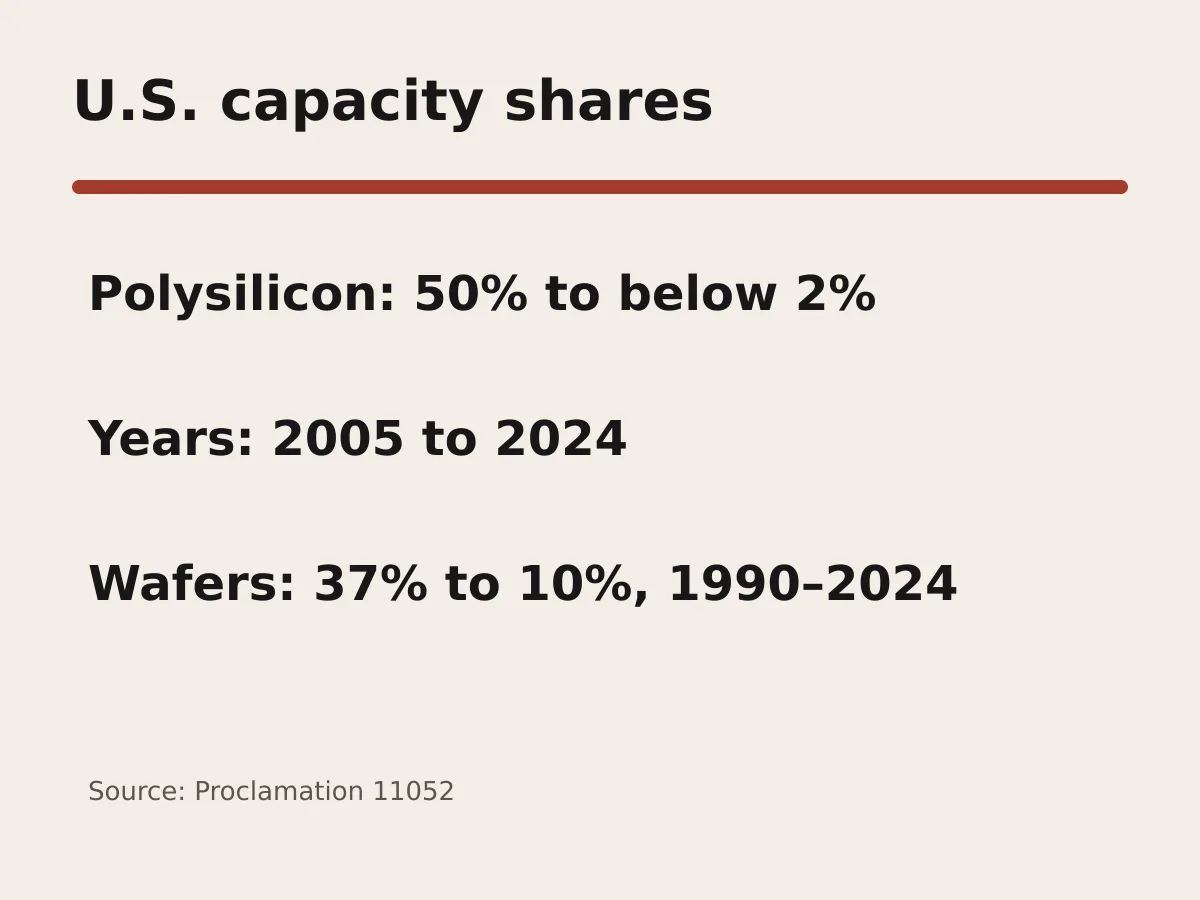
The proclamation also says the U.S. share of global polysilicon capacity declined from 50% in 2005 to less than 2% in 2024. For wafer fabrication, it cites a decline from 37% in 1990 to 10% in 2024.
Polysilicon is a foundational material for most crystalline-silicon solar cells. It is refined, formed into ingots and sliced into wafers before cells and modules are assembled, which is why the remedy spans several points in the production chain.
A minimum import price differs from an ordinary percentage tariff because it establishes a floor for the covered product category. The additional 15% duty is a separate element, and the annex and country provisions control how the two interact.
The proclamation does not estimate what U.S. consumers or project developers will pay after Dec. 4. Exchange rates, contracts, product mix, country treatment and domestic supply can all affect market prices.
Importers therefore need the tariff classifications and customs instructions, not only the four headline floors. The Federal Register text and annex remain the controlling record for product coverage and effective timing.