
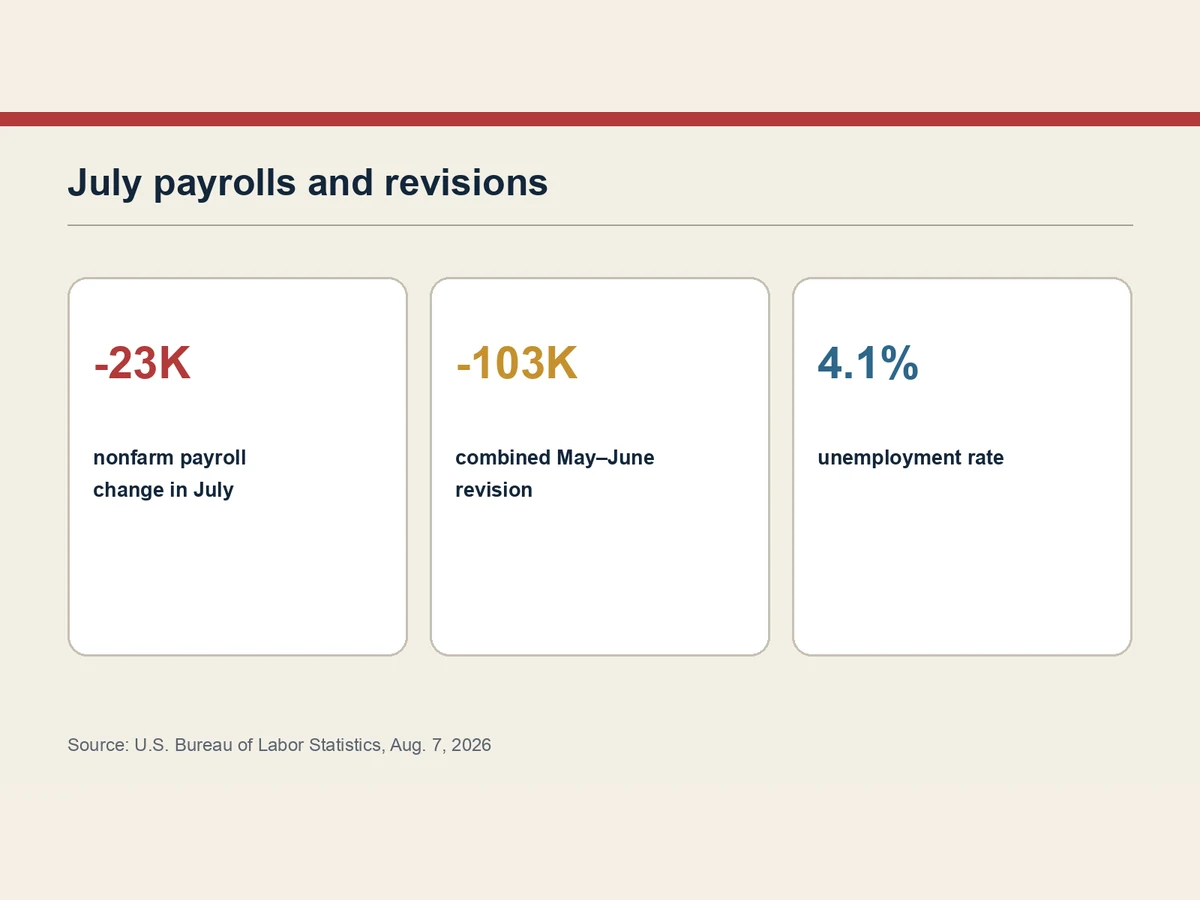
U.S. employers shed a seasonally adjusted 23,000 payroll jobs in July while the unemployment rate held at 4.1%, the Bureau of Labor Statistics reported Friday. The agency characterized both measures as little changed.
The revisions sharpened the report. BLS cut May’s gain from 129,000 to 63,000 and June’s from 57,000 to 20,000, leaving the two months together 103,000 jobs below the figures previously published.
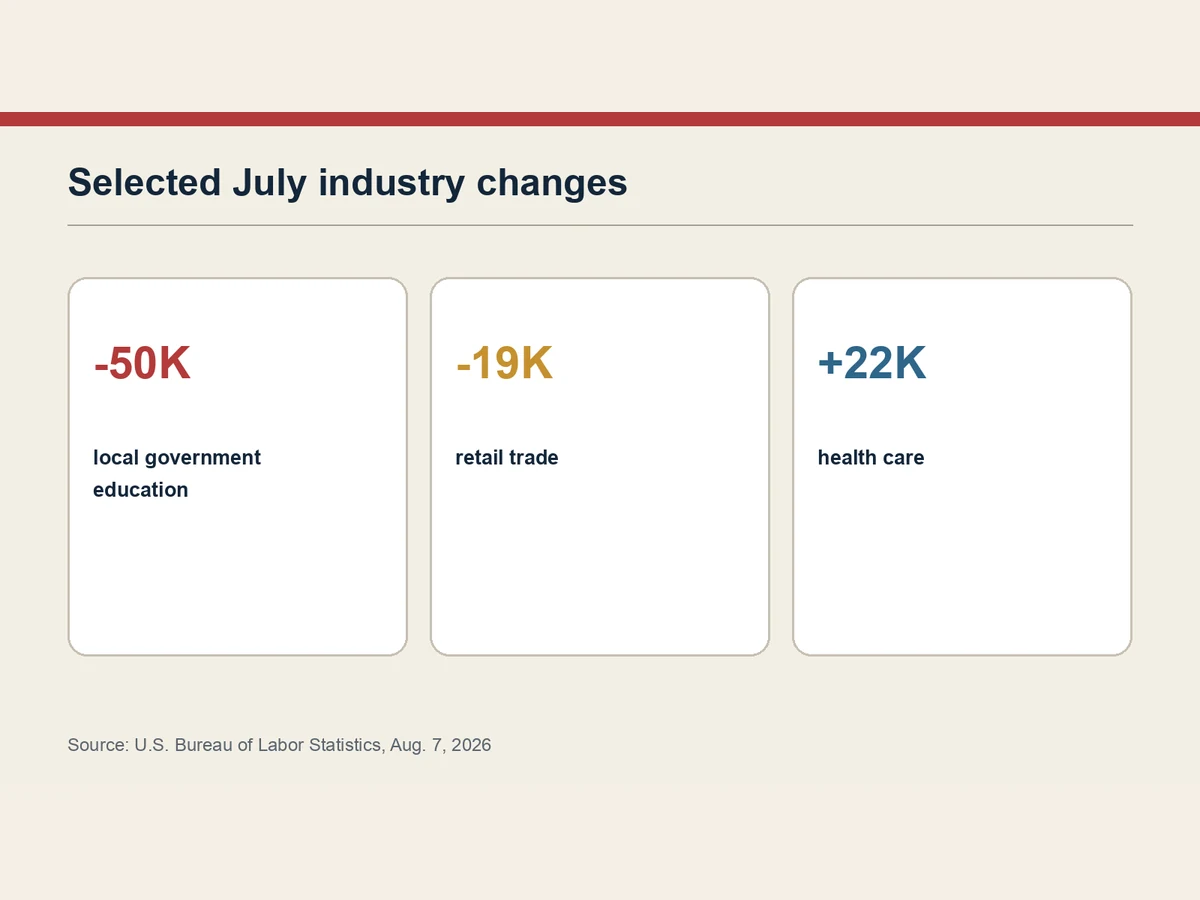
Industry detail was uneven. Local government education lost 50,000 jobs and retail trade lost 19,000. Health care added 22,000 positions, but that was slower than its average monthly gain of 36,000 over the prior year.
Financial activities continued to trend down, losing 14,000 jobs in July and 121,000 since a May 2025 peak. Most other major industries showed little monthly change, according to the establishment survey.
The separate household survey put the number of unemployed people at 6.9 million. Temporary layoffs rose by 153,000 to 921,000, while the number of permanent job losers was little changed at 1.7 million.
Labor-force participation was 61.4% and the employment-population ratio was 58.9%. Both were little changed in July, but since January they have declined by 0.7 and 0.5 percentage point, respectively.
Average hourly earnings for private nonfarm workers rose two cents to $37.62. That was a 3.2% increase from a year earlier. The average workweek remained 34.3 hours.
The payroll and household estimates come from different surveys and can move differently month to month. Payroll figures are also preliminary: BLS revises them as more employer reports arrive and seasonal calculations are updated.
The next employment report, covering August, is scheduled for Sept. 4. BLS will also publish a preliminary annual benchmark estimate Aug. 28, based on broader unemployment-insurance tax records. The July release leaves a clear near-term signal—job growth has softened—but not a final verdict on the direction of the labor market.