
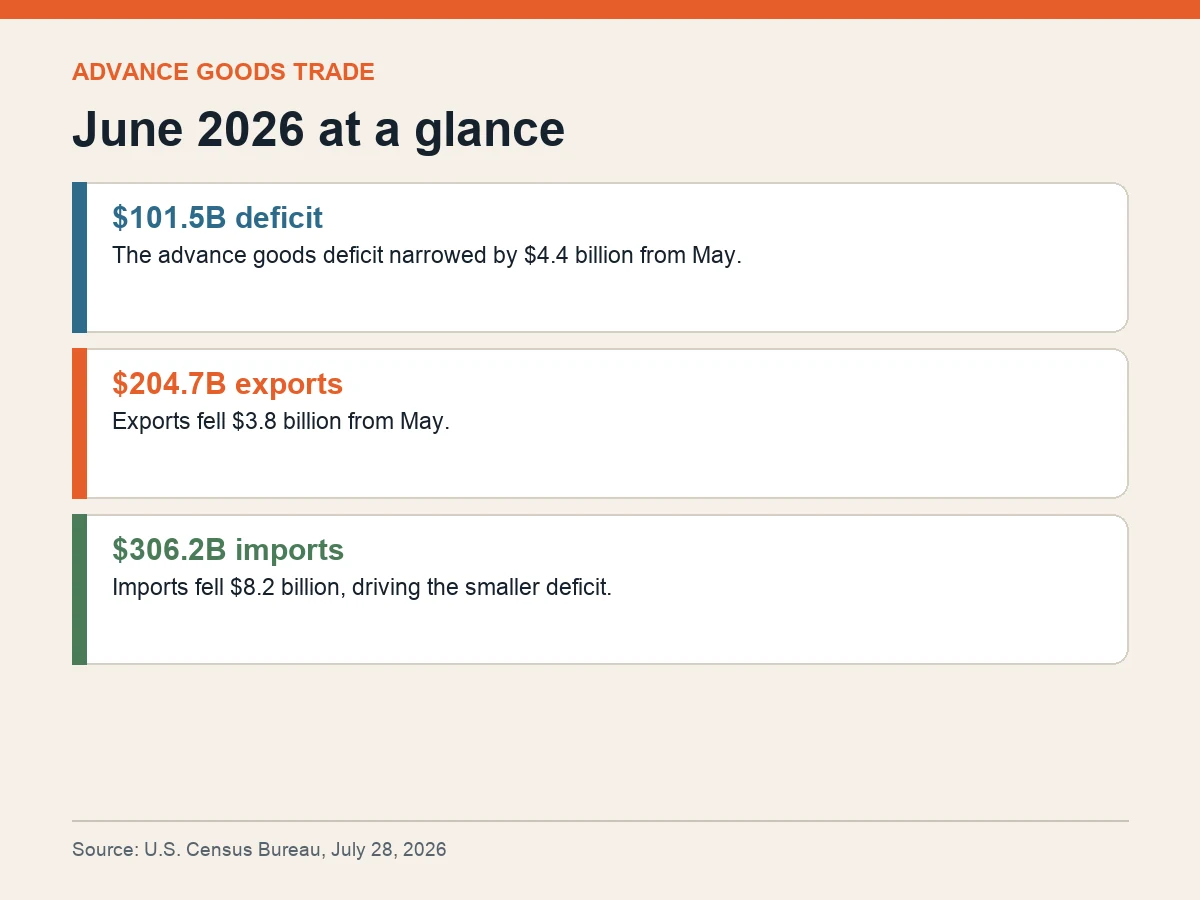
The U.S. goods trade deficit narrowed to an estimated $101.5 billion in June, as imports fell more than twice as much as exports in the Census Bureau’s advance monthly accounting.
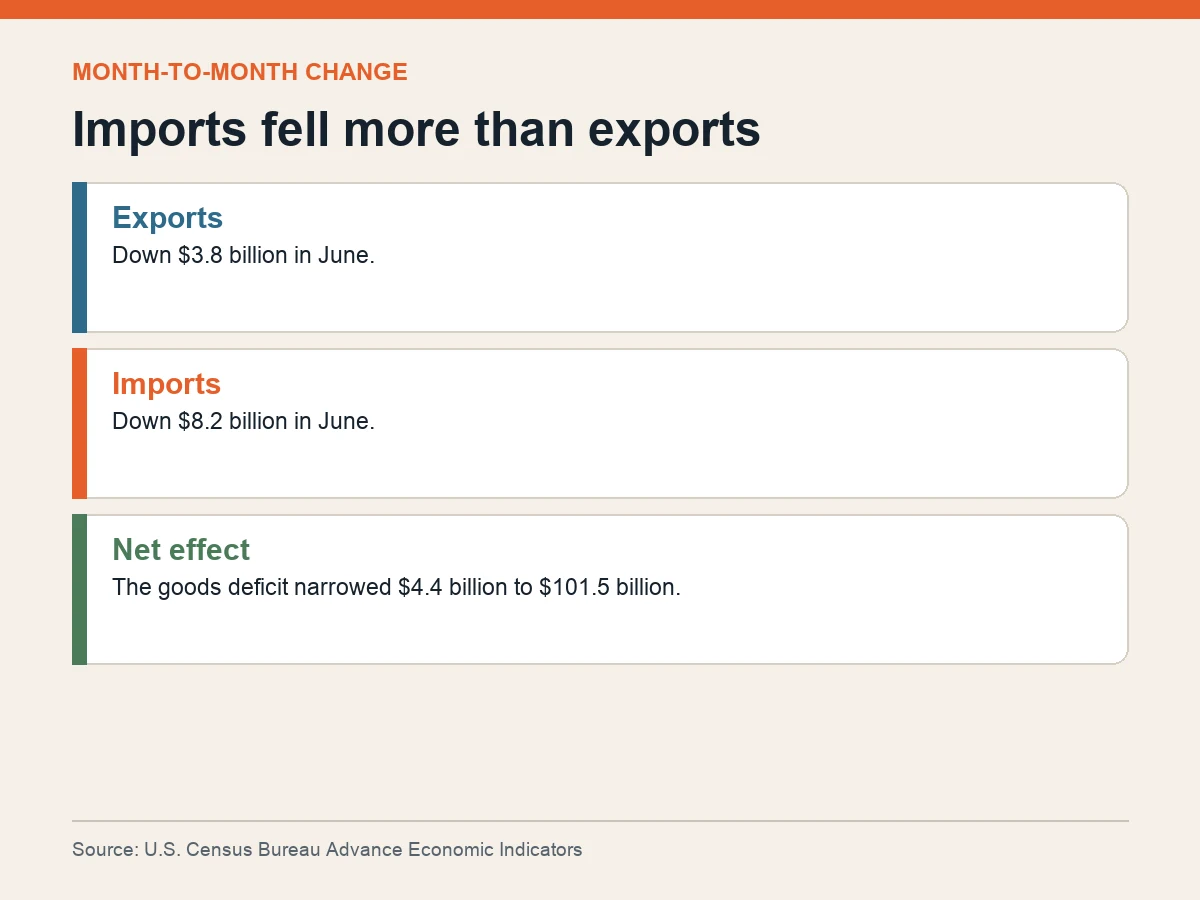
Goods exports were $204.7 billion, down $3.8 billion from May. Goods imports were $306.2 billion, down $8.2 billion. The larger import decline reduced the gap by $4.4 billion from May’s revised $105.9 billion.
A smaller deficit does not by itself mean trade expanded. Both sides of the ledger declined. The balance narrowed because imports contracted by more dollars than exports, not because U.S. exports grew faster than purchases from abroad.
The figures are advance estimates for goods only. They arrive before the fuller monthly U.S. international trade release, which combines detailed goods data with services such as travel, transport, finance and intellectual-property transactions.
That distinction is important for headlines. The $101.5 billion number should not be called the total U.S. trade deficit because the United States typically records a services surplus that offsets part of the goods deficit in the combined account.
The same report estimated wholesale inventories at $945.9 billion at the end of June, up 0.3% from May, with a stated margin of error of 0.2 percentage point. Retail inventories were estimated at $831.3 billion, statistically unchanged from May within a 0.2-point margin.
Inventory estimates and trade flows offer different signals. Stocks can rise because firms expect demand, because goods arrived faster than sales, or because prices and seasonal adjustment moved the measured value. The release does not assign one cause to June’s inventory changes.
Advance trade figures are also revised as more complete records become available. Census compiles goods statistics primarily from shipment documentation, including automated records associated with goods entering or leaving the United States.
The clearest June conclusion is mechanical: exports decreased, imports decreased more, and the preliminary goods gap narrowed. Any claim about the broader economy or the effect of trade policy requires additional releases and a longer time series.