
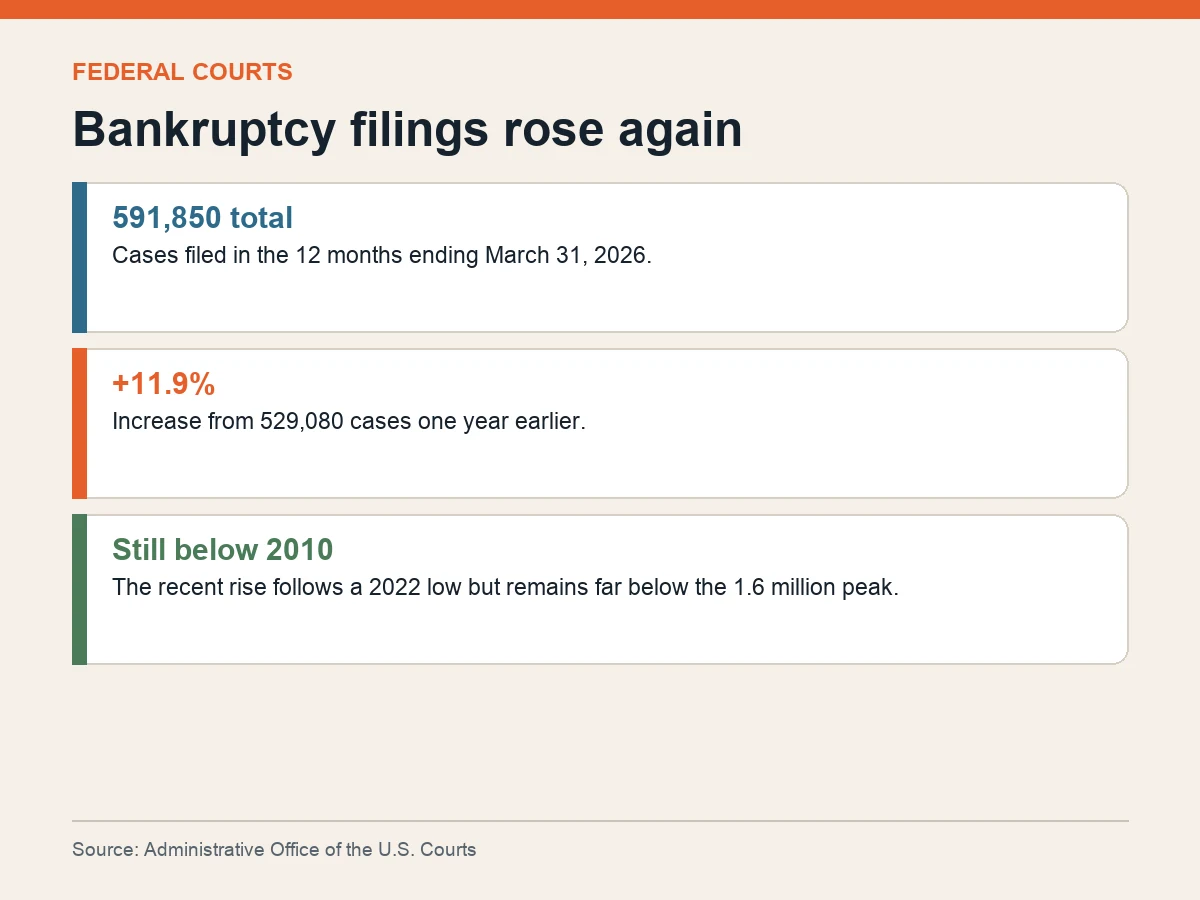
U.S. bankruptcy filings rose 11.9% in the 12 months ending March 31, reaching 591,850 cases, according to the Administrative Office of the U.S. Courts. The total was up from 529,080 in the comparable period a year earlier.
The increase appeared on both sides of the docket. Business filings rose 11.4%, from 23,309 to 25,960. Non-business filings, which include consumer cases, increased 11.9%, from 505,771 to 565,890.
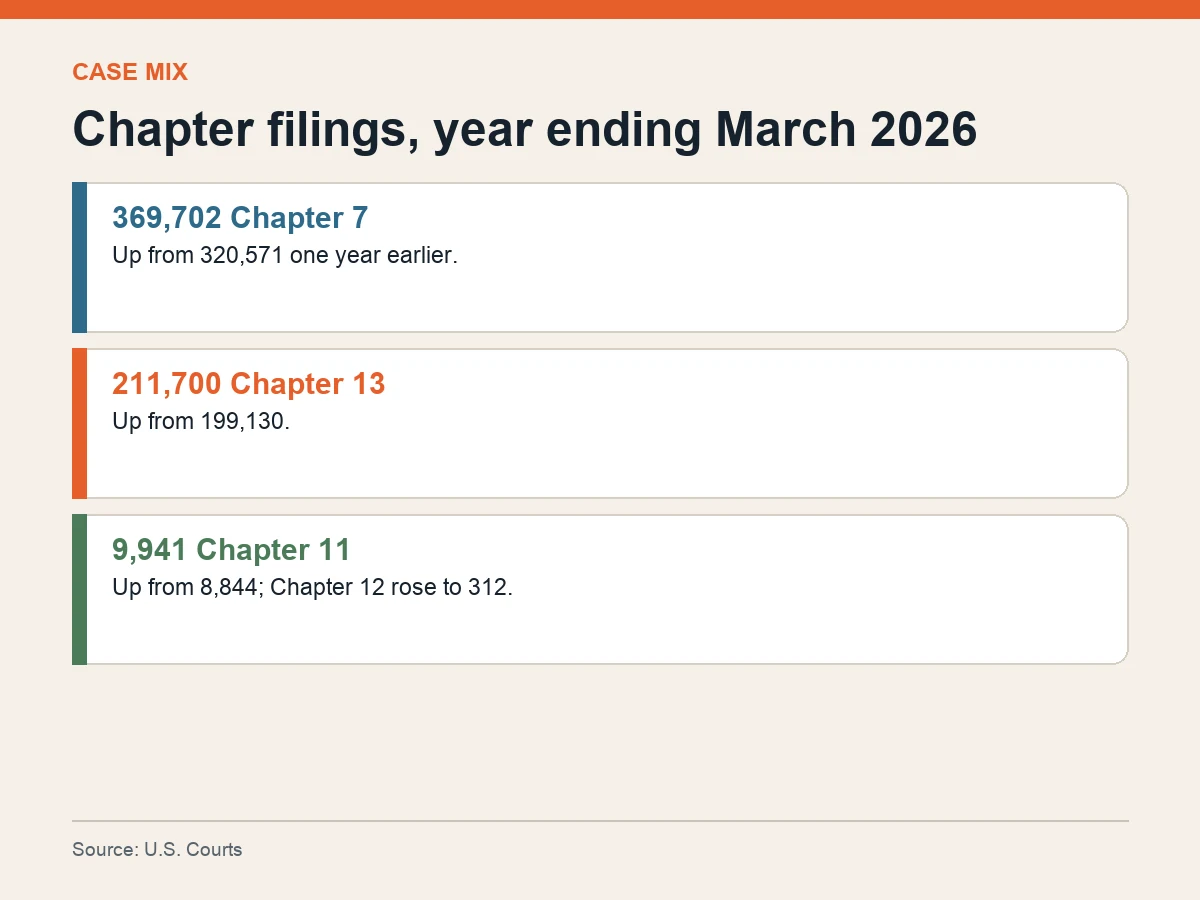
Chapter 7 accounted for the largest category, with 369,702 filings, up from 320,571. Chapter 13 filings reached 211,700, compared with 199,130 a year earlier. Chapter 11 filings rose from 8,844 to 9,941, while Chapter 12 cases increased from 259 to 312.
Those chapters serve different legal structures. Chapter 7 generally involves liquidation of nonexempt assets, Chapter 13 allows qualifying individuals to pursue repayment plans, Chapter 11 is commonly used for reorganizations, and Chapter 12 is tailored to family farmers and fishermen.
The latest rise extends a reversal that began after total filings fell to 380,634 in the year ending June 2022. The judiciary says filings have increased every quarter since that low.
Even after the recent increases, the count remains far below the nearly 1.6 million cases reported in the year ending September 2010. That longer comparison matters because the current trend is upward from an unusually low recent base, not a return to the post-financial-crisis peak.
The data measure cases filed, not outcomes. A filing can be dismissed, converted to another chapter, discharged or resolved through a confirmed plan. The figures therefore do not show how many debtors ultimately receive relief or how much debt is affected.
The report also does not assign a cause. Interest rates, household expenses, medical costs, business conditions and the timing of accumulated financial stress can all affect bankruptcy decisions, but a national filing count cannot separate those influences.
The defensible conclusion is narrower: more households and businesses entered the federal bankruptcy system over the latest 12 months, and the increase reached every major chapter listed by the judiciary. The next quarterly release will show whether that broad rise is continuing or beginning to level off.