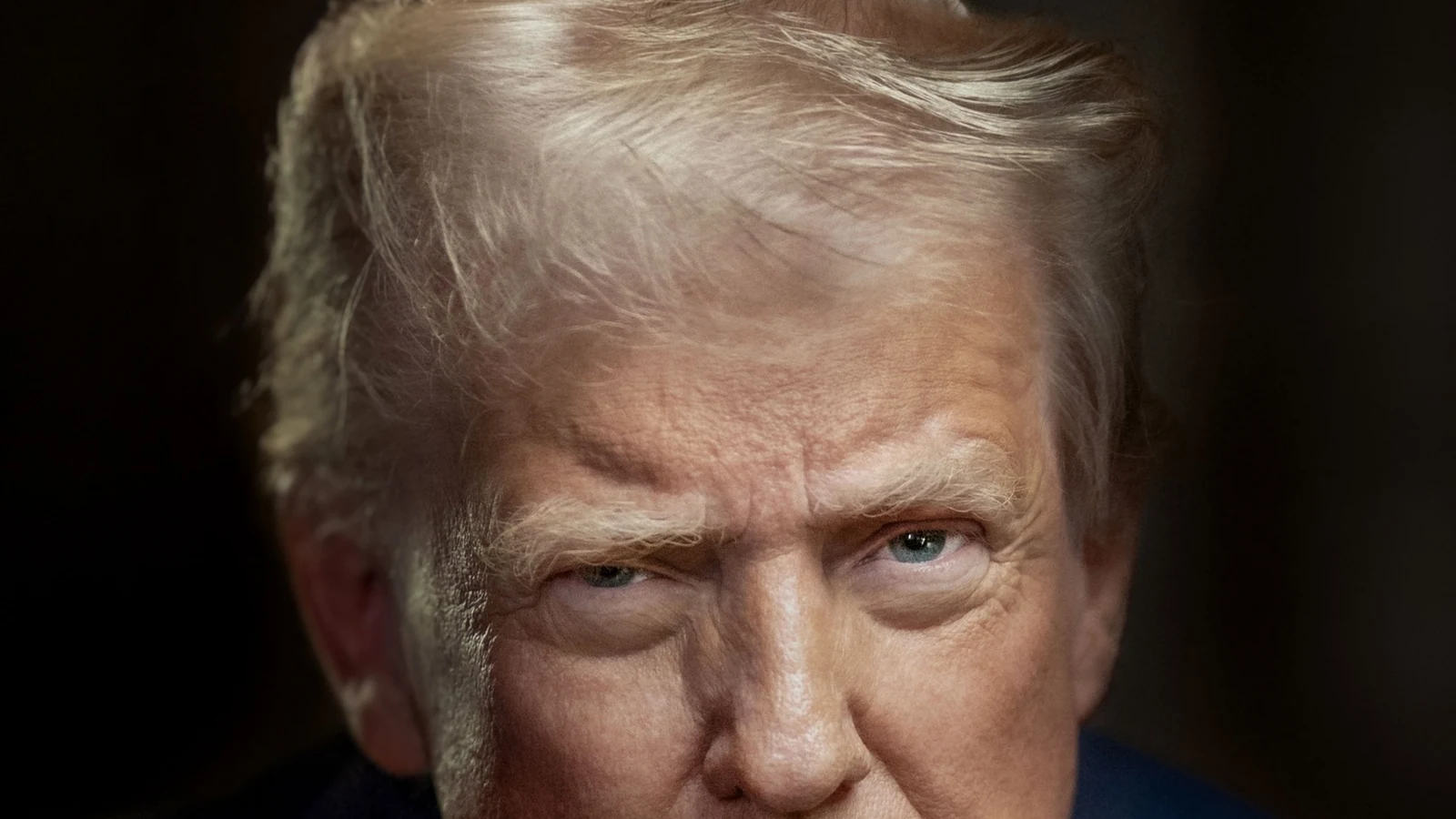
President Donald Trump's endorsement remains one of the most valuable assets in a Republican primary. It is also one of the easiest political measurements to misuse.
A conventional scorecard counts every endorsed winner, divides by all endorsements and announces a success rate. That method treats an unopposed incumbent as equivalent to a contested challenger. It ignores when an endorsement occurred, whether the candidate was already leading, how much outside money entered the race and whether the endorsed candidate won a nomination or merely advanced to a runoff.
The most revealing 2026 races are therefore not the easiest wins. They are the contests in which Republican voters had a meaningful alternative.
The clearest display of power came in Kentucky
Trump-backed Ed Gallrein defeated U.S. Rep. Thomas Massie, one of the president's most persistent Republican critics. Massie had opposed Trump's tax legislation, criticized the war with Iran and pressed for release of files related to Jeffrey Epstein. Trump recruited and endorsed Gallrein, campaigned against Massie and celebrated the result.
The Associated Press called it the most expensive U.S. House primary in history. Pro-Israel organizations also spent heavily against Massie. That makes the race strong evidence of Trump's power to define loyalty inside the party—but not a controlled experiment proving the endorsement alone caused the outcome.
Republican Sen. Bill Cassidy of Louisiana also lost his primary after trying to repair a relationship damaged by his vote to convict Trump in the president's second impeachment trial. In Texas, Trump endorsed Attorney General Ken Paxton after early voting had begun in the runoff; Paxton then defeated four-term Sen. John Cornyn. These contests sent an unmistakable warning to Republican officeholders: open defiance can invite a president-backed primary.
Governor races supplied visible limits
Minnesota Republicans rejected Trump-backed Mike Lindell and chose state House Speaker Lisa Demuth for governor. The result was especially notable because Trump endorsed Lindell on Election Day, when much of the vote had already been shaped. It was also not an isolated gubernatorial miss: the AP reported that Trump's preferred candidates had previously lost Republican governor primaries in Georgia and Iowa.
Late endorsements deserve their own category. A same-day statement may signal loyalty or affect a small group of undecided voters, but it cannot reasonably receive the same causal weight as months of campaigning, advertising and organization.
South Carolina offers another category. Trump backed Darline Graham in the special Republican primary for the Senate seat formerly held by her late brother, Lindsey Graham. She advanced to an August 25 runoff with U.S. Rep. Ralph Norman. That is neither a win nor a loss yet.
A better scorecard
A useful endorsement ledger should record at least five things: the endorsement date; the candidate's status at that moment; whether the contest was competitive; the election rule; and the final outcome.
It should then divide races into groups:
- Incumbent or prohibitive favorite: evidence that Trump aligned with the party's likely winner.
- Competitive open primary: a meaningful test of preference among viable candidates.
- Challenge to a critic: evidence of Trump's ability to punish disloyalty.
- Late endorsement: limited time to influence voting.
- Runoff or unresolved contest: no final score yet.
Under that framework, 2026 shows both reach and selection. Trump has helped remove critics and shape nominations. He has also lost several competitive gubernatorial choices. The endorsement is powerful, but voters, local party organizations, candidate quality and campaign context remain consequential.
Influence is not the same as persuasion
An endorsement can work in at least three ways. It can persuade voters. It can tell donors and activists whom to support. Or it can select a candidate who was already likely to win. Public result totals alone cannot distinguish those mechanisms.
That is why the honest conclusion is narrower than the loudest one. Trump's standing among Republican primary voters gives him unusual power to reward allies and punish critics. The record does not show that his candidate wins every serious contest—or that a single percentage can explain why.
Methodology
This article evaluates only publicly documented endorsements discussed in the cited AP coverage. It does not publish a comprehensive numerical win rate because a complete, timestamped first-party endorsement ledger has not yet been reconciled. Runoff candidates are not scored as final winners.