
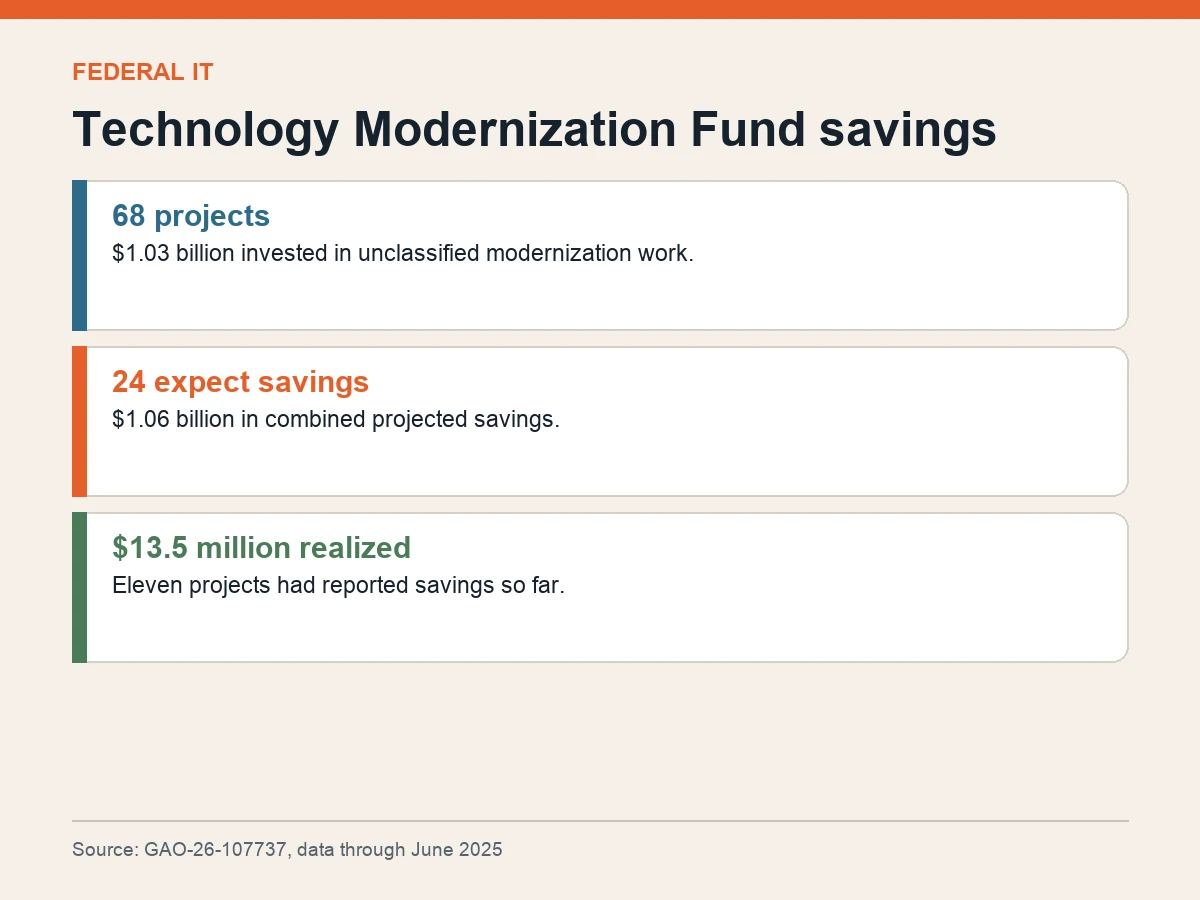
The federal Technology Modernization Fund had invested about $1.03 billion in 68 unclassified information-technology projects by June 2025, while 11 projects had collectively documented about $13.5 million in realized savings, according to a new Government Accountability Office review.
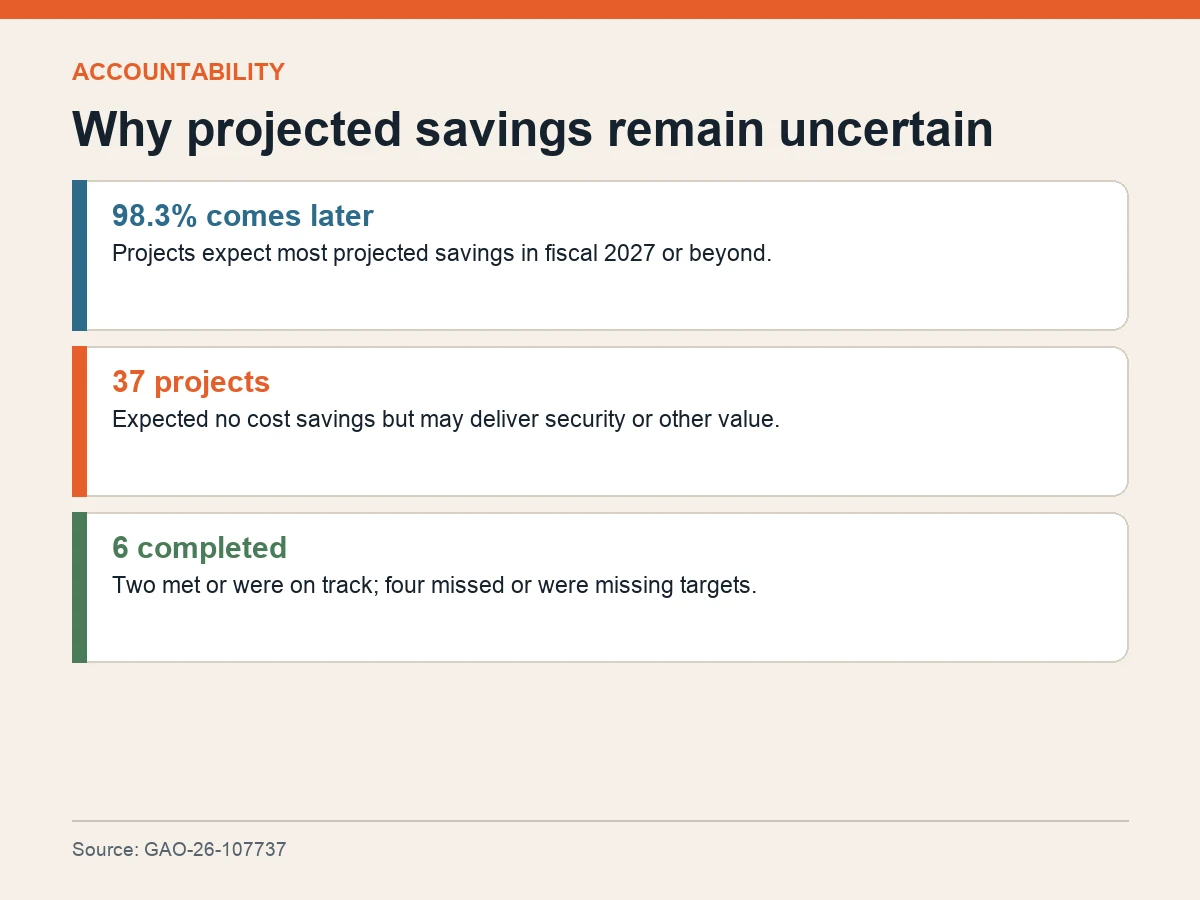
The gap is substantial, but it is not a complete verdict on the program. Twenty-four projects expected about $1.06 billion in combined savings, and projects scheduled 98.3% of that amount for fiscal year 2027 or later. The watchdog’s latest data therefore compare money already invested with benefits that are mostly still forecasts.
Congress created the fund to help agencies replace or improve aging systems. Projects can receive money up front and repay the fund over time, allowing future modernization work to reuse some of the capital. The program can also support cybersecurity, service delivery and reliability improvements that do not appear as direct cost savings.
That distinction shows up in the portfolio. Thirty-seven projects did not expect any cost savings, GAO said, but were intended to provide other value such as reducing security risks. Seven other projects had been canceled by June 2025 and no longer expected savings.
The clearest accountability test comes from completed work. Six finished projects expected cost savings. Two met or were on track to meet their targets within the 10% variance threshold used by the Office of Management and Budget, while four did not meet or were not on track to meet them.
Agency officials attributed misses to changes such as removing planned functionality and paying more than expected to migrate systems. Those adjustments reduced actual savings by tens of millions of dollars compared with estimates, GAO reported.
Procurement was generally competitive. Of 177 contract actions reviewed across 32 projects, 154—87%—used competitive procedures. Those actions represented about $713.1 million, or 96% of the funding awarded in the reviewed contracts. Agencies documented authorized exceptions for the remaining actions.
The numbers support two conclusions at once. Documented savings remain small compared with the capital invested, and most of the portfolio has not yet reached the period when managers predicted the largest returns. Treating all future savings as guaranteed would overstate performance; treating the current total as the final return would understate the program’s timeline.
The next meaningful audit point will come after fiscal 2027, when projected savings should begin concentrating. At that stage, completed projects can be judged against their original estimates, revised scope, repayment schedules and nonfinancial outcomes such as reduced security exposure.
For now, the fund’s public scorecard is dominated by promises. The accountability question is whether agencies preserve consistent baselines and publish enough evidence to show which savings came from modernization, which projections changed and which projects delivered value in forms that cannot be counted as dollars.