
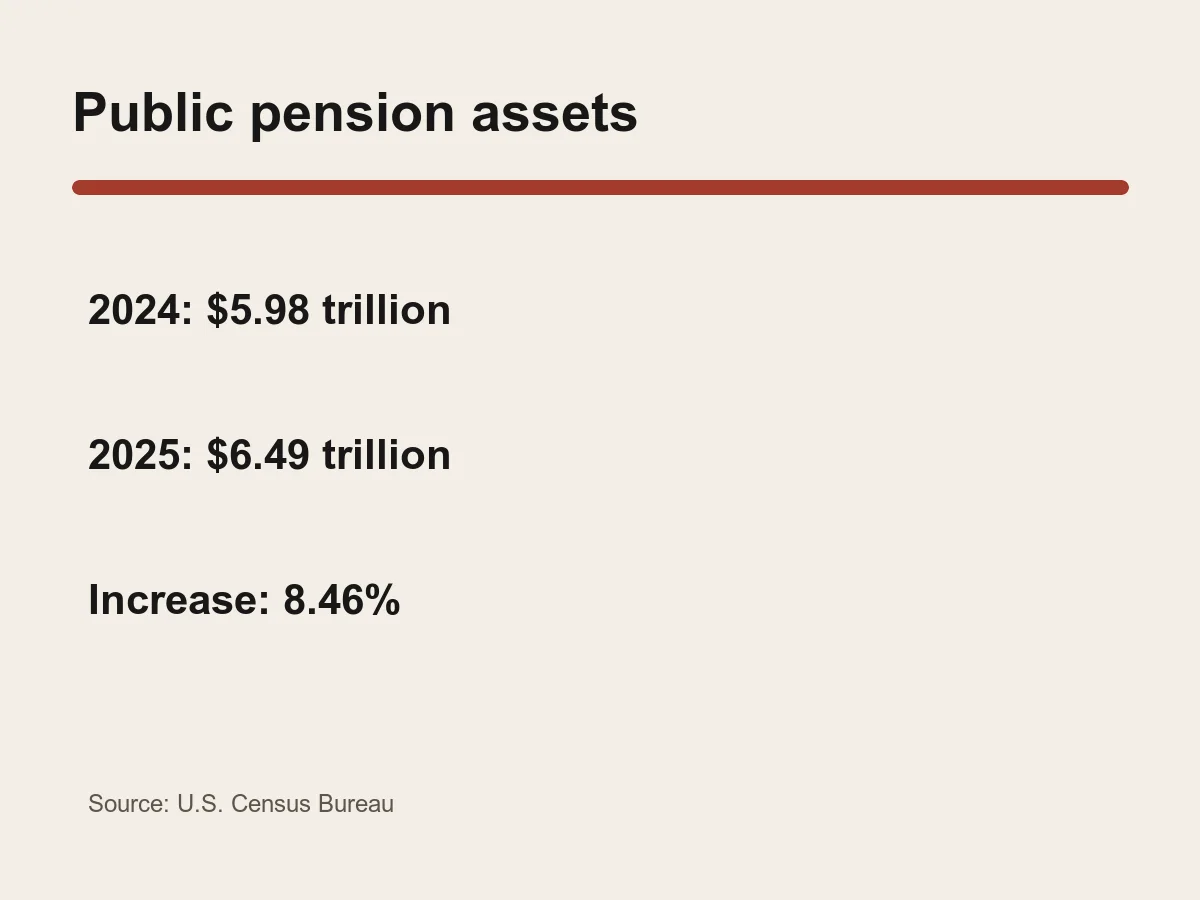
State and local government retirement systems held $6.49 trillion in assets in 2025, an 8.46% increase from $5.98 trillion a year earlier, according to the U.S. Census Bureau.
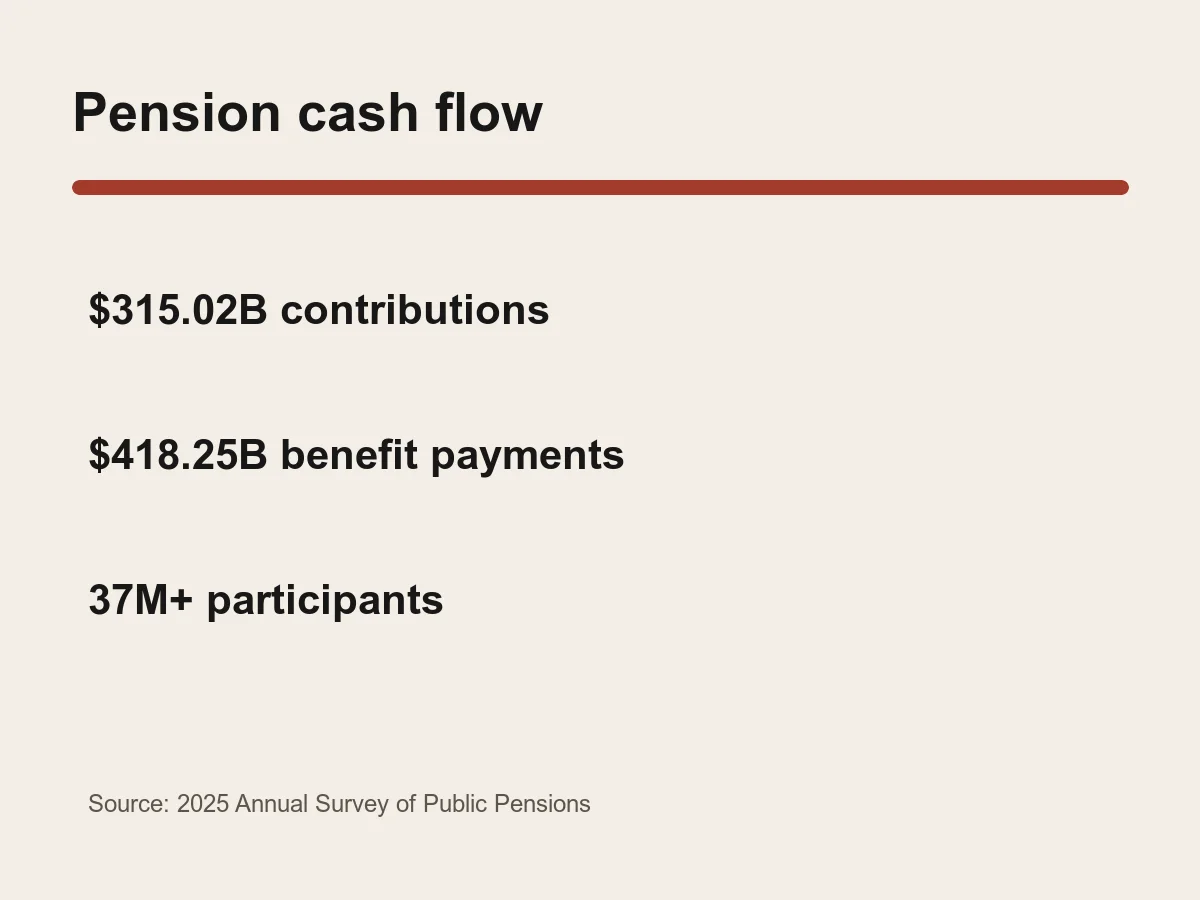
The systems covered more than 37 million members, beneficiaries and other participants. That total spans active workers, retirees and people with different benefit statuses rather than 37 million current employees.
Contributions totaled $315.02 billion during the year. Employees supplied 24.83% of contributions and governments supplied 75.17%, the Census Bureau reported.
Benefit payments reached $418.25 billion, up 3.40% from $404.46 billion in 2024. Contributions and benefit payments are annual flows, while the $6.49 trillion asset figure is a year-end stock, so they should not be compared as if they were the same measure.
Asset growth can reflect investment returns, contributions, payments and changes in the systems included or reported. The national total does not show that every state or local plan improved by the same percentage.
Likewise, a large asset balance is not a complete measure of pension health. Funding adequacy depends on promised benefits, actuarial assumptions, contribution policy, workforce demographics and the timing of future payments.
The annual survey provides a consistent national view across state and local systems, making it useful for tracking the scale and direction of public retirement finances over time.
It does not provide individualized retirement guidance. A participant's benefit depends on the rules and records of the specific system, while fiscal judgments require plan-level liabilities and actuarial reports.
The next comparison will show whether asset gains persisted and how contributions and benefit payments changed. Plan-level records remain necessary to understand risks hidden by the national aggregate.