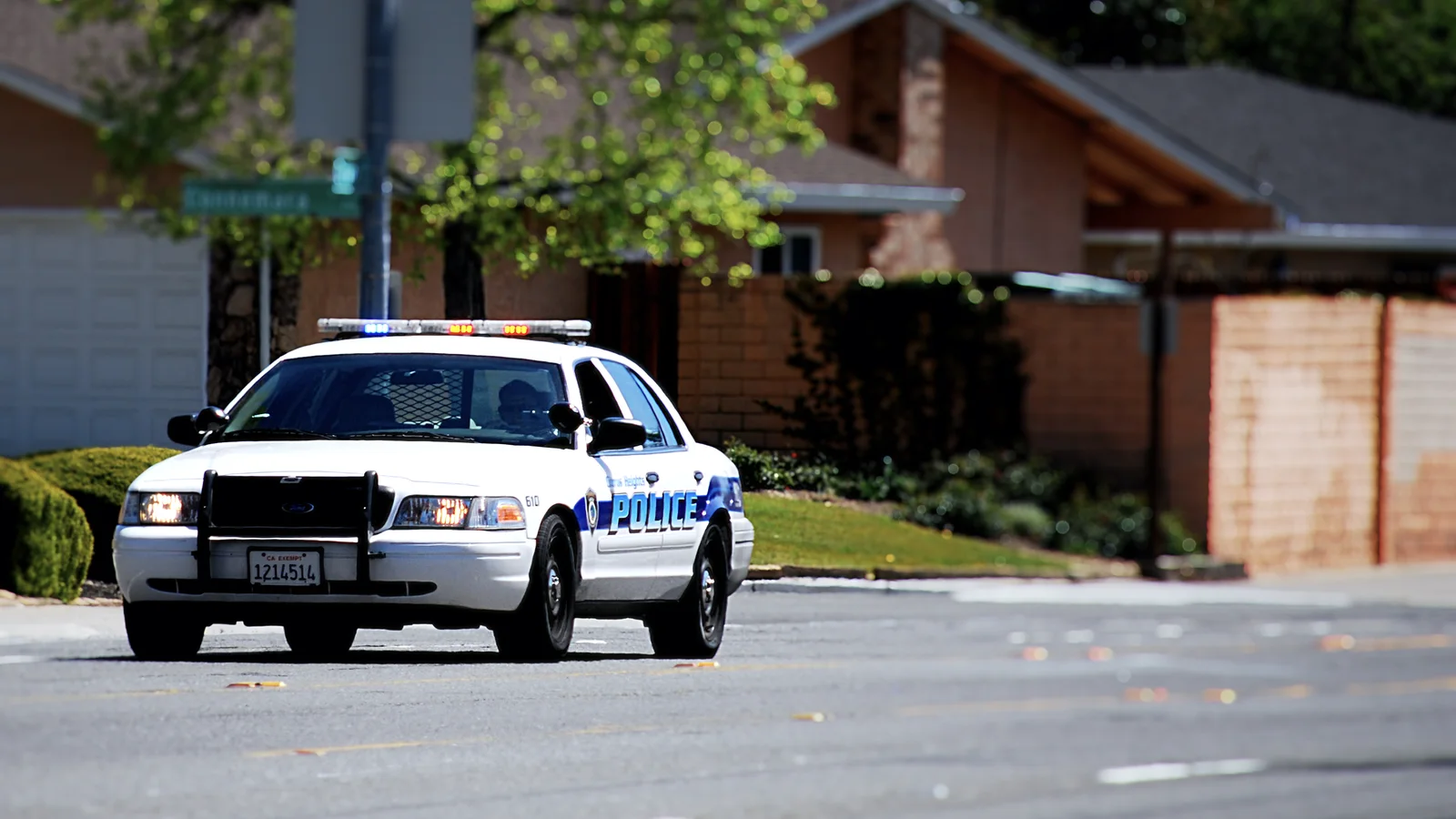
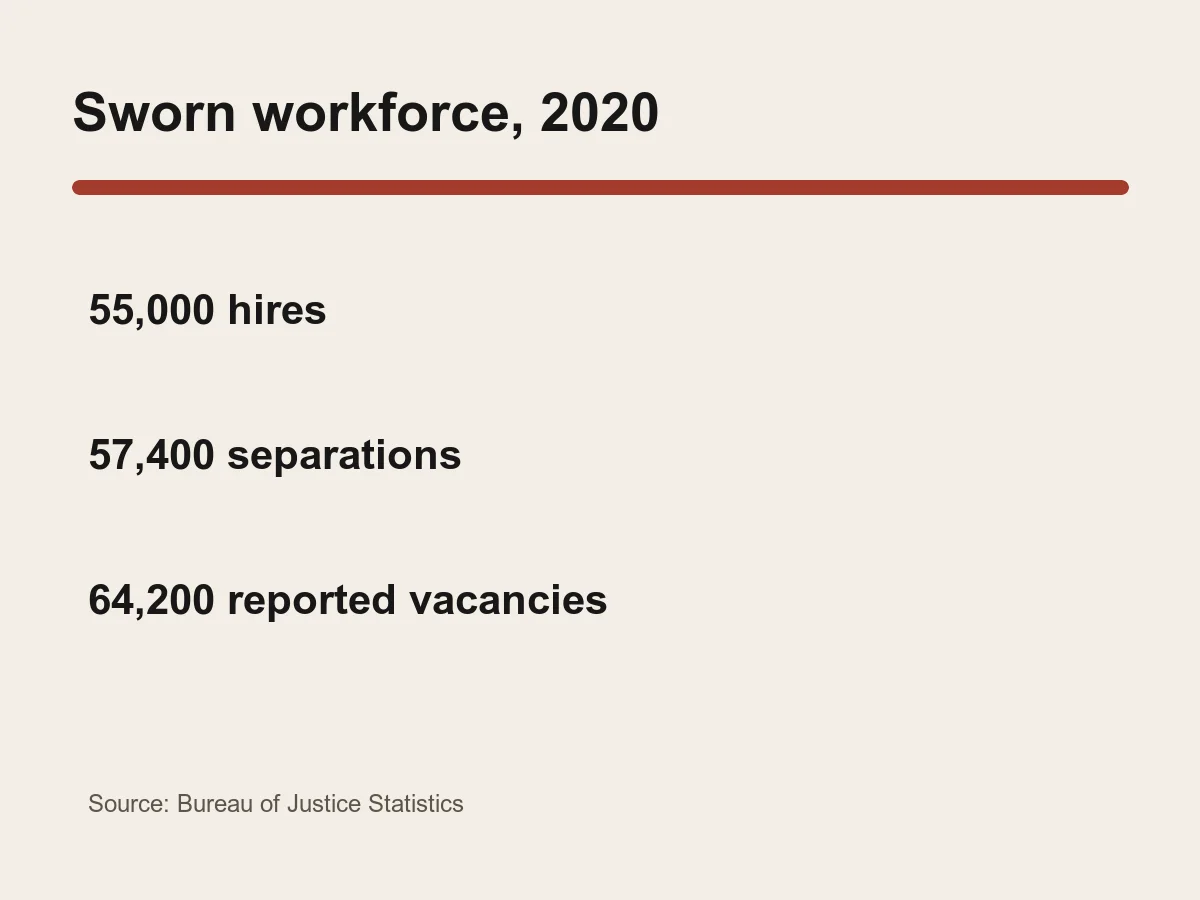
State and local law-enforcement agencies reported about 64,200 vacant sworn-officer positions in 2020, according to statistical tables released by the Bureau of Justice Statistics in March 2026.
The agencies reported hiring roughly 55,000 officers during the year while about 57,400 officers separated. The figures describe a national survey period shaped by the pandemic and should not be treated as a current vacancy count for 2026.
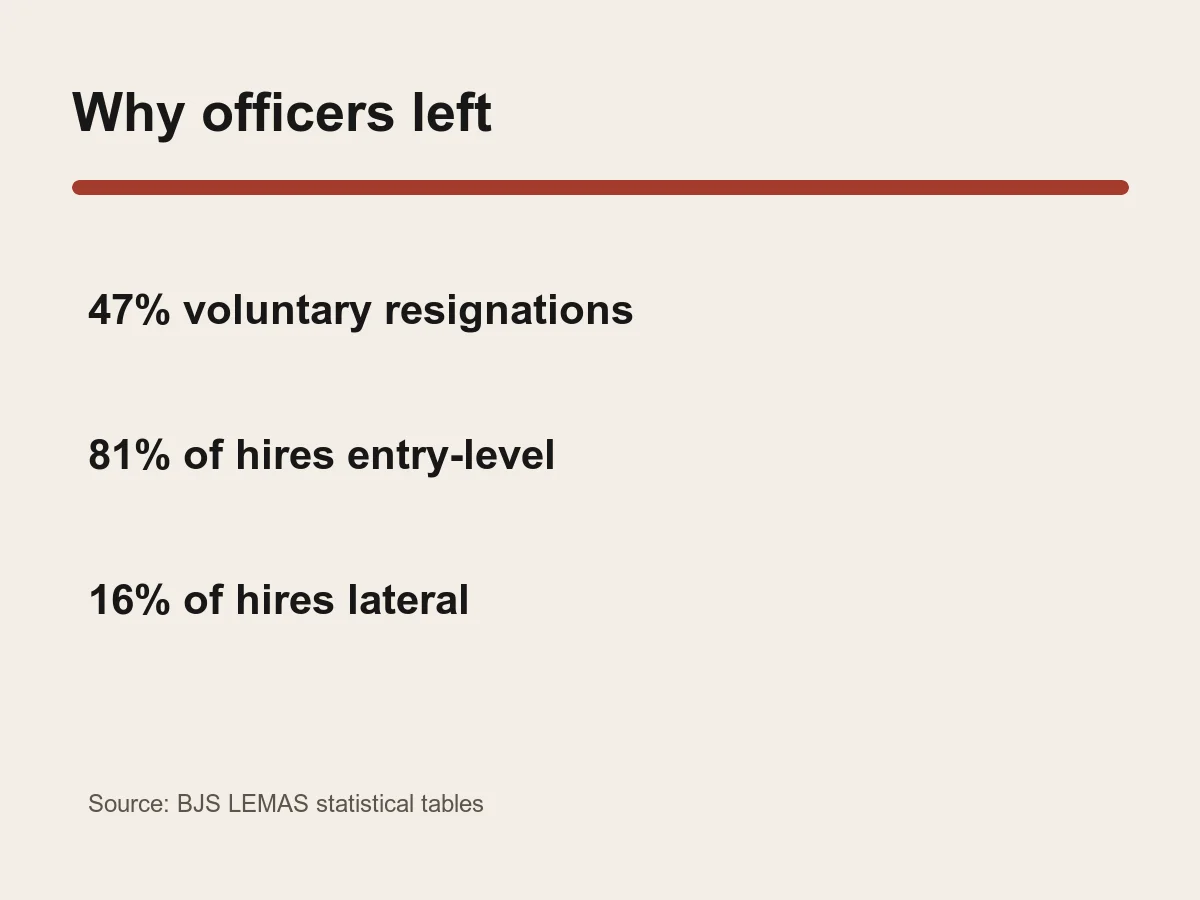
Entry-level recruits accounted for 81% of hires, while lateral hires from other law-enforcement agencies accounted for 16%. The remaining share included other hiring paths identified in the survey tables.
Voluntary resignations made up 47% of reported separations. Retirements, dismissals and other departures accounted for the balance, making retention as important to staffing totals as recruiting new officers.
Agency size affected the resources available to recruits. BJS found that 97% of agencies with 500 or more full-time-equivalent sworn officers paid for academy training, compared with 57% of agencies with 24 or fewer.
That gap does not by itself explain vacancies. Compensation, local labor markets, retirement eligibility, hiring standards, academy capacity and community conditions can all affect whether an agency fills an authorized position.
The tables also distinguish authorized vacancies from a universal statement about service levels. A vacancy is an approved position that was unfilled under the agency's reporting rules; it does not show how every agency deployed personnel or whether budgets supported immediate hiring.
Because the data cover 2020, the report is best used as a baseline for comparing later staffing surveys rather than as a live roster. Changes after 2020 require newer agency or national records.
The clearest national signal is the workforce flow: reported separations exceeded hires, and nearly half of departures were voluntary resignations. Future releases can show whether recruitment and retention efforts reversed that pattern.