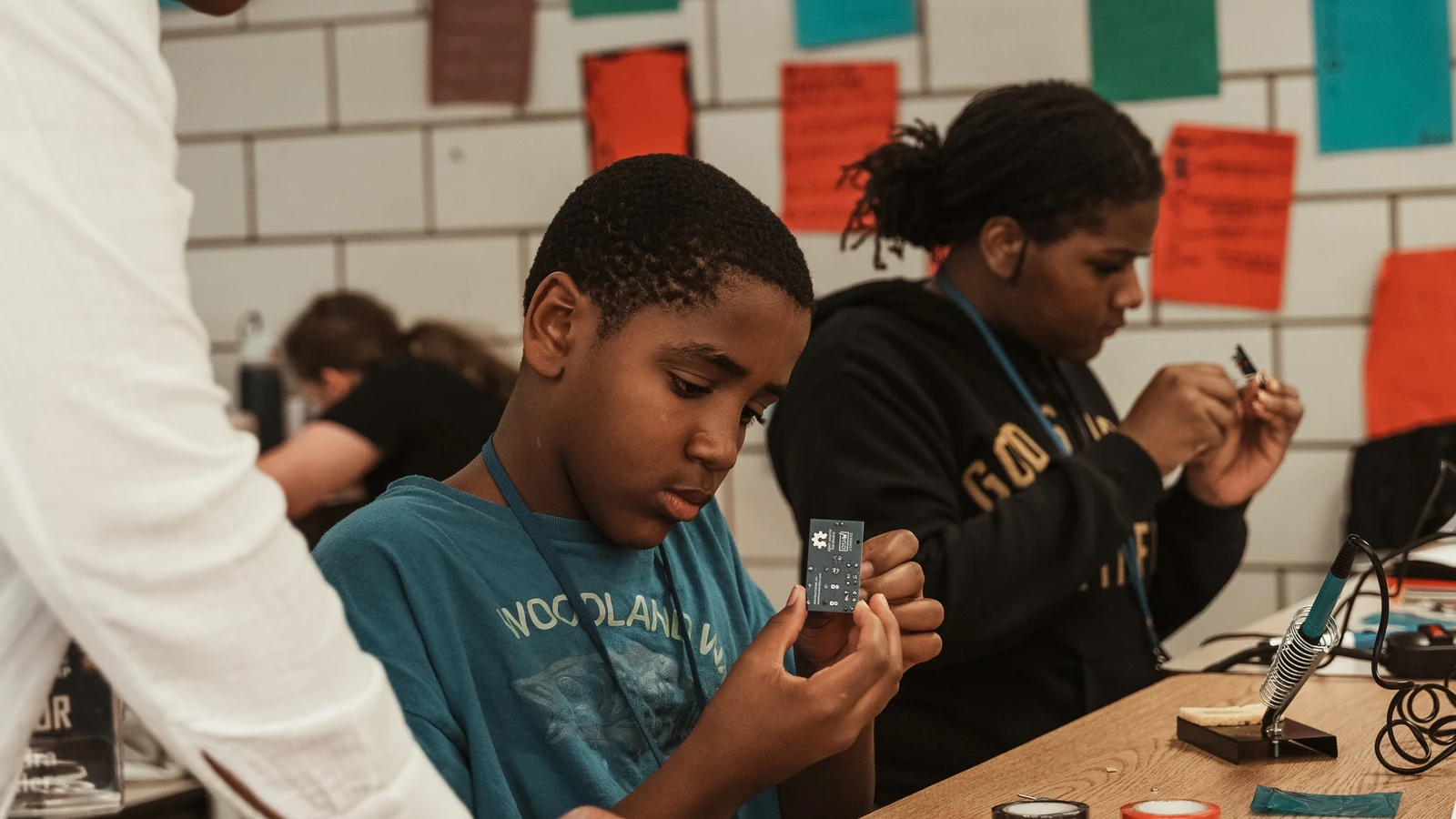
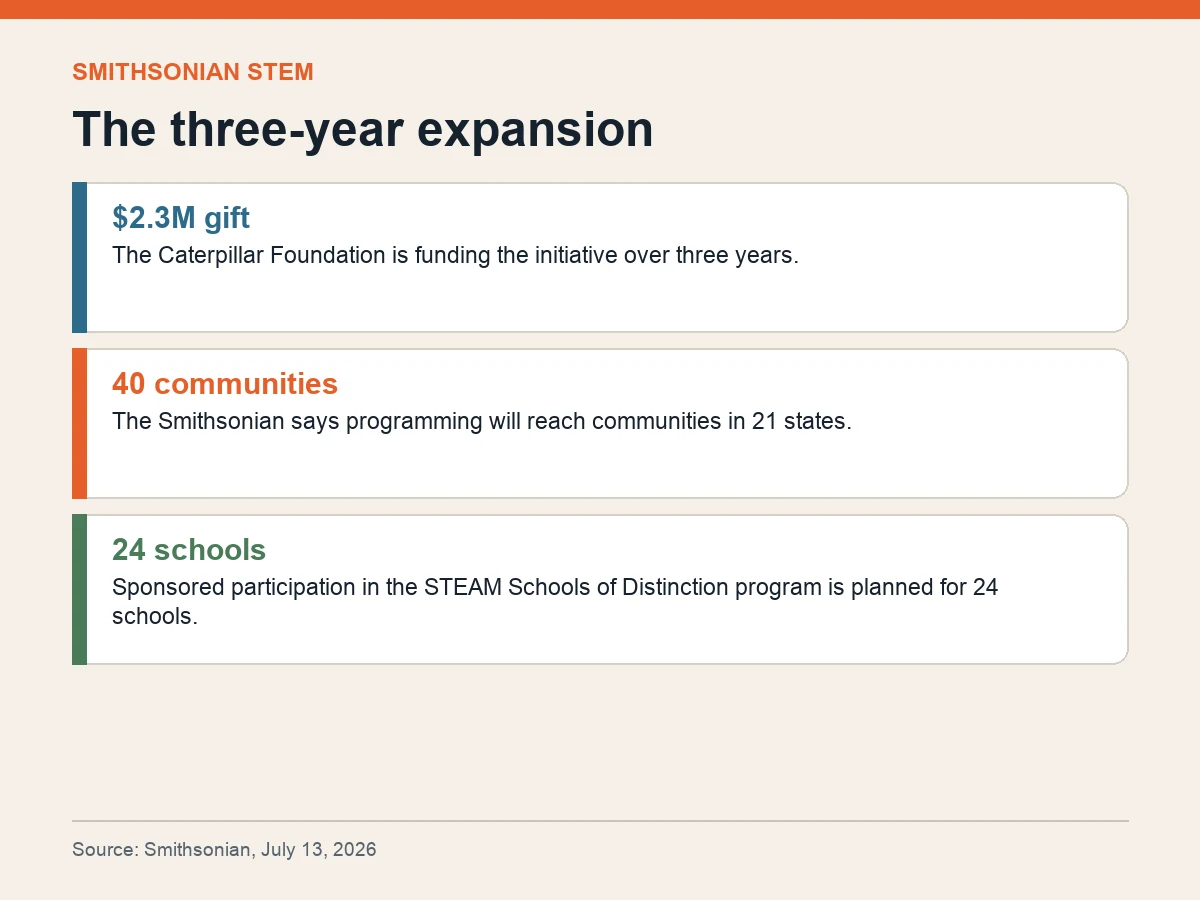
A $2.3 million Caterpillar Foundation gift will fund a three-year expansion of Smithsonian science and engineering education across 40 communities in 21 states, the Smithsonian Institution announced.
The initiative is organized through the Smithsonian Science Education Center and focuses on teachers as well as students. The announced work includes professional development, virtual training and hands-on resources intended to help educators carry new material into regular classroom instruction.
Twenty-four schools will receive sponsored participation in the STEAM Schools of Distinction program. The program uses science, technology, engineering, arts and mathematics as a schoolwide framework rather than treating STEM as one isolated event or elective.
The funding also supports a new guide focused on artificial intelligence. The Smithsonian announcement describes it as a resource for educators; it does not present AI as a replacement for teachers or specify that students will be required to use a particular commercial system.
Geographic reach is broad but not nationwide. Forty communities in 21 states means implementation will depend on selected local partners and schools, and the announcement does not list a uniform package of activities for every site.
The Smithsonian says the initiative will reach tens of thousands of students. That is the institution’s forward-looking estimate, not an independently measured enrollment or outcome from a program that has already concluded.
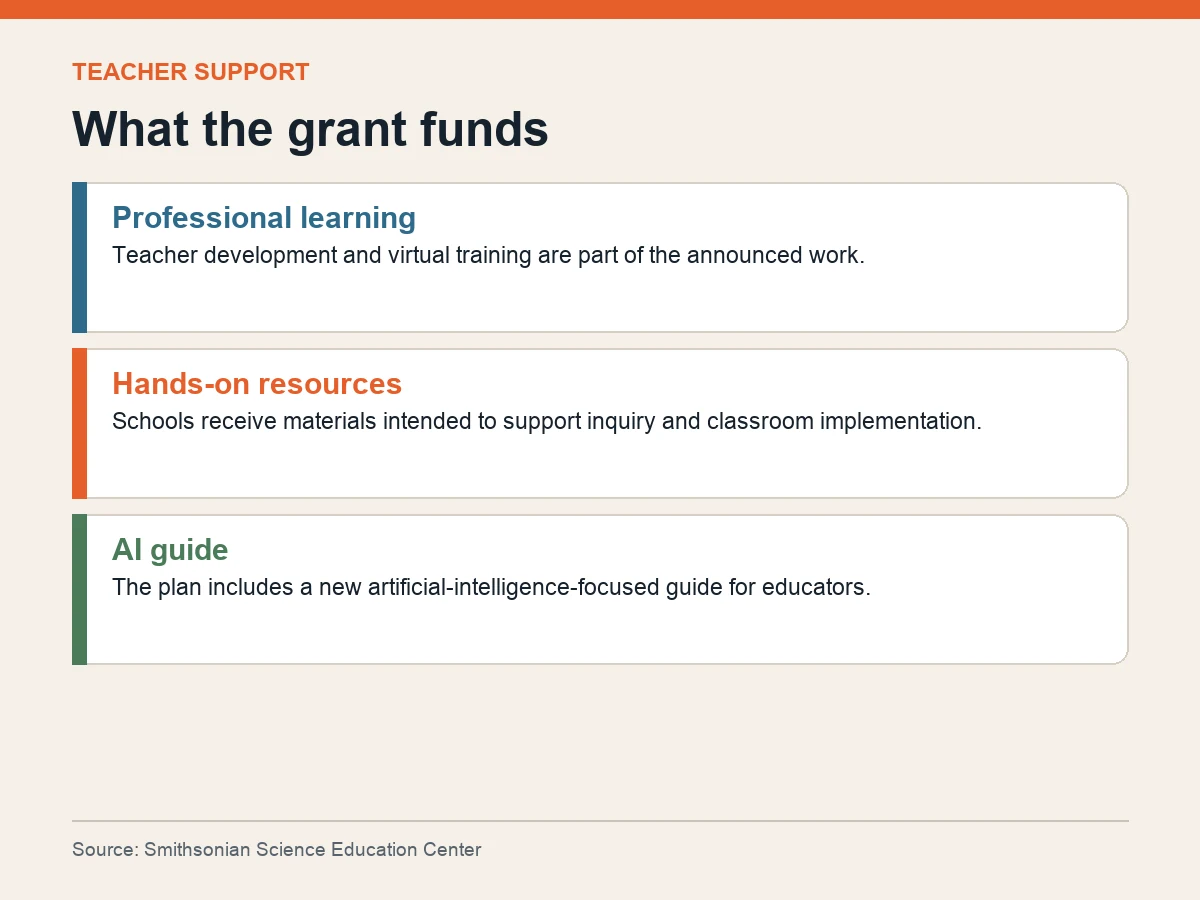
The design places professional learning alongside materials because classroom equipment alone does not establish a durable program. Teachers need time to understand the content, adapt it to grade levels and evaluate whether students are learning the intended concepts.
The gift was announced in connection with the United States’ 250th anniversary, but the three-year schedule extends beyond a single commemorative event. Its substantive test will be whether participating schools retain useful teaching practices after the grant period.
No external evaluation plan or school-by-school performance targets were included in the release. The verifiable commitment today is the funding, scope and planned supports; claims about learning gains will require later evidence from the communities and the Smithsonian.