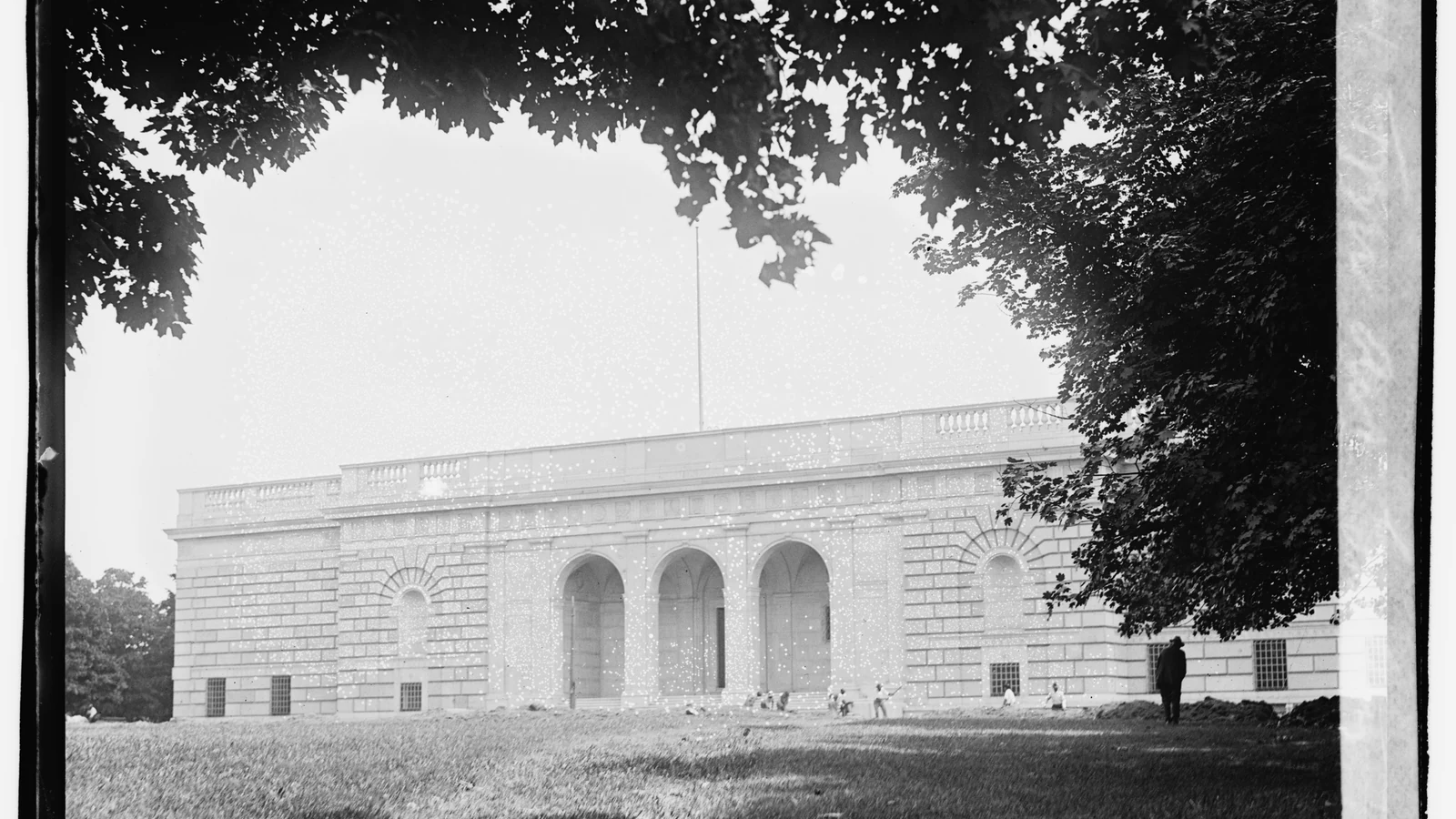
Twenty-six Islamic artworks from the Musée du Louvre will travel to Washington for a four-month Smithsonian exhibition that asks not only how the objects were made, but how they came to be labeled masterpieces.
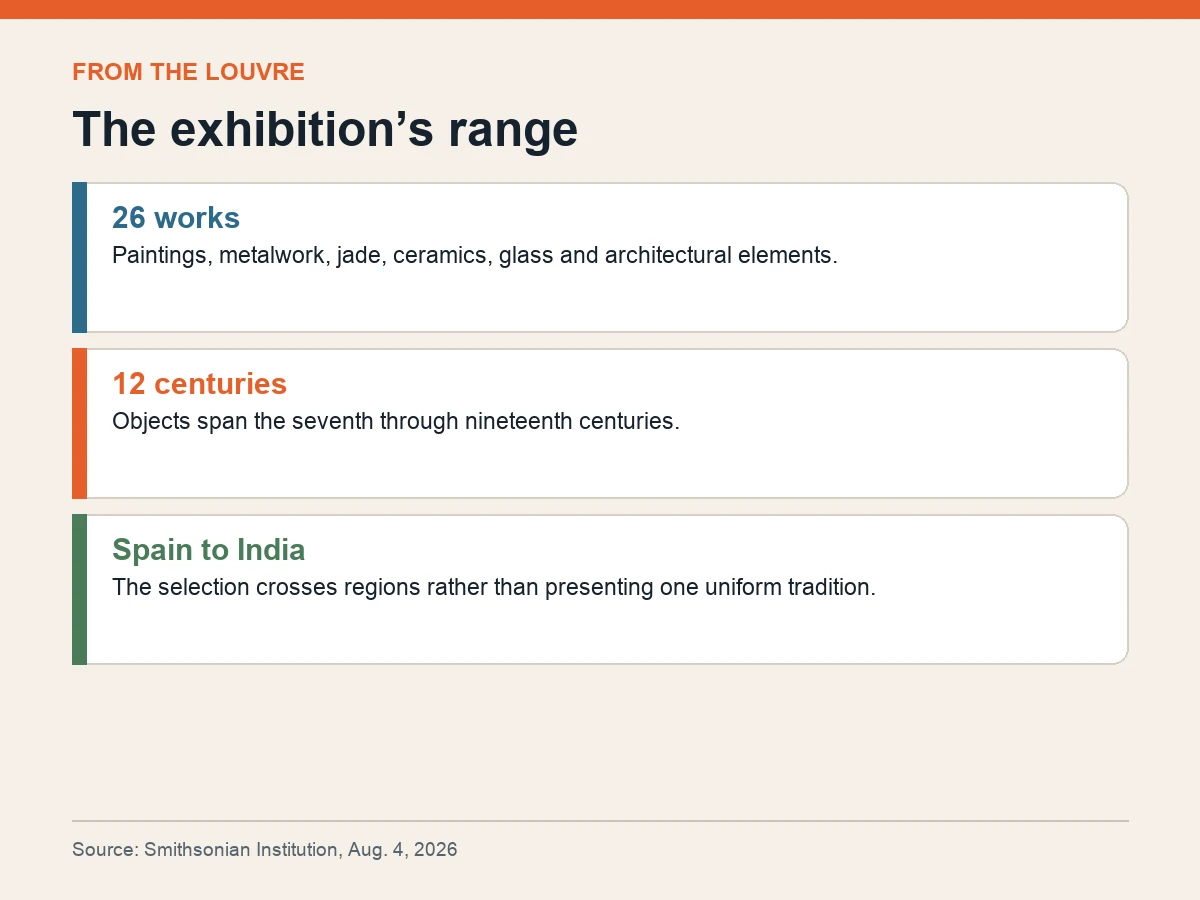
“From the Louvre: Masterpieces of Islamic Art” opens September 26 at the National Museum of Asian Art and runs through January 18, 2027. The Smithsonian describes the presentation as the works’ first U.S. display and the exhibition’s only stop in the country.
The selection spans the seventh through nineteenth centuries and a geography stretching from modern-day Spain to India. It includes metalwork, painting, jade, ceramics, glass and architectural elements rather than treating Islamic art as one period or one material tradition.
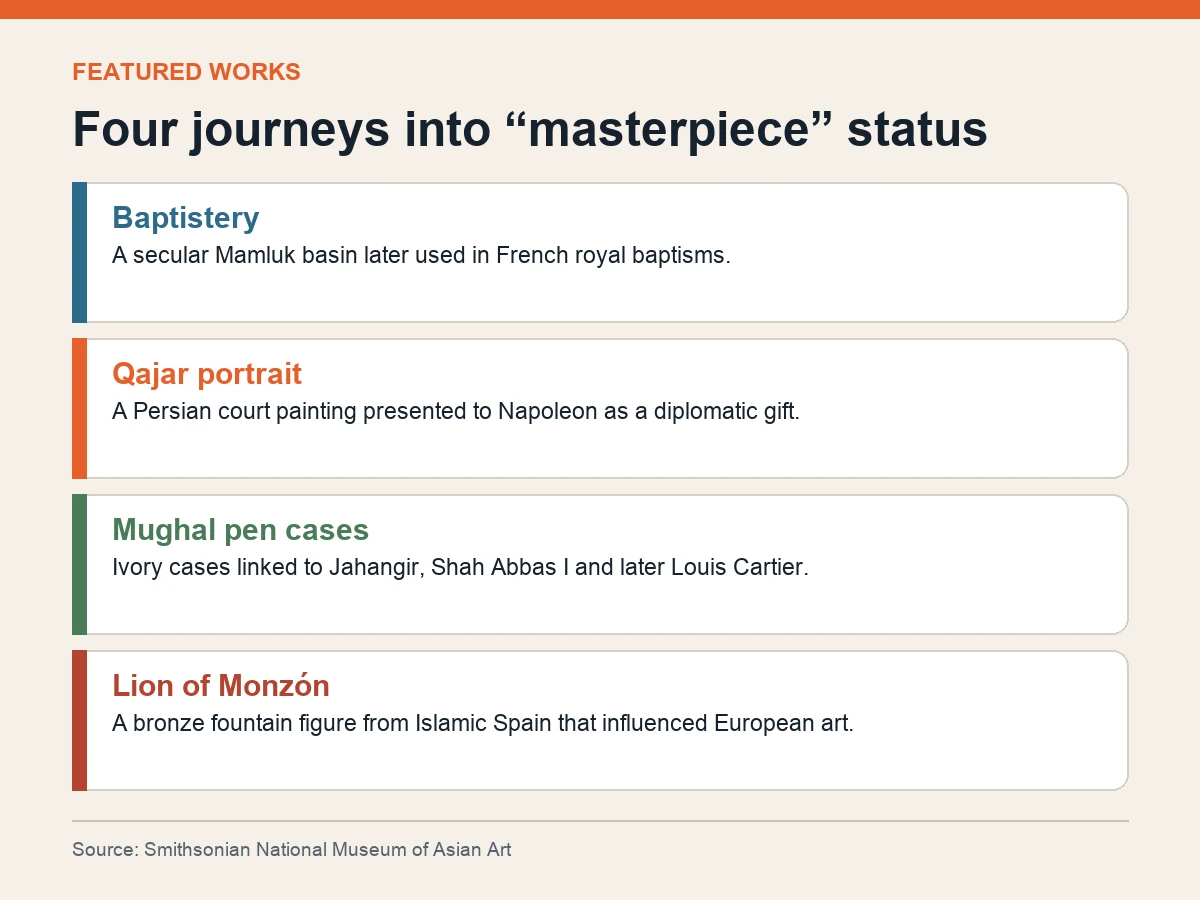
The best-known object may be the Baptistery of Saint Louis, a fourteenth-century brass basin inlaid with silver and gold in Syria or Egypt. Made for secular ceremonial use, it later acquired a Christian identity in France when it was used to baptize Louis XIII in 1606.
Other works show art moving through diplomacy and collecting. An eighteenth-century portrait of the Persian ruler Fath-Ali Shah Qajar was presented to Napoleon. Two ivory Mughal pen cases bearing the names of Shah Abbas I and his grand vizier later entered the orbit of jeweler Louis Cartier.
The Lion of Monzón, a bronze animal created in Islamic Spain in the tenth or eleventh century, was probably used as a fountain spout before its design influenced European artists and critics. The exhibition uses that change in function and reception to question whether masterpiece status is fixed at creation.
The collaboration also revives an institutional link. Smithsonian founder Charles Lang Freer corresponded with Louvre curator Gaston Migeon and French collector Raymond Koechlin in the early twentieth century. A sixteenth-century Ottoman plate from Koechlin’s collection, now at the Louvre, returns through the loan.
The release provides concise object histories rather than a complete provenance file for all 26 works. Questions about ownership transitions, excavation and market history require the exhibition labels and supporting scholarship, and announced loans can change for conservation or transport reasons.
The practical details are unusually simple for an international loan show: the National Museum of Asian Art is free, and the exhibition remains in Washington through the Martin Luther King Jr. holiday weekend. Its deeper proposition is that public access is part of how an exclusive courtly object becomes a widely recognized masterpiece.