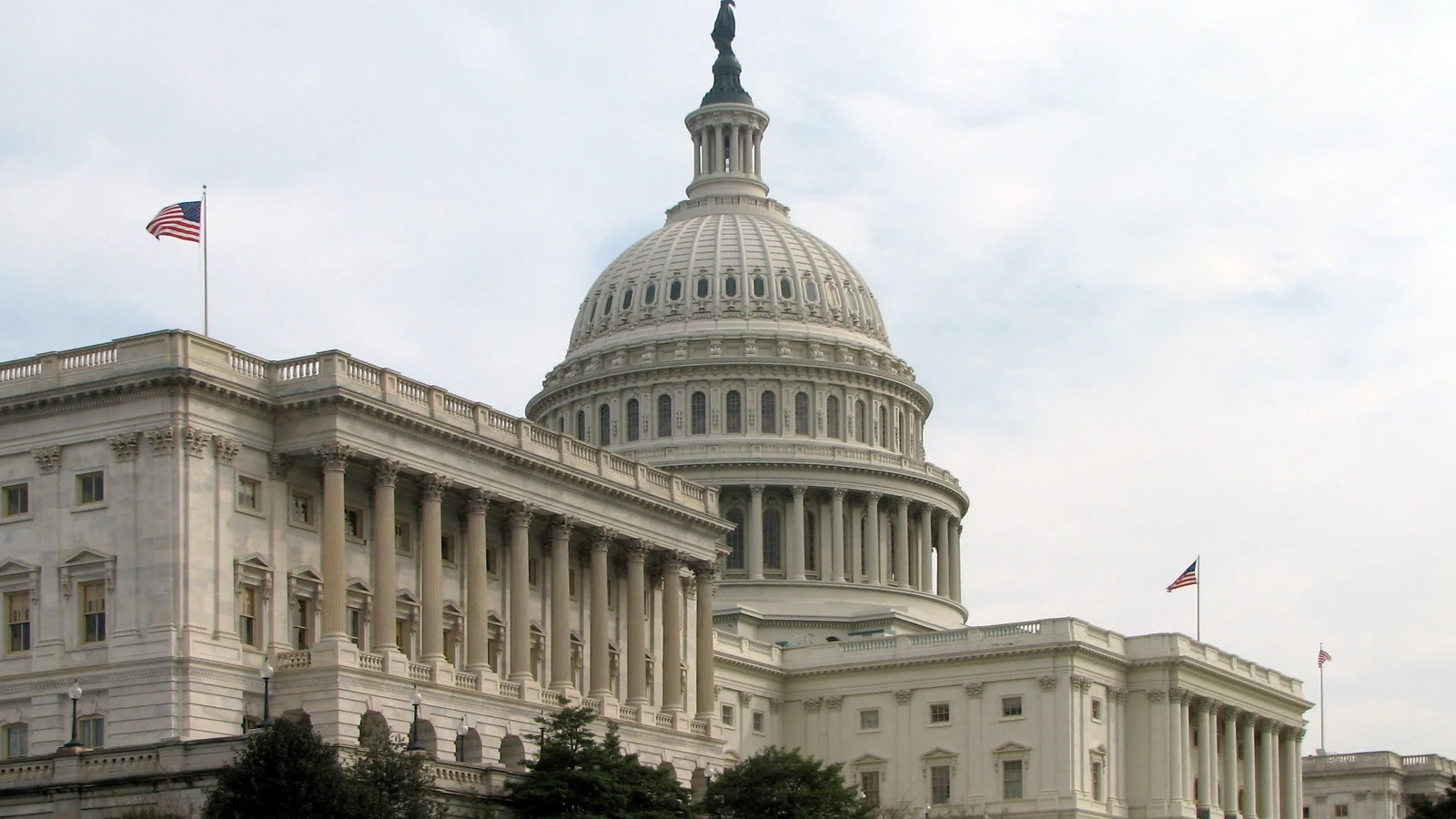
The fight for the U.S. Senate is moving from intraparty arguments to general-election choices. Most states have selected their nominees. The primaries in Michigan and Minnesota put progressive Democrats at the center of two open-seat races, while Republican contests showed the continuing power of President Donald Trump and the risks of crossing him.
The field is not complete. Alaska, Florida and Wyoming vote August 18. Delaware and Rhode Island, both holding Senate elections, vote in September. South Carolina Republicans will return for an August 25 special-primary runoff. Louisiana's regular election produced an unusually early Republican defeat when Sen. Bill Cassidy failed to advance.
That unfinished business is a reason to discuss routes to control as scenarios, not forecasts.
Michigan becomes a test of a progressive nominee in a true battleground
Abdul El-Sayed defeated four-term U.S. Rep. Haley Stevens for the Democratic nomination to succeed retiring Sen. Gary Peters. The Associated Press reported that the margin was roughly 15,000 votes—about one percentage point. Stevens carried the backing of Michigan Gov. Gretchen Whitmer and other party figures; El-Sayed's victory energized the left and revived arguments about electability.
Michigan deserves special caution in any national rating. Donald Trump won the state in 2016 and 2024, while Joe Biden carried it in 2020. A primary tells us which coalition dominated among participating party voters, not whether the same coalition will be sufficient in November.
The general election will test whether El-Sayed can keep progressives engaged, consolidate Stevens supporters and reach voters who do not participate in Democratic primaries. Republicans will make the opposite calculation: whether their nominee can turn disagreement with El-Sayed into a majority in a state that has repeatedly split at the top of the ticket.
Minnesota chose Peggy Flanagan
Lt. Gov. Peggy Flanagan defeated U.S. Rep. Angie Craig for the Democratic nomination to replace retiring Sen. Tina Smith. Craig emphasized her history of winning a competitive suburban House district; Flanagan ran against corporate influence and highlighted Craig's earlier vote for the Laken Riley Act. Outside spending and U.S. policy toward Israel also figured in the contest, according to AP reporting.
Flanagan will face former television sports reporter Michele Tafoya, the Republican nominee. Democrats begin with an important historical advantage: Minnesota has not elected a Republican to statewide office since 2006. That is not the same as certainty. The state has produced close presidential margins, and Republicans are trying to turn a public-fraud scandal and conflict over federal immigration enforcement into broader dissatisfaction with Democratic governance.
Republican dissent carried a price
In Kentucky, Trump-backed U.S. Rep. Andy Barr won the Republican nomination for the seat long held by retiring Sen. Mitch McConnell. In Louisiana, Cassidy's effort to recover from his vote to convict Trump after the president's second impeachment failed; he did not advance to the next stage of Louisiana's election.
Texas produced one of the cycle's most expensive contests. Sen. John Cornyn and Attorney General Ken Paxton advanced from a crowded March primary because neither won a majority. Trump endorsed Paxton after early voting had begun in the runoff, and Paxton defeated the four-term senator on May 26. He will face Democratic state Rep. James Talarico in November. The race demonstrated both the force of a presidential endorsement and the distinct dynamics of a second, lower-attention election.
South Carolina's special election remains open
The death of Sen. Lindsey Graham created a compressed special-election calendar. Darline Graham, his sister and temporary appointee, advanced from the Republican primary with Trump's endorsement. U.S. Rep. Ralph Norman also advanced. Their August 25 runoff will decide the Republican nominee in a state where the party ordinarily begins with a strong general-election advantage.
Calling Graham the winner now would be wrong. She won a runoff place, not the nomination.
What to watch next
The remaining calendar matters in three ways. Alaska can produce unusual coalitions because its election system differs from ordinary closed party primaries. Florida and Wyoming have Senate contests on August 18. Rhode Island votes September 9 and Delaware September 15.
Once those nominations are complete, the most useful national guide will compare candidates through the same evidence: prior certified state results, fundraising over identical filing periods, independent spending, incumbency, candidate policy commitments and the actual rules governing each election.
The worst guide would replace that evidence with a single national mood. Senate control is won one state at a time.
Methodology
The remaining Senate-primary schedule comes from the FEC's 2026 calendar. Candidate outcomes are attributed to AP reporting. This article does not assign probabilities or present external race ratings as fact.