
The Securities and Exchange Commission has proposed making electronic delivery the default for many documents that issuers, brokers, funds and investment advisers must provide under federal securities laws.
Proposed Regulation E-Delivery would allow covered firms to satisfy delivery obligations electronically without first obtaining a recipient's affirmative consent, subject to conditions in the rule.
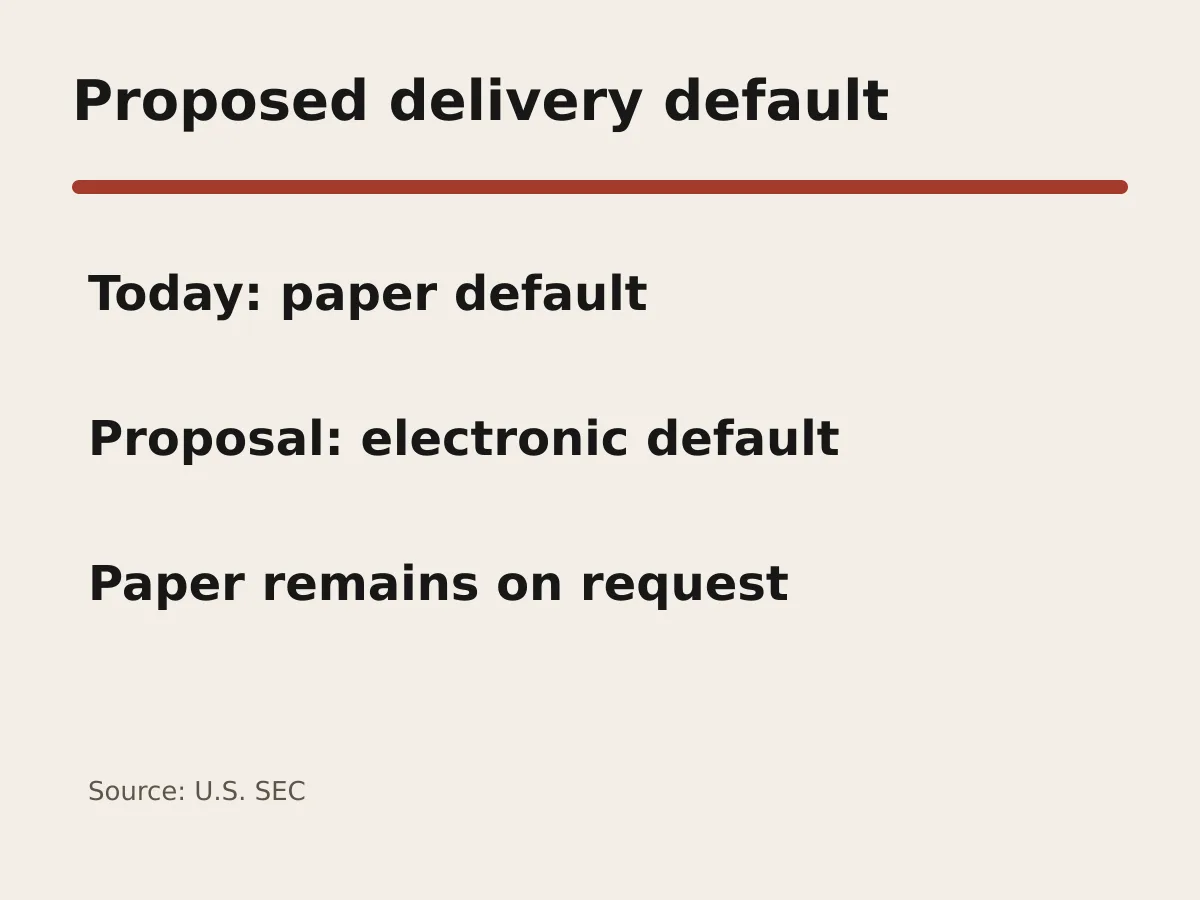
Paper would remain available on request. People already receiving documents on paper would get two paper notices before a transition, including information on how to opt out of electronic delivery.
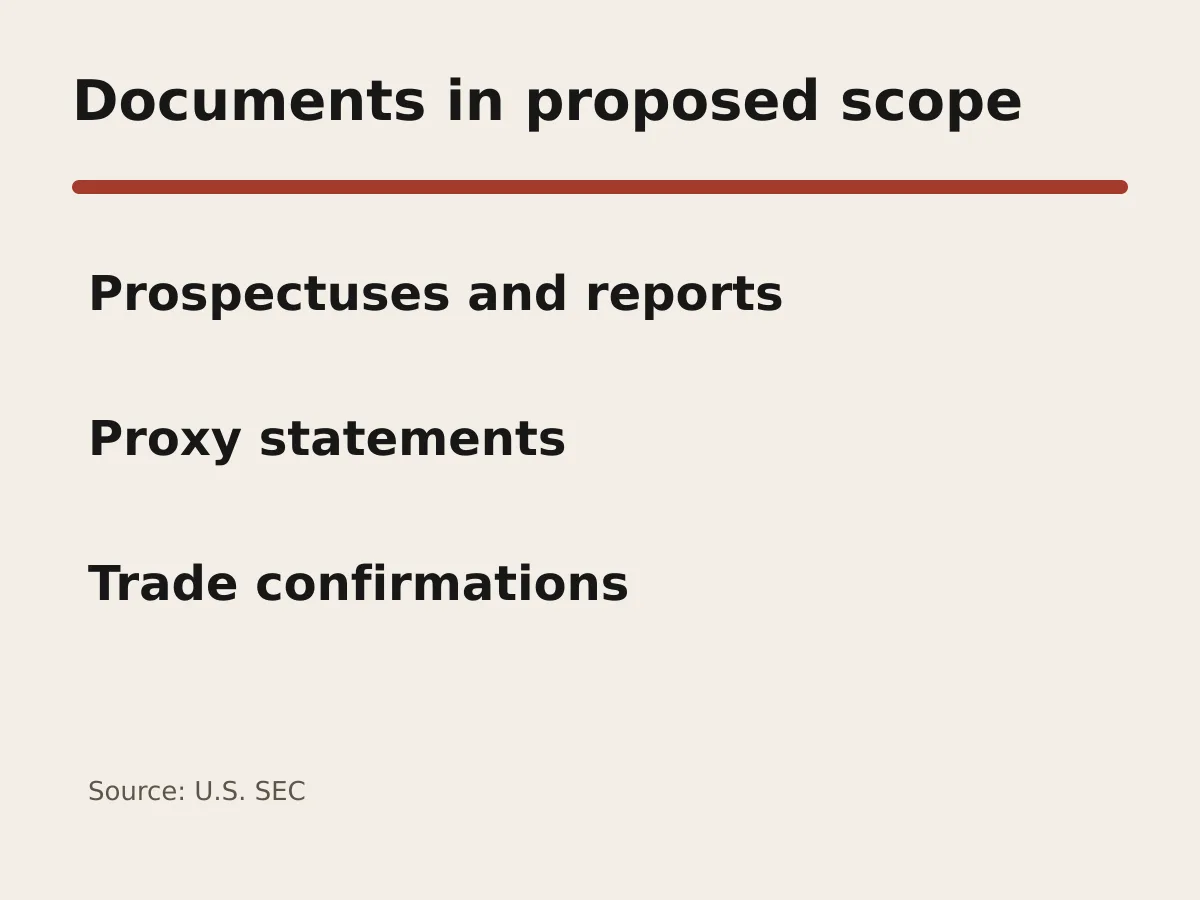
The proposal covers a broad range of records, including prospectuses, annual and semiannual shareholder reports, proxy statements, trade confirmations, Form CRS disclosures and investment-adviser brochures.
Current SEC practice generally treats paper as the default unless the recipient affirmatively chooses electronic delivery. The proposed regulation would replace much of the agency's guidance-based framework developed over several decades.
The SEC says electronic delivery could reduce paper, printing and postage costs while enabling more timely, accessible and interactive disclosures. Those are expected benefits of the proposal, not measured savings guaranteed by the rule.
A digital default also shifts practical burdens. Recipients need a working address, reliable access and a clear way to retrieve older records; the final rule's conditions will determine how failed delivery and accessibility are handled.
The commission set a public-comment period of 60 days after the proposing release appears in the Federal Register. The press release does not supply a final adoption date because the commission may revise or decline the proposal after review.
For investors, nothing changed on the announcement date. The operative question is whether the SEC adopts a final rule and, if so, what transition process and delivery safeguards it includes.