The Securities and Exchange Commission has approved a temporary system of price bands for overnight trading in National Market System stocks, creating a first-phase framework expected to start Dec. 6, 2026.
The overnight session covered by the amendment runs from 9 p.m. Eastern Sunday through Thursday to 4 a.m. Eastern Monday through Friday. It is separate from the regular-hours limit-up, limit-down mechanism.
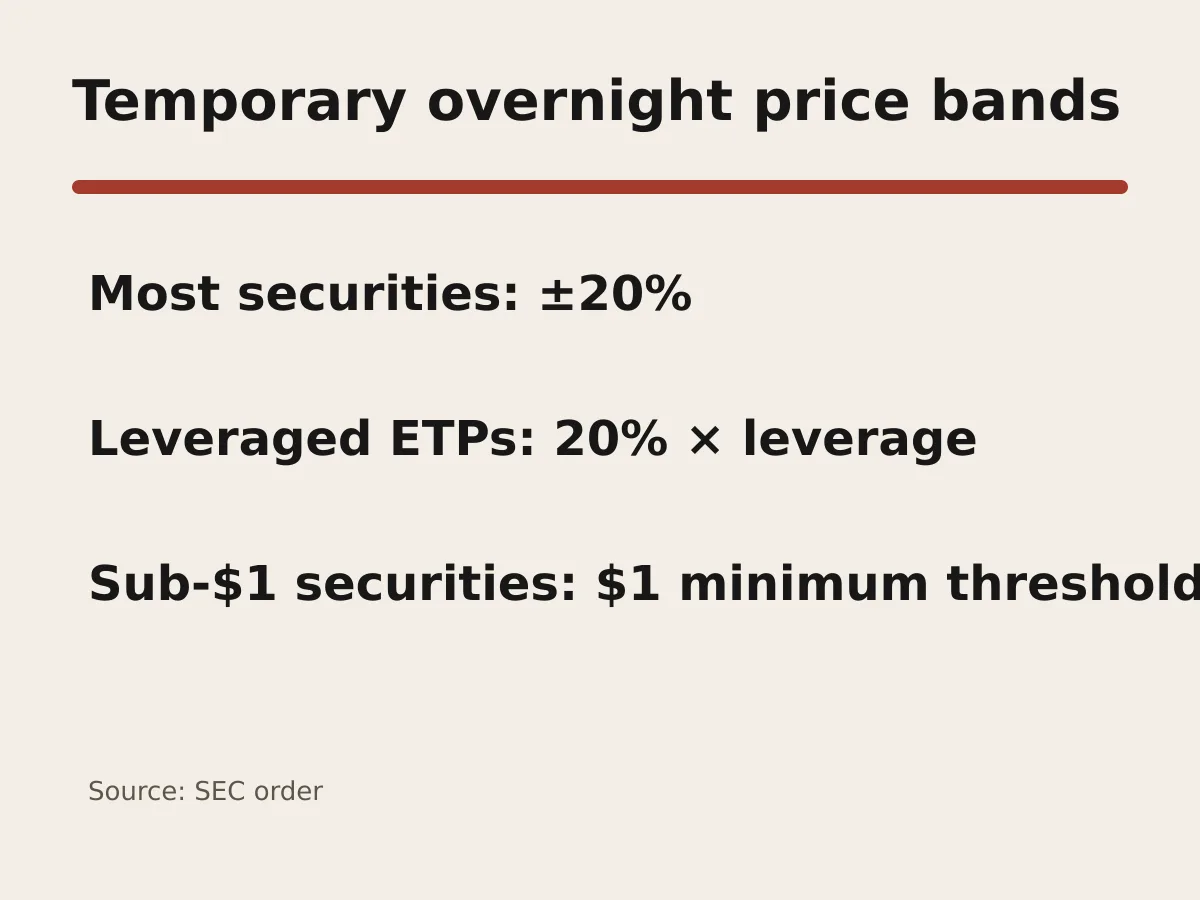
For most securities, the temporary bands are set 20% below a lower reference price and 20% above a higher reference price. The plan uses defined reference prices from eligible transactions rather than a single universal closing price.
Leveraged exchange-traded products receive a parameter equal to 20% multiplied by their leverage ratio. Securities priced below $1 receive minimum thresholds of $1, intended to prevent percentage formulas from producing very narrow dollar limits.
The bands do not create automatic overnight trading pauses. Participating market centers would reject orders priced outside the bands, while a listing exchange could halt trading under its existing authority.
The SEC approved Amendment 27 after receiving no public comments on the proposal. The order describes the arrangement as a temporary first phase while exchanges and market participants gather operational data.
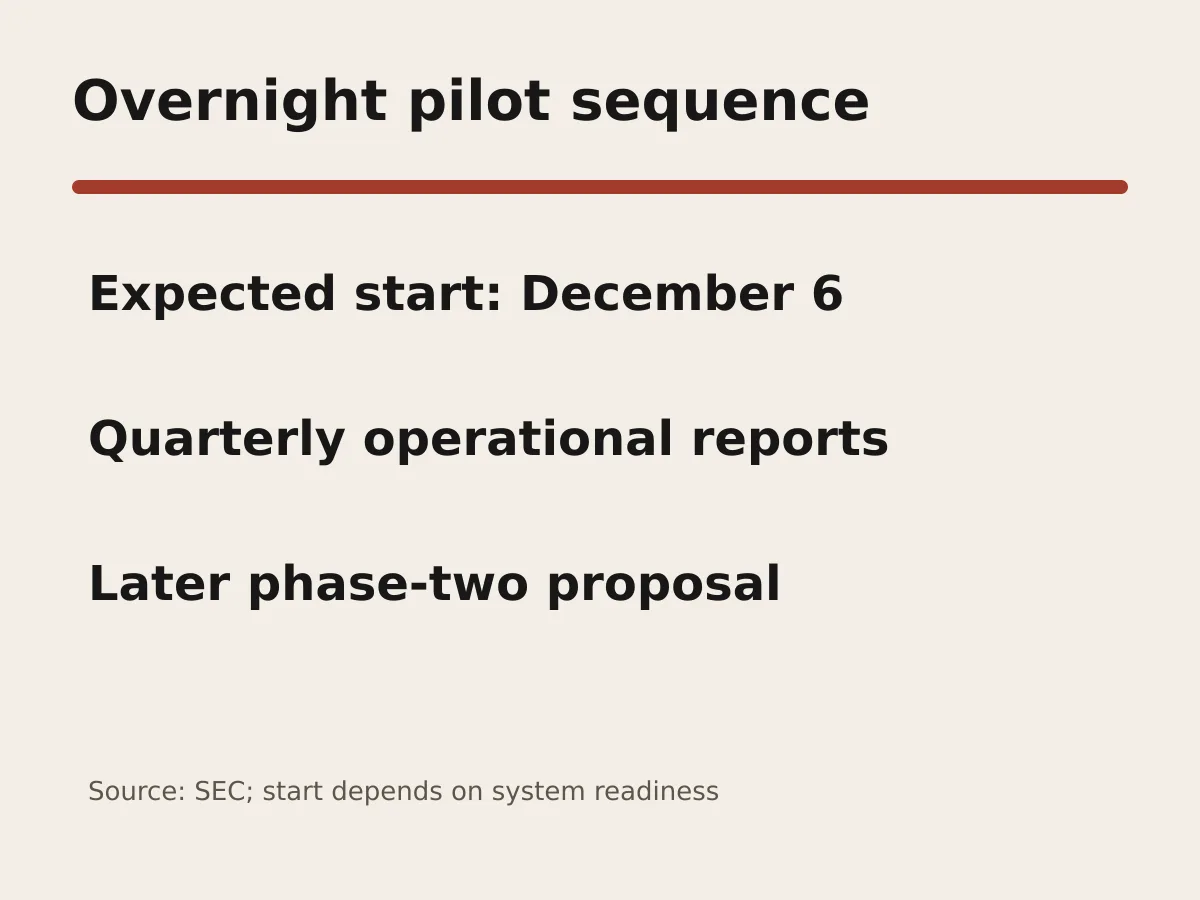
The Dec. 6 start is an expected implementation date and depends on required systems changes. The plan participants must submit quarterly reports, and a later phase-two filing would address a longer-term framework.
Wide bands cannot prevent every sharp overnight price move, execution gap or trading interruption. Liquidity can be thinner outside regular hours, and the order does not guarantee that an investor can trade at a desired price.
The rule is a market-structure measure, not an investment recommendation. Investors considering extended-hours trading should rely on their broker's current disclosures and order-handling terms.