The Small Business Administration is removing the 8(a) Business Development Program's regulatory presumption that members of specified racial and ethnic groups are socially disadvantaged.
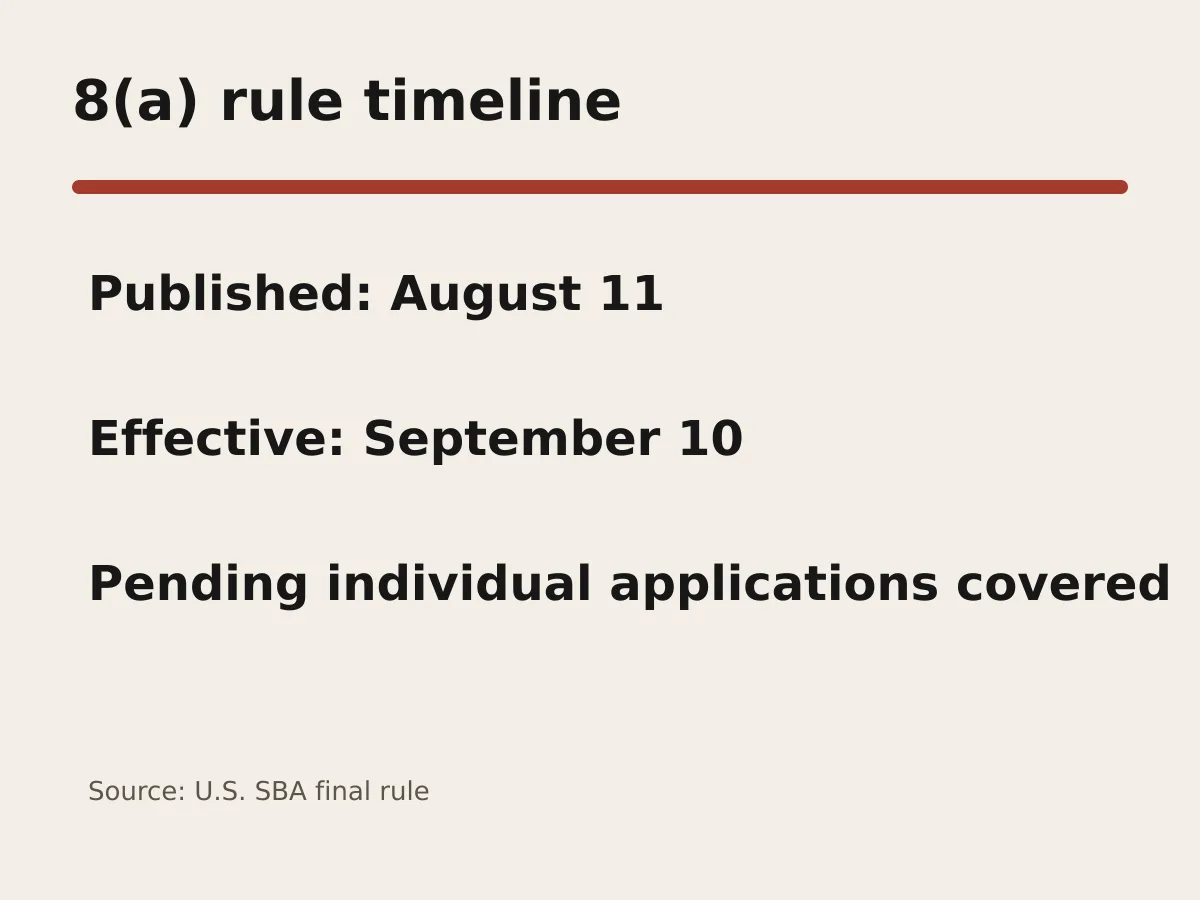
The final rule takes effect Sept. 10, 2026. SBA says it will apply to individually owned applications that remain pending on that date, so those applicants must establish social disadvantage under the revised standard.
Under the new text, any U.S. citizen may seek to show social disadvantage by identifying membership in a group that has experienced prejudice or bias and explaining material harm tied to that treatment. The rule does not guarantee admission based on group membership alone.
The 8(a) program provides business-development assistance and access to certain federal contracting opportunities for qualifying small businesses owned and controlled by socially and economically disadvantaged individuals or eligible entities.
The change does not require people who are already certified in the program to re-establish social disadvantage. SBA also says the rule does not alter eligibility for firms owned by tribes, Alaska Native Corporations, Native Hawaiian Organizations or Community Development Corporations.
SBA presents the revision as a response to court decisions and its reading of constitutional requirements. That is the agency's legal rationale; the rule does not resolve every future question about how individual applications or contracting decisions may be reviewed.
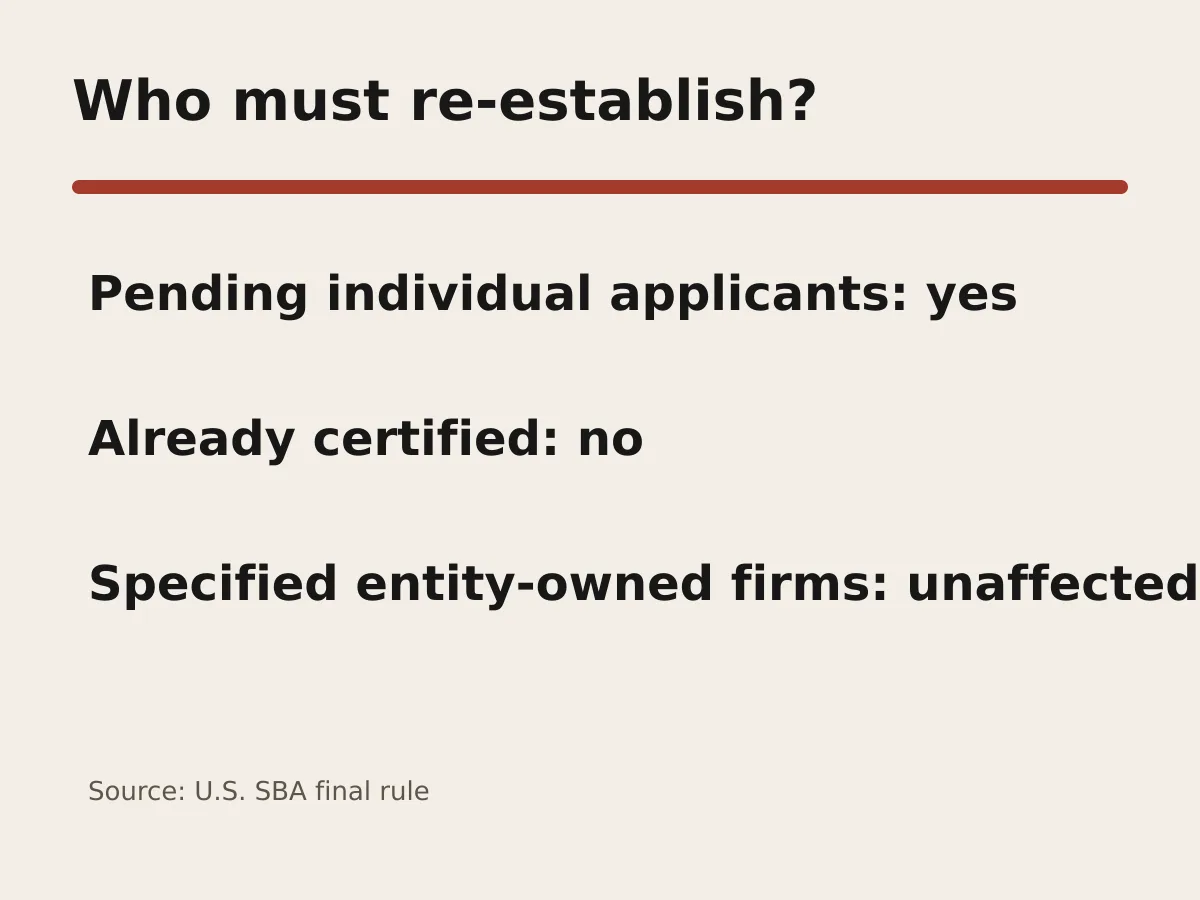
For pending individually owned applicants, the practical change is evidentiary. They can no longer rely on the former rebuttable presumption and will need to submit the information SBA requires under the revised regulation.
The final rule distinguishes pending applications from current participants because certification decisions have already been made for the latter. It also preserves the separate statutory framework for specified entity-owned businesses.
The document does not forecast how many applicants will qualify under the new test or how federal contract awards will change. Those outcomes depend on the applications received, SBA adjudication and agency procurement decisions.
Applicants and contracting officers should use the final regulatory text and SBA's program instructions for case-specific requirements. This report describes the rule's general effect and is not legal advice.