A robotic servicing vehicle designed to inspect satellites and install mission-extension hardware launched July 21 aboard a SpaceX Falcon 9, NASA announced.
The Mission Robotic Vehicle is traveling toward geosynchronous orbit with a NASA-supported payload known as Robotic Servicing of Geosynchronous Satellites, or RSGS.
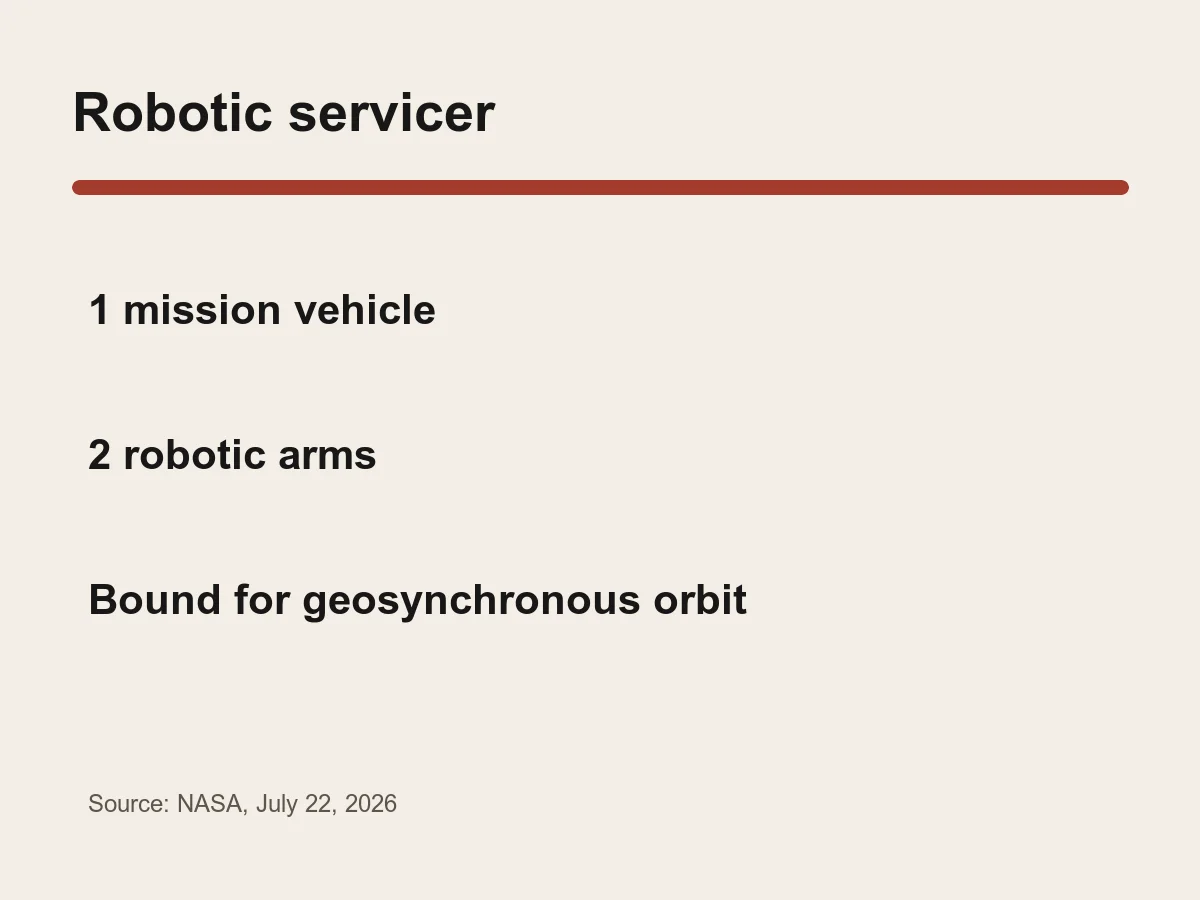
The vehicle carries two robotic arms developed by the U.S. Naval Research Laboratory. DARPA funded the demonstration, while NASA is contributing simulation, software analysis and trained flight robot operators.
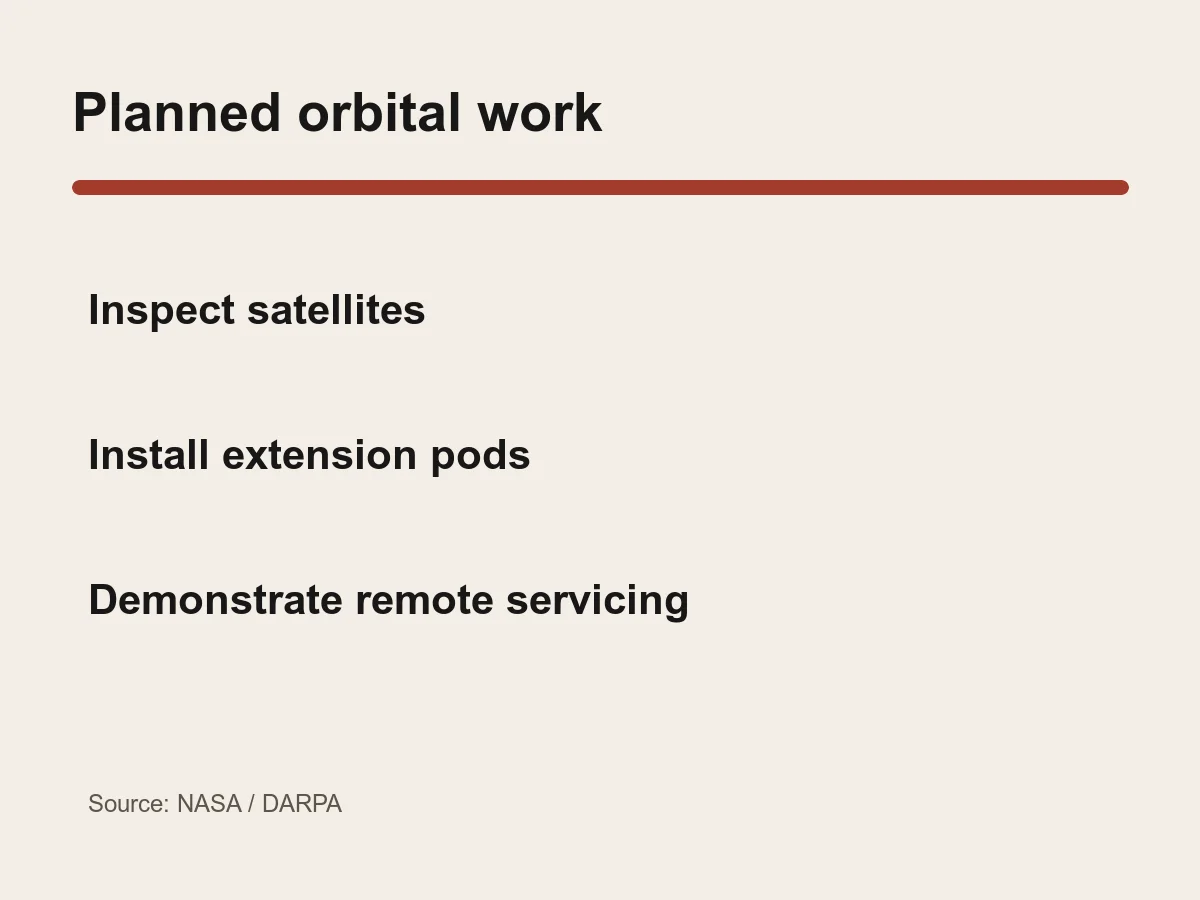
The planned work includes inspecting spacecraft and installing mission-extension pods. A successful demonstration could help satellite operators prolong useful service when a spacecraft remains functional but needs additional propulsion or related support.
The launch is the start of the mission, not proof that every planned task has succeeded. The vehicle must reach its operating orbit, complete checkout and perform its demonstrations before the technology's on-orbit performance can be judged.
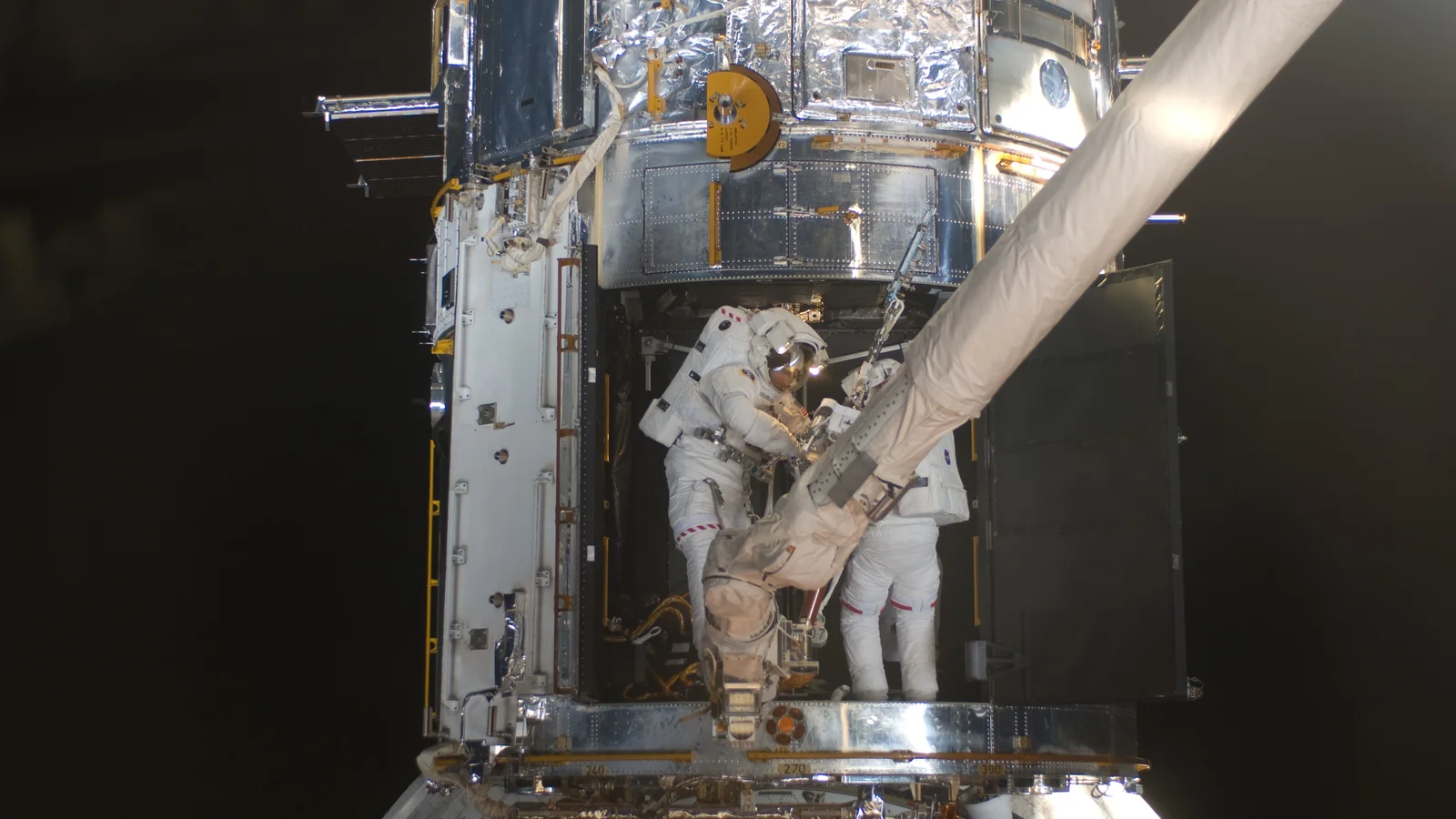
Geosynchronous orbit hosts hundreds of communications, weather and other satellites. Its distance from Earth makes crewed repair far more difficult than the low-Earth-orbit servicing performed on the Hubble Space Telescope.
Robotic servicing also requires precise navigation and contact with spacecraft that may not have been designed for repair. Demonstrations must show that the arms, software and operators can work without damaging the client satellite.
The mission is not a general rescue guarantee for every aging spacecraft. Compatibility, ownership, operational approvals and the condition of a target all affect whether servicing is feasible.
The decisive evidence will come after arrival: checkout results, documented servicing demonstrations and measurements of whether installed hardware extends a satellite's useful operations as intended.