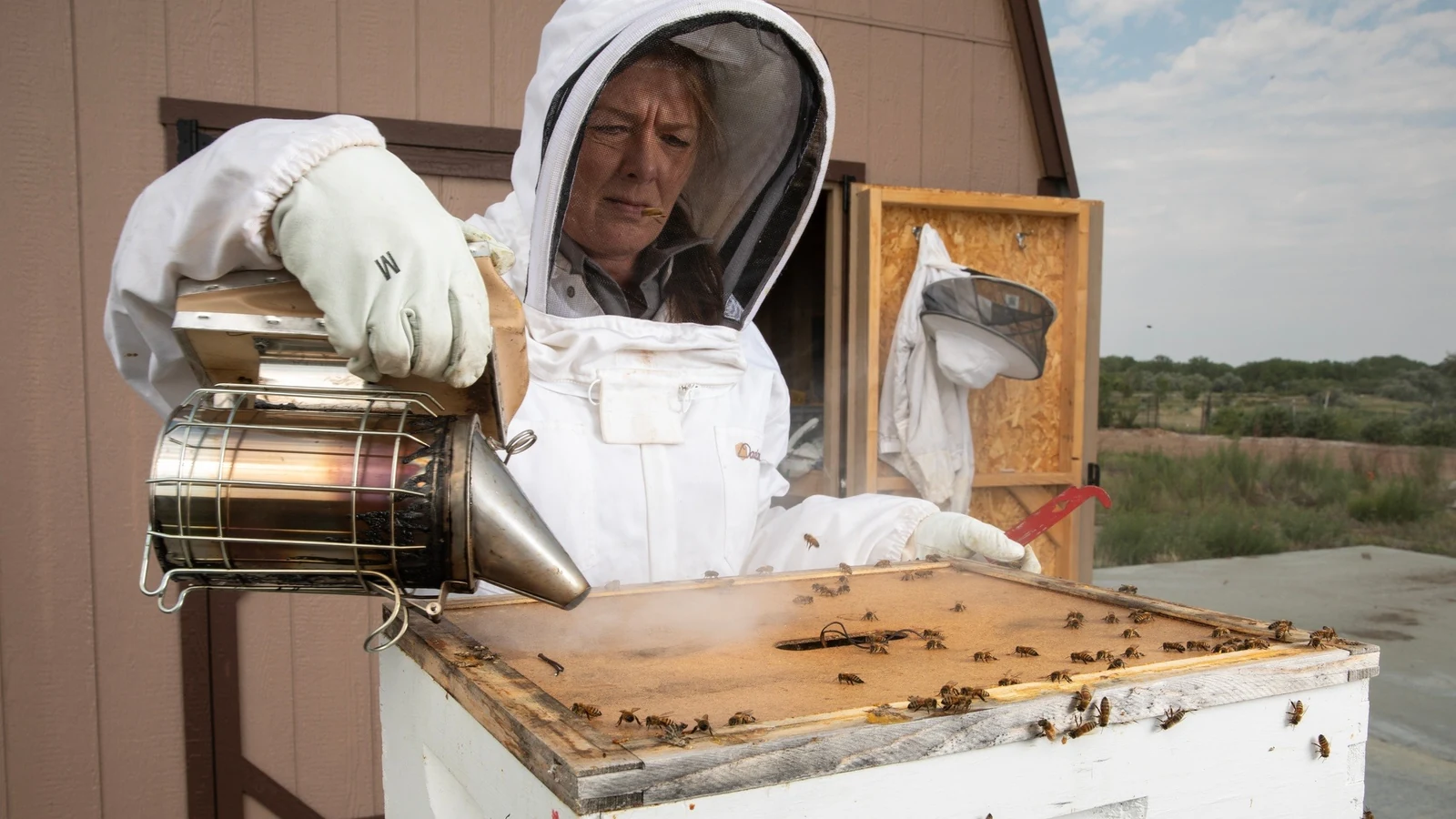
Queen sweat bees use chemical signals that help shape whether adult daughters reproduce independently or remain in the nest as workers, according to a multiyear study on Panama’s Barro Colorado Island.
The species, Megalopta genalis, is useful because its social structure is flexible. Some females live alone, while others form small groups with a reproductive queen and daughters that forage, guard and care for offspring.
Researchers followed hundreds of artificial nests, marked individual bees and recorded behavior over multiple years. They paired those observations with ovarian measurements and repeated chemical samples from living queens.
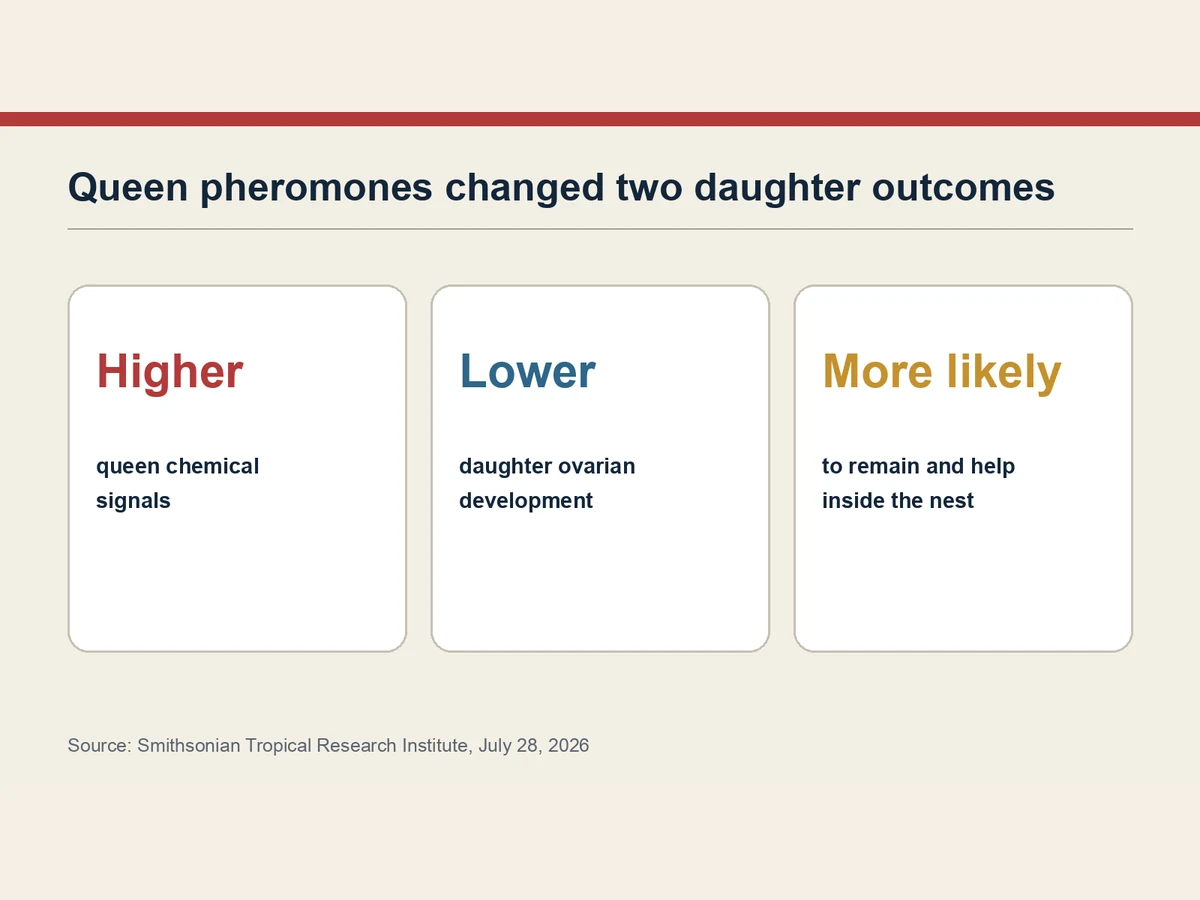
Using gas chromatography-mass spectrometry, the team identified queen-associated compounds. Higher levels were linked to reduced ovarian development in daughters and to a greater likelihood that daughters stayed in the natal nest.
That combination gives the signal biological weight: it was associated with both physiology and behavior. The authors describe it as the first queen pheromone identified in an insect whose social organization can shift between solitary and group living.
The result does not mean a daughter is chemically controlled by one molecule. Nest conditions, kinship, resources, queen health and individual development can also influence whether staying or leaving is advantageous.
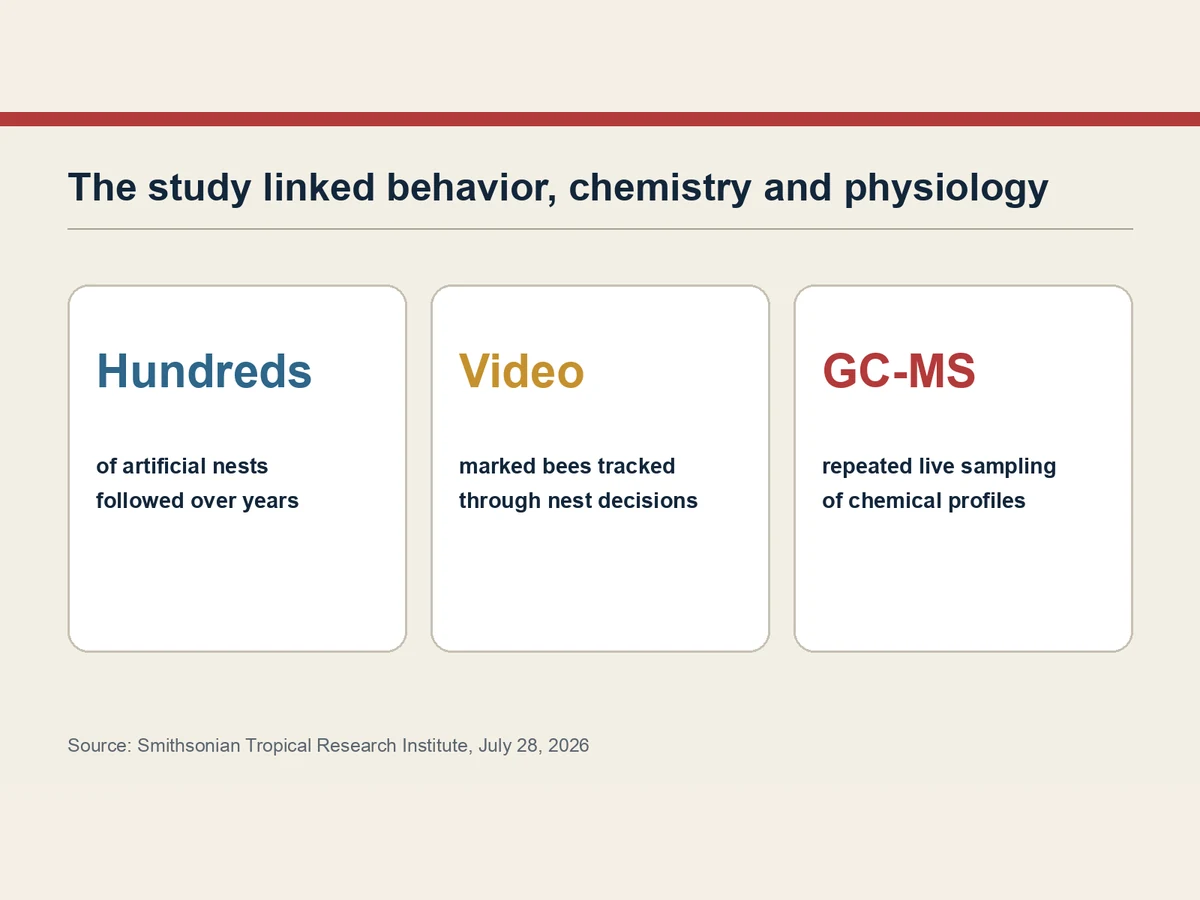
The study’s strength is the connection between years of field behavior and repeated chemistry from living animals rather than a one-time laboratory comparison. Its boundary is equally clear: one species and one tropical field site cannot stand in for every bee.
For evolutionary biology, the flexible system offers a view of how chemical communication may reinforce an intermediate social arrangement before the rigid worker castes seen in honeybees and many ants.
The next questions include how daughters detect the compounds, whether experimental changes alter choices in the field and how the signal interacts with environmental pressures. For now, the work identifies a measurable chemical pathway linking queens to daughter reproduction and cooperation.