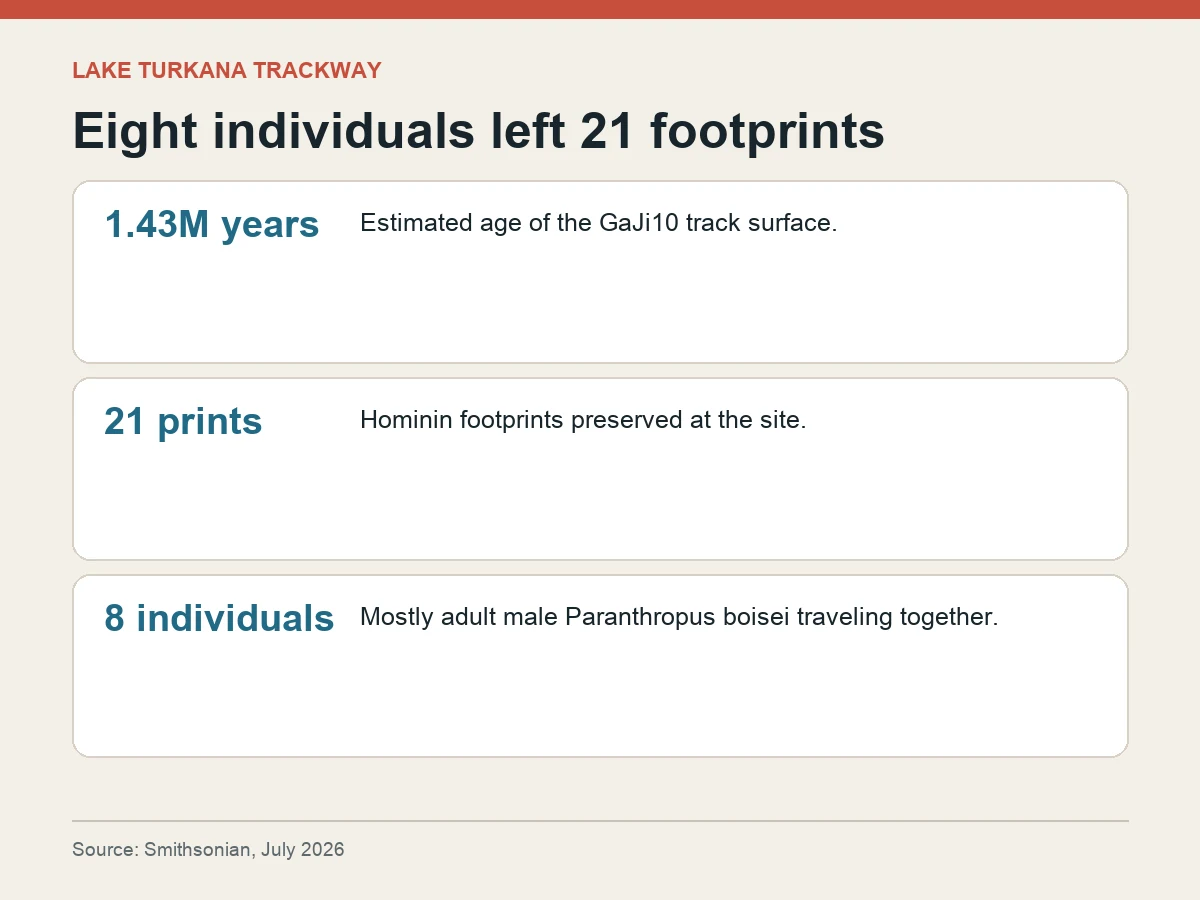
Twenty-one fossil footprints at Kenya’s Lake Turkana record eight Paranthropus boisei individuals moving across the same lakeshore about 1.43 million years ago, offering an unusually direct glimpse of body size and group behavior.
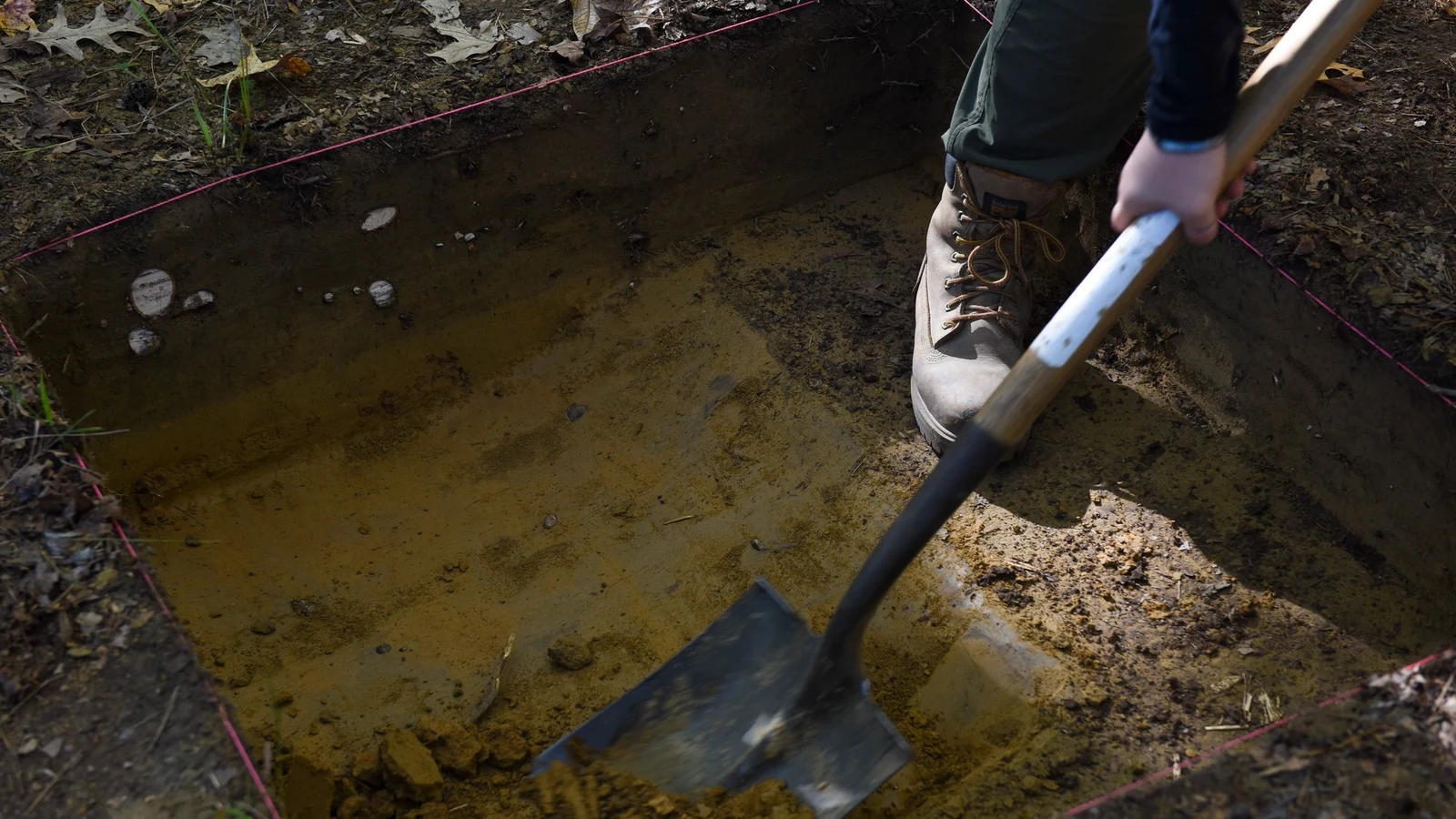
The GaJi10 surface was first exposed in 1978 after Smithsonian geologist Kay Behrensmeyer noticed a hippopotamus print in an excavated layer. The site was reburied for protection and reopened in 2016 and 2023, when researchers revealed the much larger track assemblage.
Volcanic ash in surrounding rock dated the surface to the Early Pleistocene. Along with the hominin tracks, it preserves impressions from hippopotamuses, antelope and other animals that used the ancient lake margin.
Researchers attributed the hominin prints to Paranthropus boisei by analyzing foot anatomy and movement patterns. The assignment is an inference from track morphology and the species known in the region, not a genetic identification, but the paper reports a consistent anatomical signal.
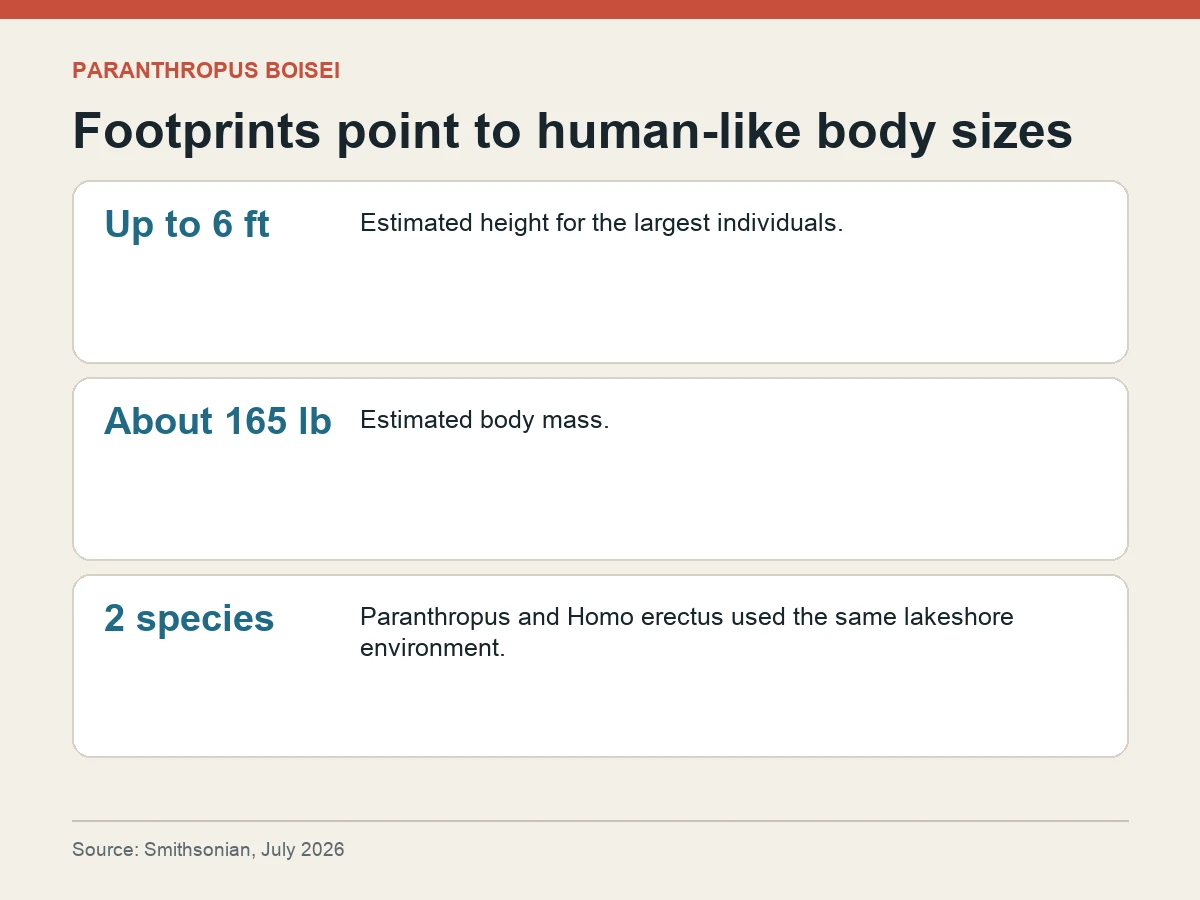
The largest prints imply bodies up to about six feet tall and 165 pounds—human-like dimensions closer to Homo erectus than earlier estimates from sparse Paranthropus bones suggested. Footprints capture weight-bearing anatomy, but converting print dimensions into height and mass still depends on models.
Track orientation and spacing indicate that the eight individuals were present together. The researchers interpret the group as mostly adult males, raising the possibility of a social organization more complex than isolated foraging or chance overlap.
That behavioral conclusion is necessarily cautious. A trackway freezes one short episode, and preservation can omit other individuals. It cannot establish how often groups formed, whether females or young were nearby, or what purpose brought the walkers to the mudflat.
A nearby, slightly older track surface described in 2024 preserved prints from both Paranthropus boisei and Homo erectus. Together, the sites show that two similarly sized hominins repeatedly used the Lake Turkana margin over a long interval.
Bones reveal anatomy accumulated over lifetimes; footprints preserve motion and association in minutes. At GaJi10, that difference turns an extinct relative from a list of skeletal traits into a group crossing a shared landscape—and makes the case for protecting the sediments that still hold such moments.