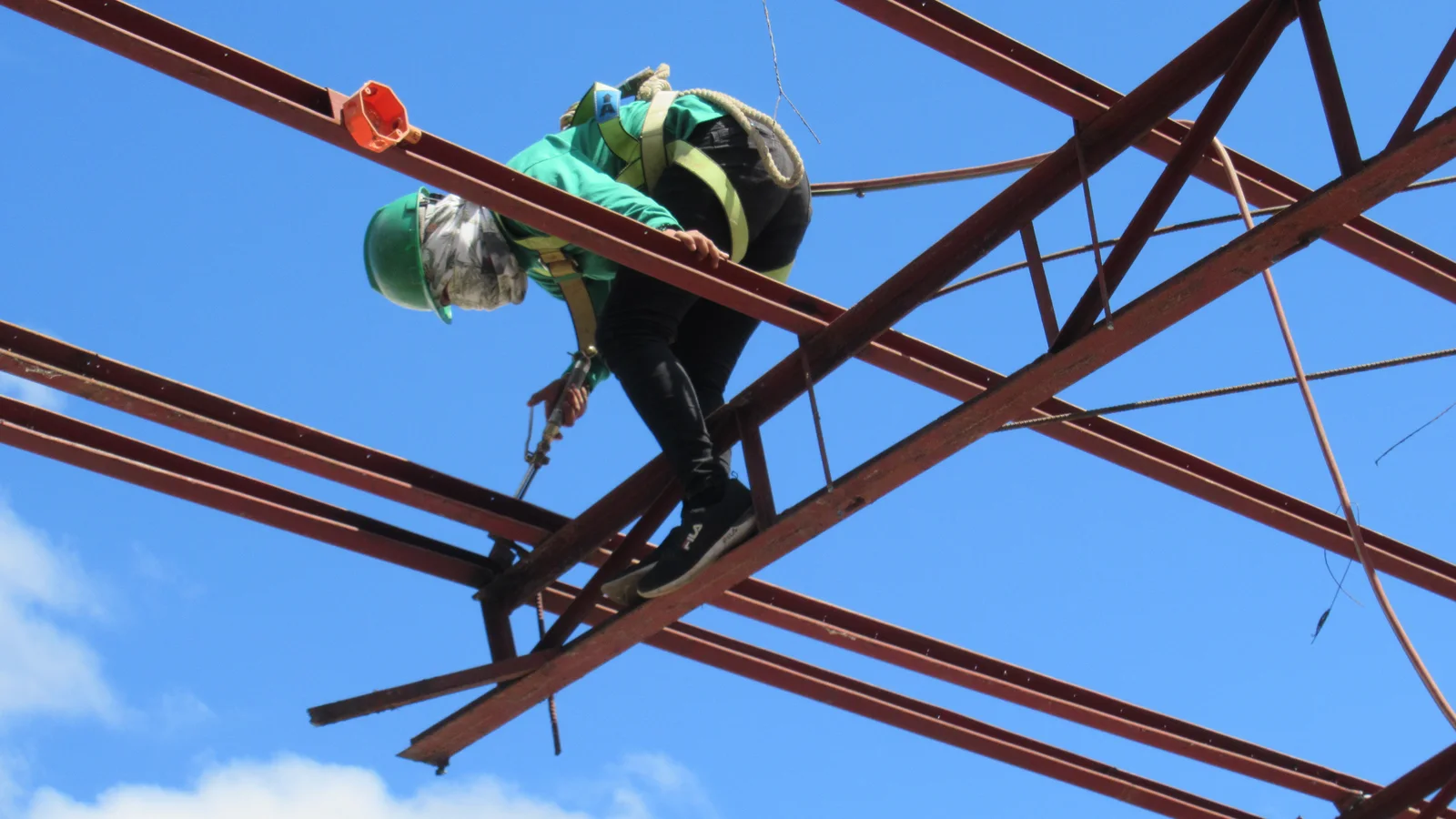
OSHA's 2026 Safe + Sound Week begins Monday, Aug. 10, and runs through Sunday, Aug. 16, giving employers and workers a national prompt to examine how their safety and health programs operate in practice.
The Occupational Safety and Health Administration describes the week as open to organizations of every size and industry. Participation is voluntary, and the agency provides activity ideas rather than imposing a new rule or one-size-fits-all compliance checklist.
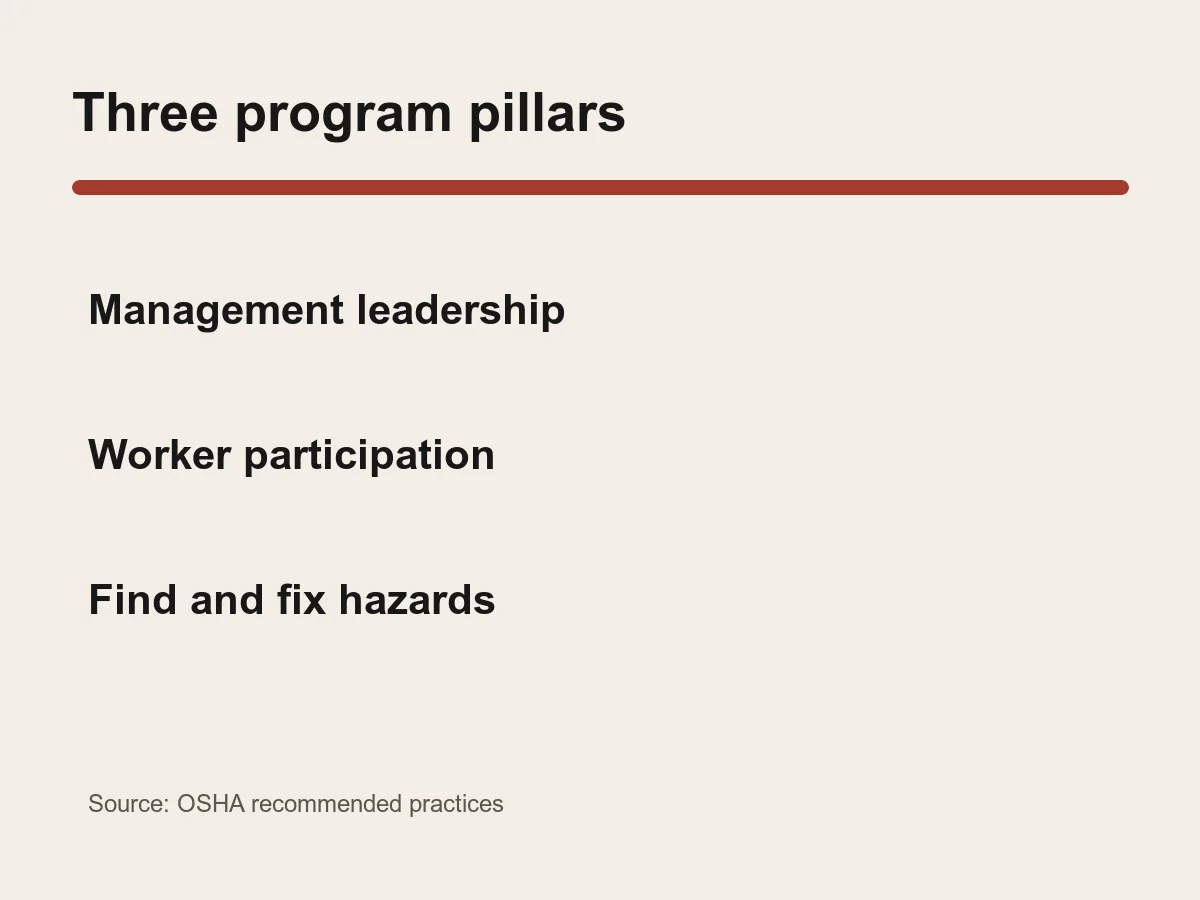
OSHA's recommended framework has three core elements: management leadership, worker participation, and a systematic process for finding and fixing hazards. The point is to make prevention part of routine operations instead of waiting for an incident to expose a problem.
Management leadership includes setting expectations, providing time and resources, and making supervisors accountable for the program. Worker participation means employees can report hazards, help design controls and raise concerns without retaliation.
The third element turns those commitments into a cycle: identify hazards, assess risk, select controls, verify that the controls work and revisit the process as equipment, staffing or tasks change.
A workplace can mark the week with a focused walkthrough, a short hazard-reporting exercise, a review of emergency contacts or a discussion led by workers who perform the task being examined. OSHA's materials encourage activities that fit the workplace rather than decorative events detached from actual hazards.
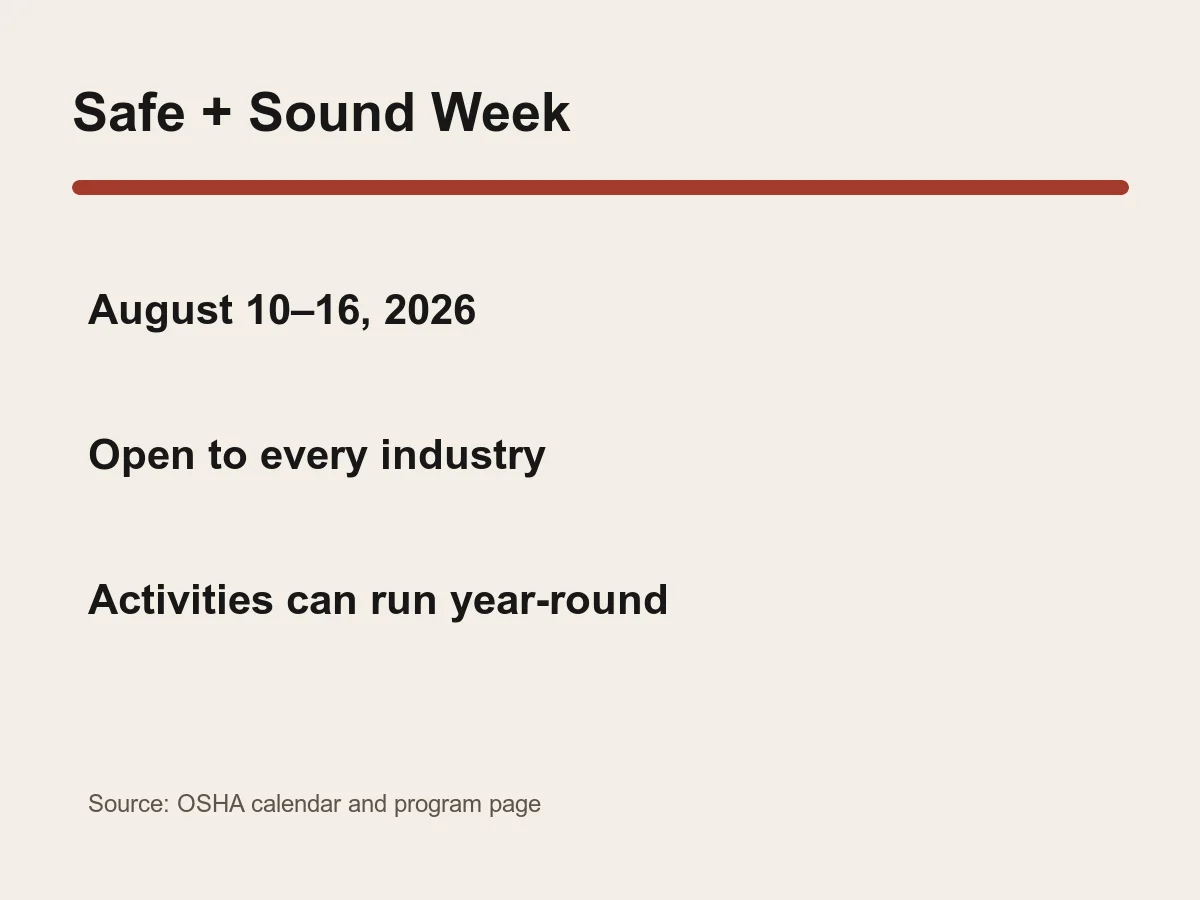
The calendar placement matters because a safety program is not proved by seven days of attention. A useful Safe + Sound Week activity should produce a documented action, such as assigning an owner to a hazard, setting a completion date or measuring whether a control reduced exposure.
Workers retain the right to raise safety concerns throughout the year. The awareness campaign does not replace employer obligations under the Occupational Safety and Health Act, applicable standards or state-plan requirements.
For organizations joining the event, the practical test is what remains after Aug. 16: a clearer reporting path, a hazard corrected, a worker included in a decision or a recurring review that did not exist before the week began.