
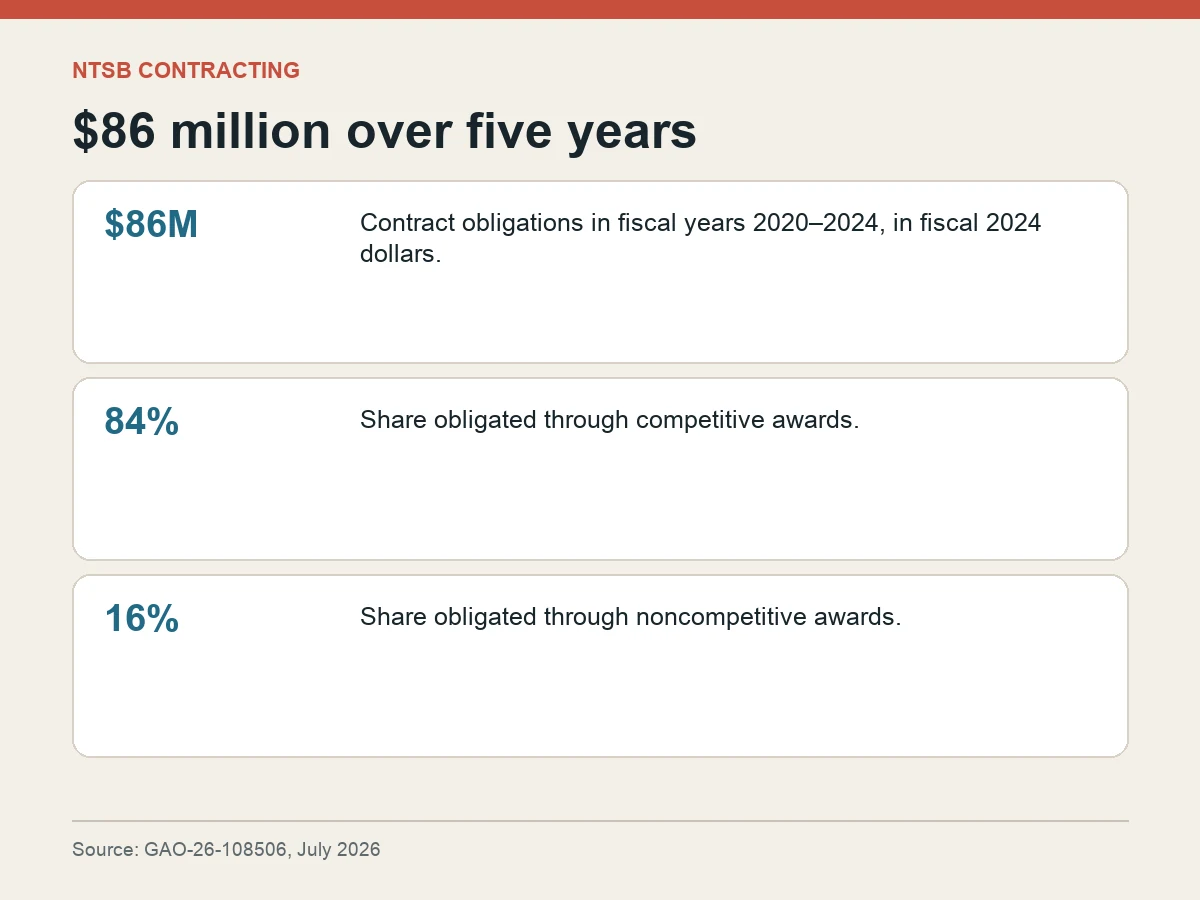
The National Transportation Safety Board obligated about $86 million through awarded contracts over five fiscal years, with information-technology upgrades driving most of a sharp increase in competitive spending, according to a Government Accountability Office review.
The total covers fiscal years 2020 through 2024 and is adjusted into fiscal 2024 dollars. About 84 percent of the obligations were tied to competitively awarded contracts; roughly 16 percent went through noncompetitive procedures. That split describes dollars obligated, not the number of awards.
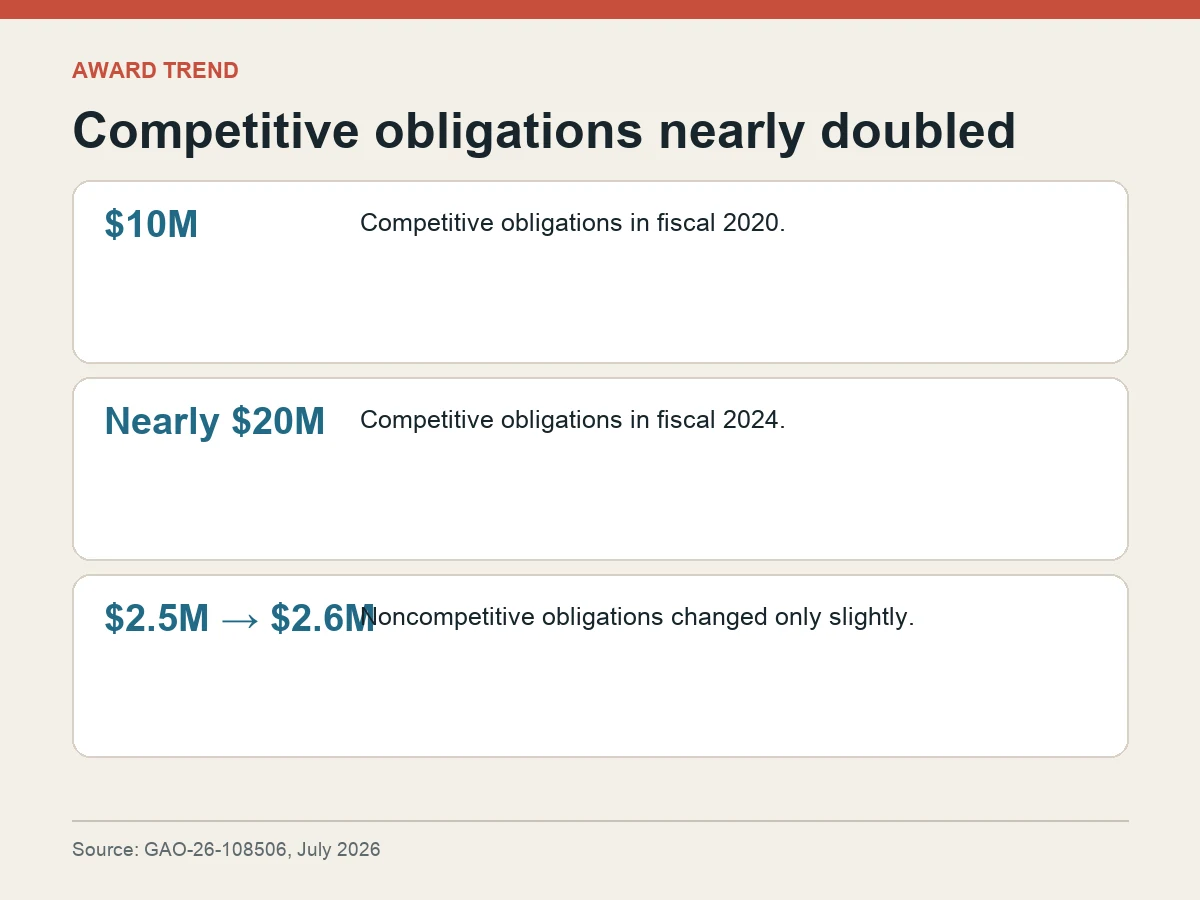
Competitive obligations rose from about $10 million in fiscal 2020 to nearly $20 million in fiscal 2024. NTSB officials told GAO that most of the increase came from investments in IT products and services, including systems and applications used to investigate accidents and share data and institutional knowledge.
Noncompetitive obligations increased much less, from about $2.5 million in fiscal 2020 to about $2.6 million in fiscal 2024. Federal rules generally call for full and open competition, but agencies may use noncompetitive procedures when an authorized exception applies.
NTSB’s internal process adds review as dollar values rise. Noncompetitive awards above $100,000 and competitive awards above $500,000 require additional review or senior-level approval, GAO reported. Following a February 2025 executive order, the agency also required its chair to approve new contract requirements above $100,000 unless that authority was delegated to the managing director.
The purchases support an agency whose public mission extends from examining wreckage and laboratory evidence to managing large volumes of investigative data. GAO cited laboratory equipment as one kind of product and the development and maintenance of investigative systems as examples of contracted services.
The review was required by the FAA Reauthorization Act of 2024. GAO examined statutes, regulations, executive orders and agency guidance, interviewed NTSB officials, and analyzed Federal Procurement Data System records downloaded on September 25, 2025. It found the obligation data sufficiently reliable for the descriptive work.
The figures do not establish that a noncompetitive award was wasteful or unlawful, and GAO did not make that claim. They instead provide a five-year map of how NTSB bought products and services, how the competitive share dominated the total, and where growth occurred.
The clearest operational shift is toward digital capacity: by fiscal 2024, competitive contract obligations were almost twice their fiscal 2020 level, while noncompetitive obligations were essentially flat. For an investigative agency, that means more of the contracting footprint now sits in the systems that move evidence, data and recommendations through the safety process.