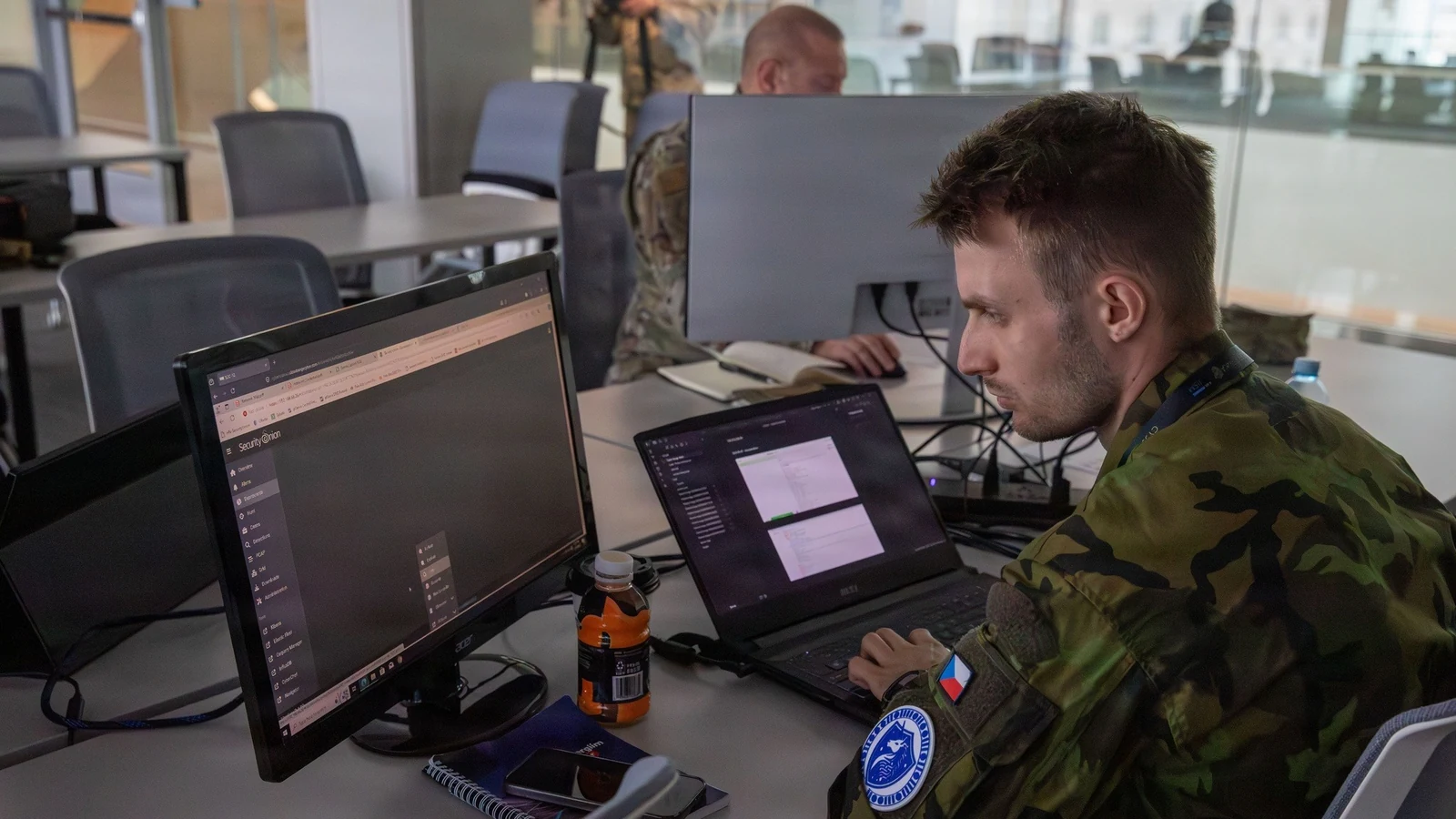
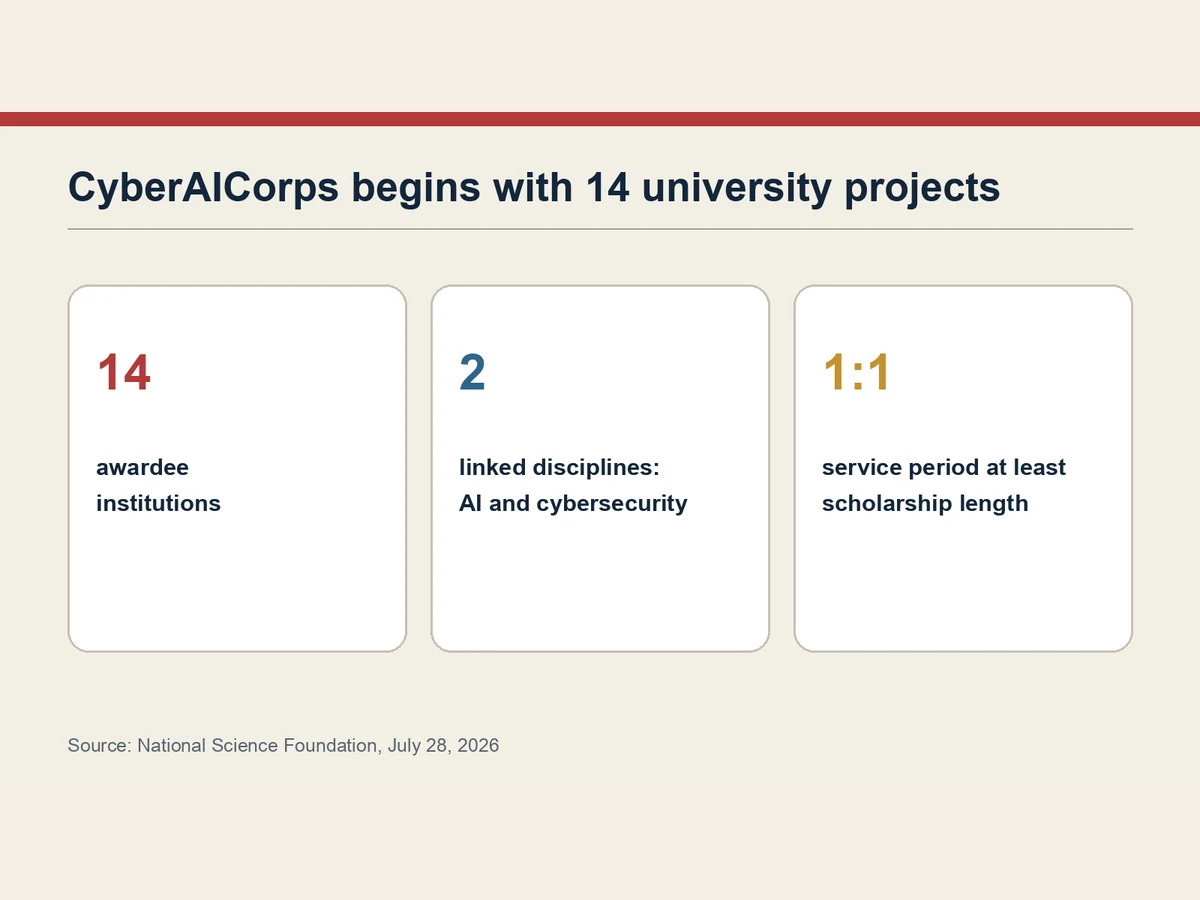
The National Science Foundation selected 14 university projects for the first CyberAICorps Scholarship for Service awards, expanding a federal cybersecurity pipeline to cover both AI-enabled defense and the security of AI systems.
The awardees span 12 states and include public and private institutions, from Arizona State and Texas A&M to the University of Rhode Island and Vanderbilt. NSF did not provide a total student count in the announcement.
The program treats “CyberAI” as a two-way field. Students may use artificial intelligence for threat detection, incident response and digital forensics while also learning how to build AI systems that resist attack and failure.
Many projects combine disciplines that universities have traditionally taught separately. The intended outcome is a worker who can reason about machine-learning systems and the security controls around data, infrastructure and deployment.
Applied learning is a required part of the design. NSF highlighted faculty-mentored research, cyber ranges, security laboratories, internships, capstone projects and work on government or critical-infrastructure problems.
The scholarship track carries a service obligation. Recipients must work after graduation in an AI or cybersecurity mission of a government organization for at least as long as they received scholarship support.
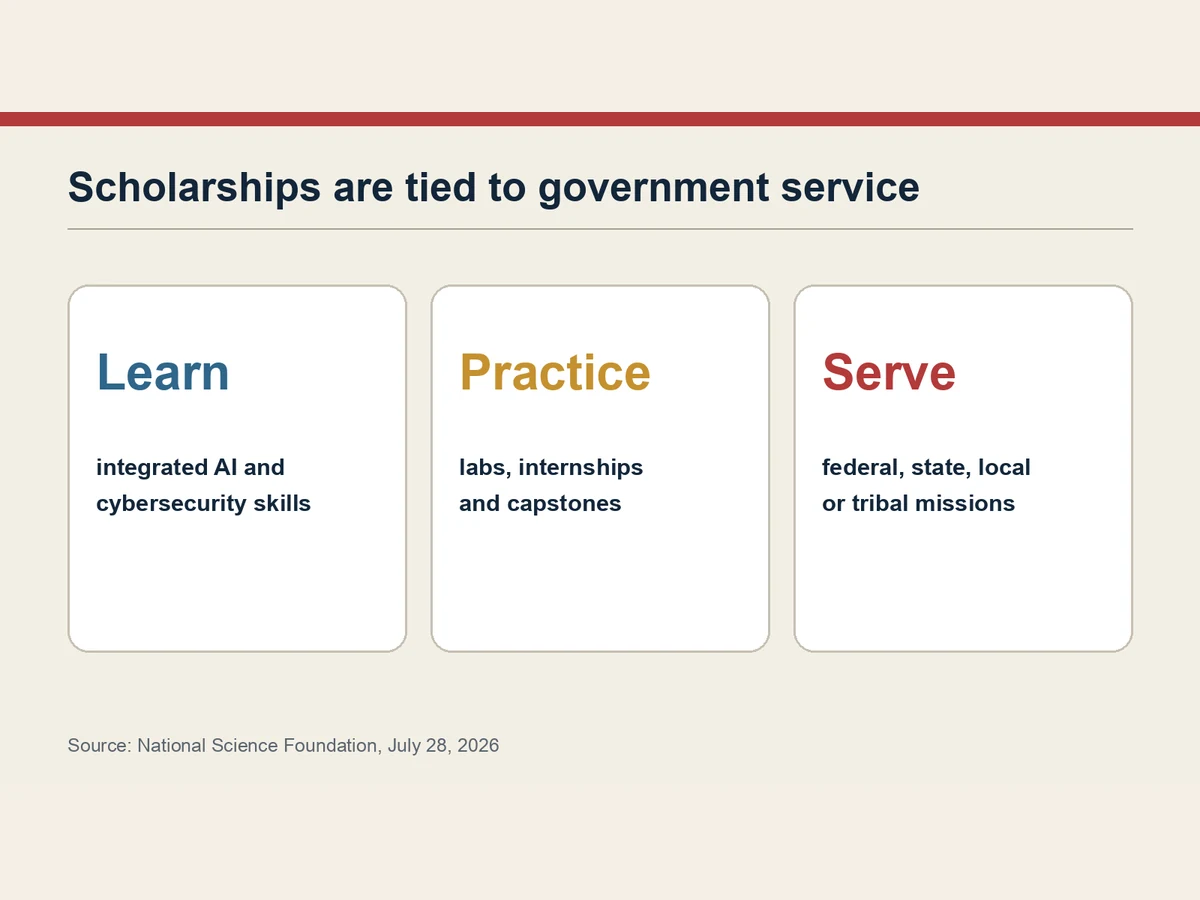
Eligible pathways include federal, state, local, tribal and territorial government. The projects add mentoring and career development to help students translate technical training into those public-sector roles.
Selection is not the same as demonstrated workforce impact. NSF has not yet reported how many students will complete the programs, which agencies will hire them or whether retention will improve.
The first useful measures will be enrollment, completion, placement and fulfilled service obligations. Security outcomes are harder: a graduate count does not by itself show that an agency can detect incidents faster or deploy safer AI.
Still, the inaugural awards establish a concrete national test of an integrated curriculum at a time when AI can amplify both defensive capability and cyber risk.