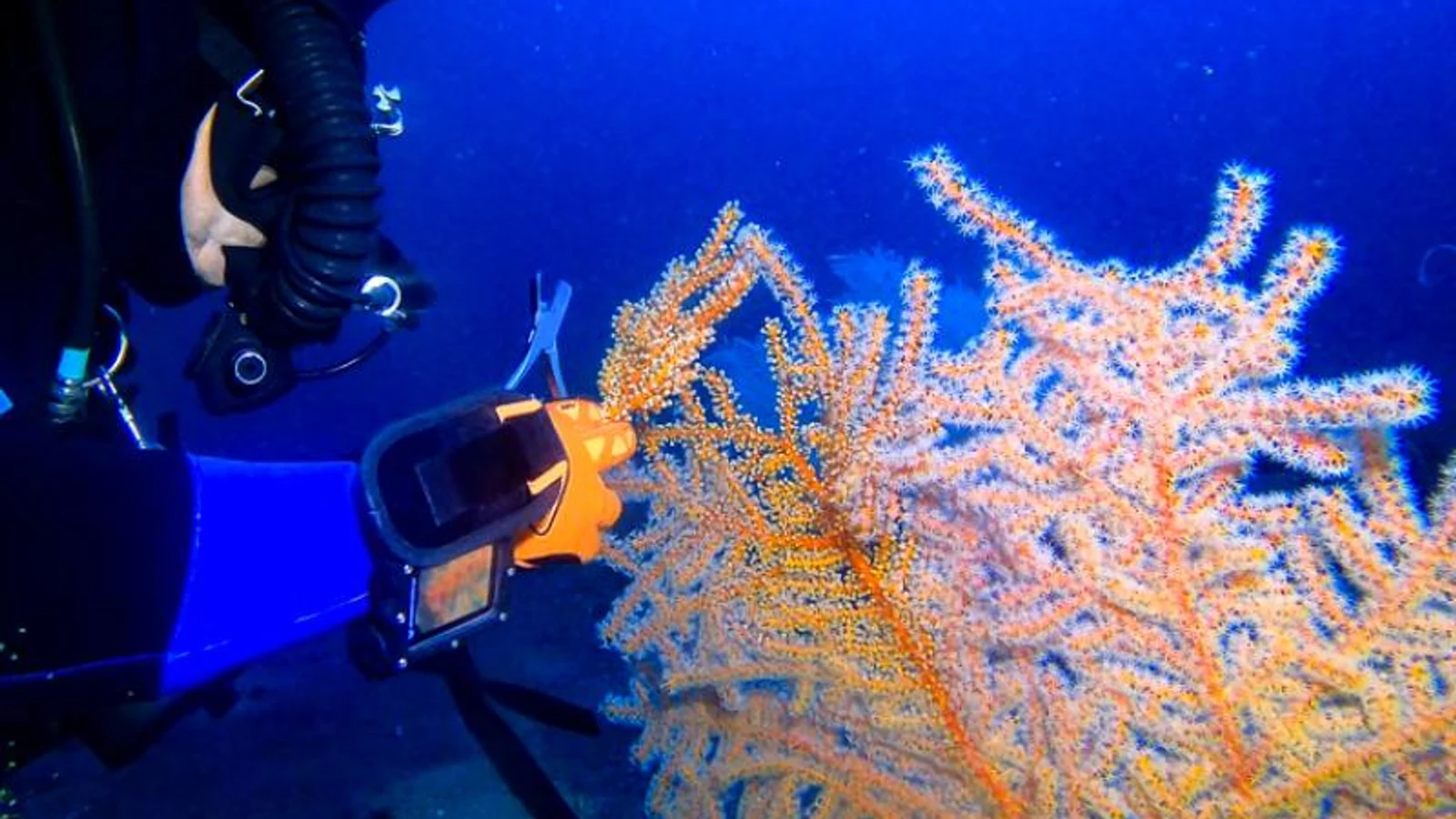
A prototype carrier nicknamed the “coral torpedo” helped NOAA divers move lab-reared corals into the dim middle-light zone of the Gulf this spring, where the team planted 26 specimens on artificial reef structures at a depth of 66 meters, or about 217 feet.
The operation aboard NOAA Ship Nancy Foster combined laboratory propagation, specialized diving and new delivery hardware in an effort to rebuild mesophotic coral communities injured by the 2010 Deepwater Horizon oil spill.
NOAA Fisheries reported the mission July 23. It said divers also relocated 16 coral fragments in the field to start new colonies—the first time rebreather divers had propagated these corals underwater and the first time divers had outplanted lab-reared mesophotic corals.
A faster route from the surface to the seafloor
Corals previously traveled on large weighted “elevators” that resisted the water and were cumbersome to maneuver. The new streamlined tube, developed by NOAA fisheries biologist Chris Gardner, held prepared fragments and descended rapidly to a precise site where divers could remove and place them.


Speed matters because transported corals must move through changing water conditions without unnecessary mixing or handling. At depth, human divers could fit the small bases attached to the specimens into their intended positions on dome-shaped concrete structures.
Technical divers worked as deep as 237 feet
The team completed decompression dives reaching 72.5 meters, or 237 feet. Closed-circuit rebreathers recycled breathing gas and extended bottom time, while a safety team and hyperbaric physician supported the operation.

Three soft-coral species were part of the planting work: Swiftia exserta, Muricea pendula and Thesea nivea. Mesophotic ecosystems live below shallow reefs but still receive some light, and they provide habitat that supports the Gulf food web.
The mission gathered far more than planted coral
NOAA said the crew collected 48 sediment cores and 51 live biological samples, sampled 11 colonies without removing them, mapped more than 14 square nautical miles of seafloor and collected water for organic-matter and environmental-DNA analysis.
The team also deployed three hydrophones to study whether habitat sound correlates with coral settlement and recorded stereo-camera surveys that can help researchers compare wild colony size with laboratory specimens.
Those measurements are the baseline for the harder question: whether the transplanted and newly propagated colonies survive and grow. NOAA has not yet reported long-term survival rates from this mission and says monitoring will continue.
The expedition is part of the Mesophotic and Deep Benthic Communities restoration portfolio led by NOAA for the Deepwater Horizon Open Ocean Trustee Implementation Group. A successful planting is a milestone, but ecological recovery will be measured over years rather than one voyage.