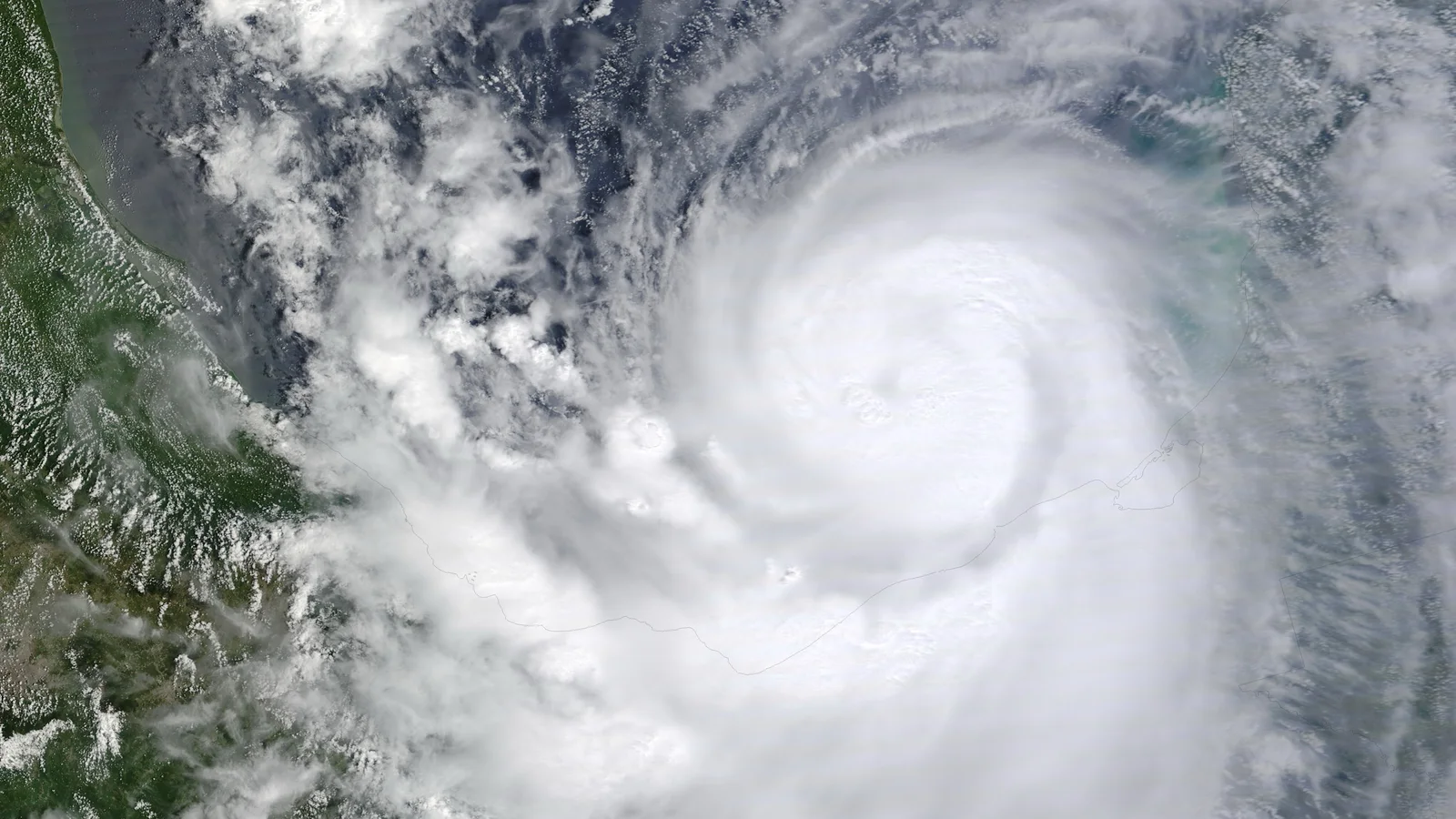
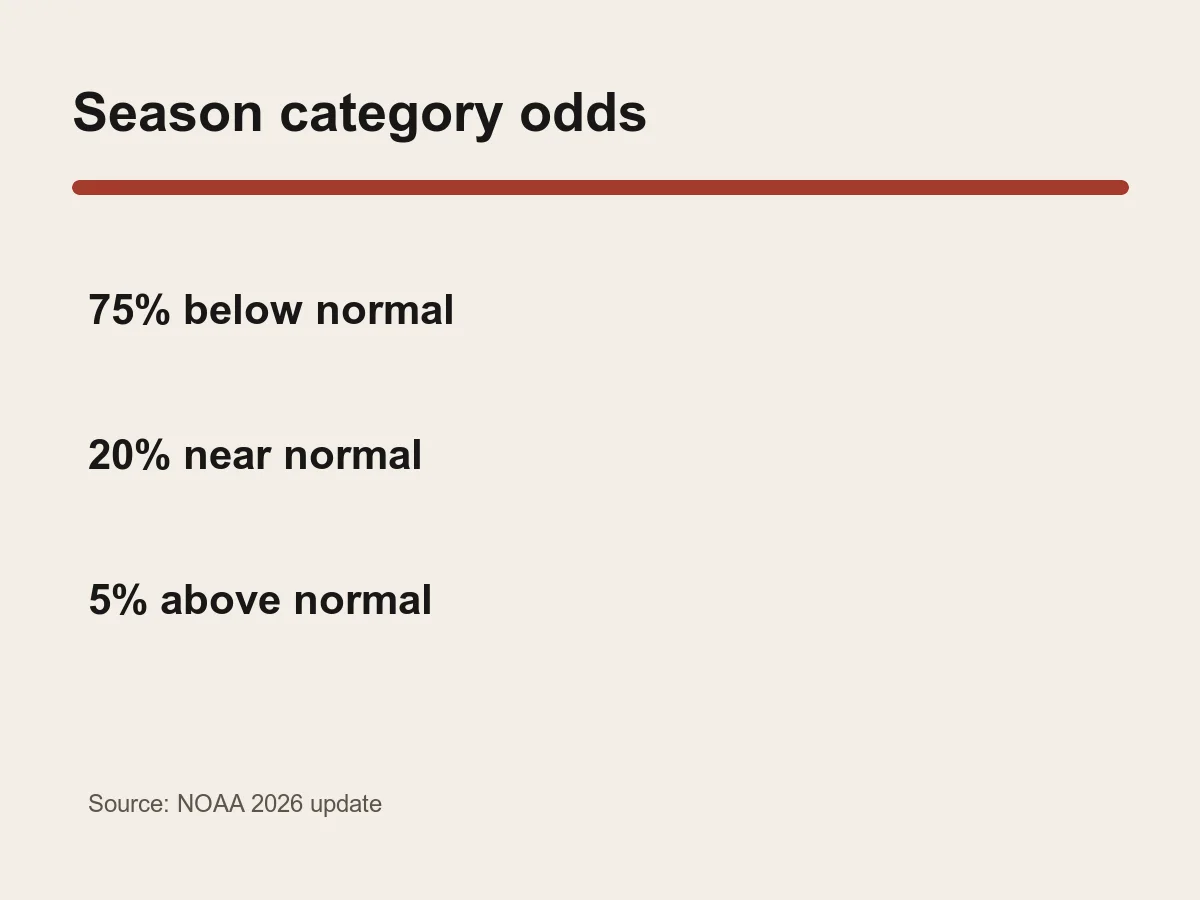
NOAA now gives the 2026 Atlantic hurricane season a 75% chance of finishing below normal, up from its preseason assessment, according to the agency's Aug. 6 update.
The outlook assigns a 20% chance to a near-normal season and 5% to an above-normal one. Those probabilities describe overall basin activity, not whether a storm will strike a particular coast.
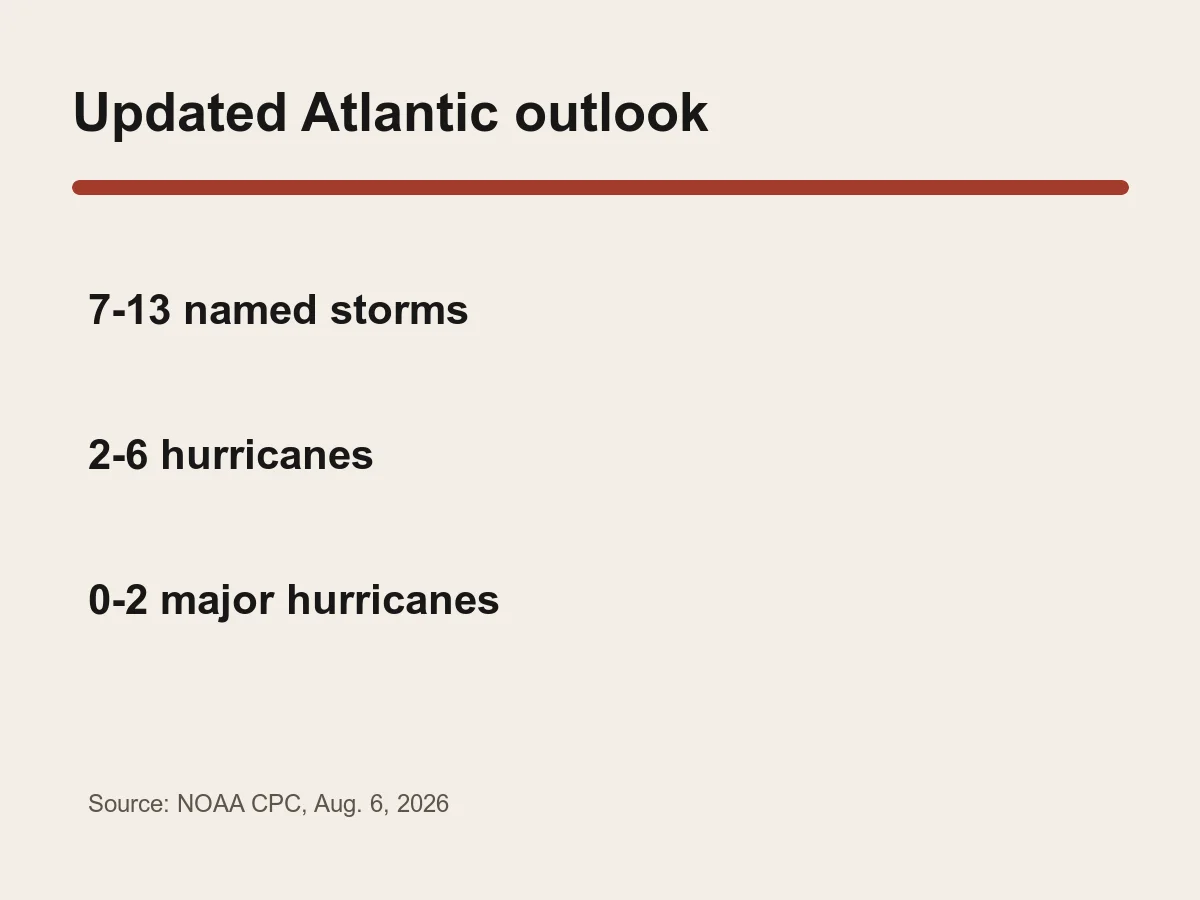
For the full June-through-November season, NOAA projects 7 to 13 named storms, including the two that had already formed when the update was issued. The range includes 2 to 6 hurricanes and 0 to 2 major hurricanes of Category 3 or stronger.
NOAA expects accumulated cyclone energy, a combined measure of storm strength and duration, to finish between 30% and 90% of the long-term median. About 3% of the median had accumulated by the outlook date.
The agency lowered its activity expectations largely because El Niño is strengthening. NOAA gives a 90% chance of strong or very strong El Niño conditions during the August-through-October peak of the Atlantic season.
El Niño often increases upper-level winds that disrupt Atlantic tropical cyclones, but it does not eliminate them. Warm water, local atmospheric conditions and short-term weather patterns can still support a damaging storm.
Seasonal totals also do not measure impact. One hurricane making landfall near a populated or vulnerable area can cause severe consequences during a season that is below normal by basin-wide statistics.
NOAA's update is therefore not a reason to relax preparedness. Residents and businesses in hurricane-prone areas should use forecasts and instructions from official local and national authorities when a specific system develops.
The outlook's value is probabilistic planning: the most likely season category is now below normal, while the ranges preserve uncertainty about how many storms will form and how strong or long-lived they will become.