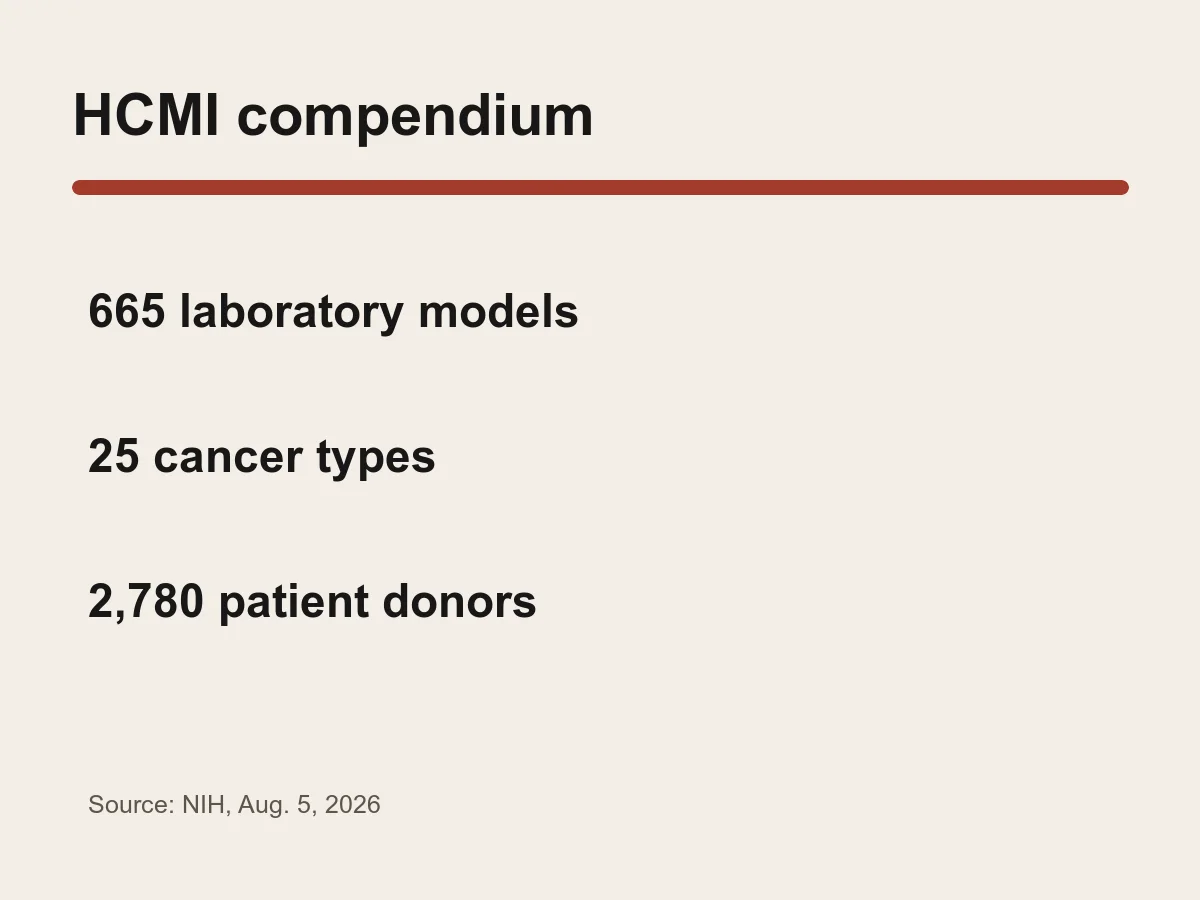
A decade-long international effort funded by the National Institutes of Health has assembled 665 patient-derived cancer models spanning 25 tumor types and tissue from 2,780 donors, creating a shared laboratory resource intended to speed precision-oncology research.
The Human Cancer Models Initiative, or HCMI, pairs laboratory-grown models with genomic, transcriptomic, epigenomic and clinical information. NIH said the collection includes common cancer subtypes and many of the predominant genetic alterations within them.
Patient-derived models let researchers test questions that cannot be explored directly in a person’s tumor. The collection includes organoids that reproduce aspects of an organ’s cellular makeup and neurosphere clusters derived from brain cancers.
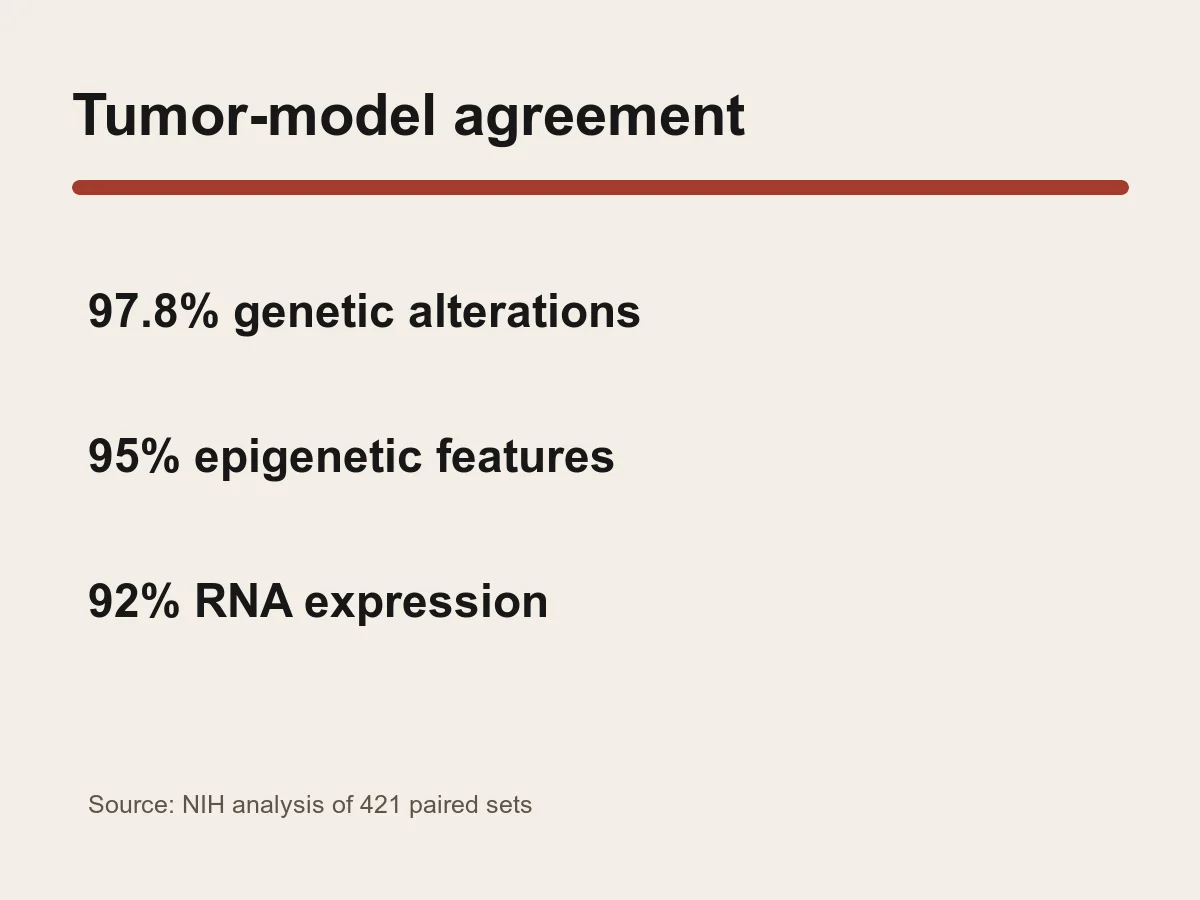
The central quality question is whether a model still resembles the tumor after it has been grown in a laboratory. HCMI researchers compared 421 tumors with their paired models and reported 97.8 percent agreement in genetic alterations, 95 percent concordance in epigenetic features and 92 percent similarity in RNA-expression patterns.
Those figures describe molecular agreement across the analyzed pairs; they do not mean every model predicts a patient’s treatment response with the same accuracy. A laboratory model is a research tool, not an individualized treatment recommendation.
The resource includes 522 models with detailed clinical data, 153 models of rare cancers and 71 models from people of non-European ancestry. NIH said models and associated data are being distributed through the American Type Culture Collection and an HCMI searchable catalog.
Researchers can use the models to study tumor evolution, drug sensitivity and treatment resistance. In glioblastoma models, the project identified several genetic features associated with resistance to temozolomide, a chemotherapy drug.
The work was published Aug. 5 in Nature with companion studies led by the Wellcome Sanger Institute, the Broad Institute of MIT and Harvard and Cold Spring Harbor Laboratory. The compendium’s value will depend on how broadly researchers use it and how well later experiments reproduce clinically meaningful findings.
For now, the deliverable is concrete: a standardized, searchable collection that gives cancer laboratories access to hundreds of molecularly characterized models without each team having to build the same resource from scratch.