
The United States has begun restricting imports of designated archaeological and ethnological material from Nepal under a bilateral cultural-property agreement.
The Customs and Border Protection final rule took effect Aug. 12. It adds Nepal to the federal list of countries covered by cultural-property import restrictions and publishes a detailed designated list.
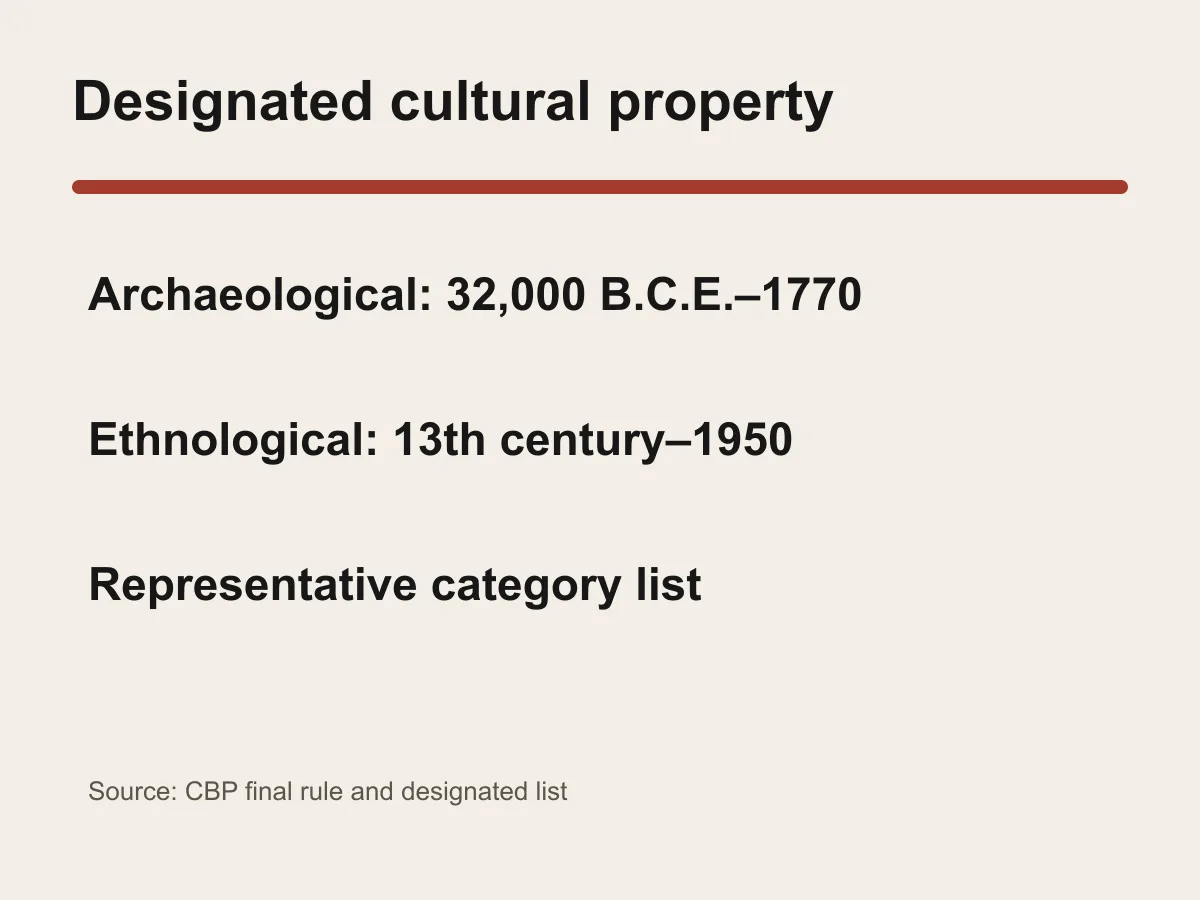
Archaeological categories range from approximately 32,000 B.C.E. through 1770 C.E. The ethnological categories cover specified religious architectural elements, religious and ceremonial objects, and manuscripts from roughly the 13th century through 1950.
The list is representative rather than an inventory of every protected object. It includes categories across stone, metal, ceramic, wood, textiles, paintings, manuscripts and other materials, with the applicable description and date range controlling.
A covered object may enter the United States only when the conditions in 19 U.S.C. 2606 and the implementing customs rules are met. The restriction is therefore not a ban on all Nepalese art, crafts or lawful cultural exchange.
The bilateral agreement was signed Jan. 8, 2026. U.S. officials had determined that Nepal's cultural patrimony was at risk of pillage, that Nepal had taken protective measures and that import restrictions would provide a substantial deterrent benefit.
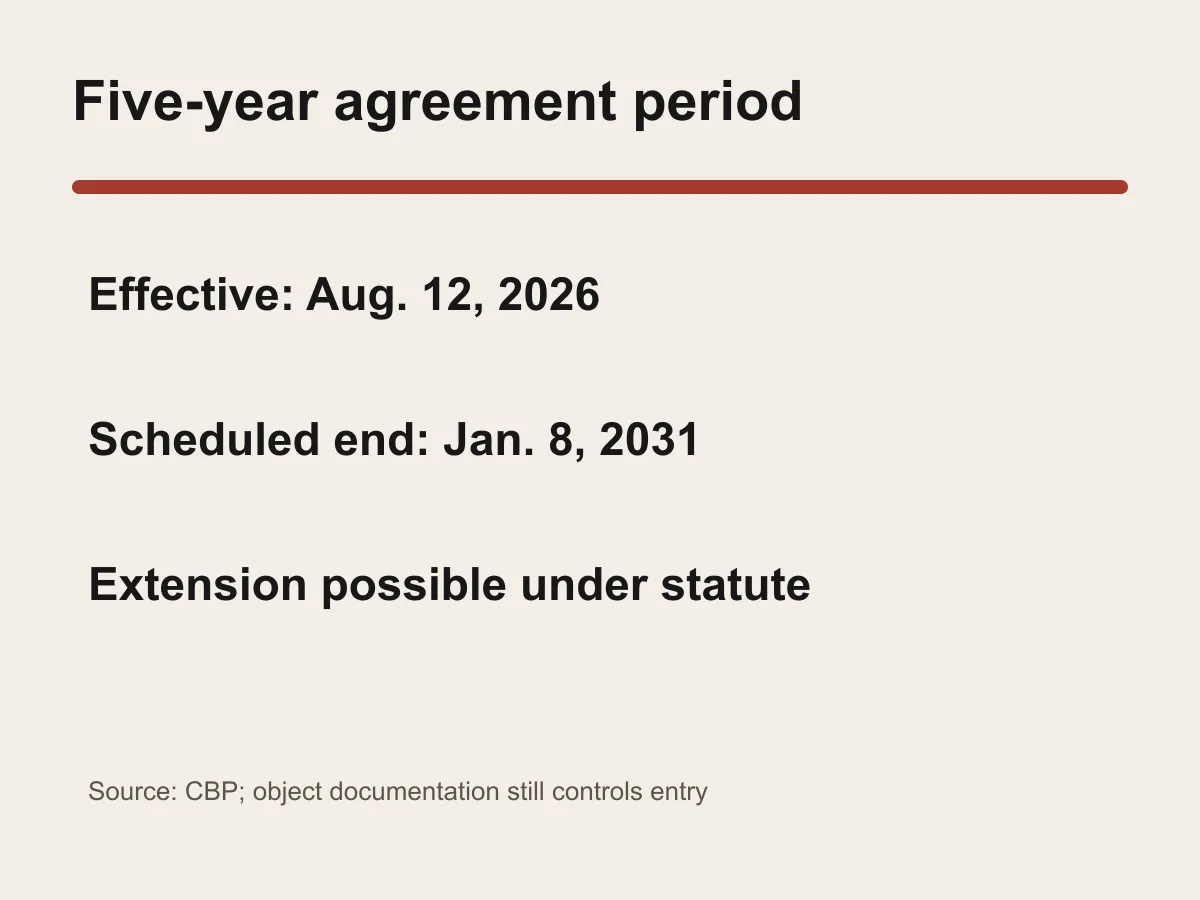
The restrictions are scheduled to expire Jan. 8, 2031. They may be extended in periods of no more than five years if the statutory findings still apply and there is no cause for suspension.
Collectors, museums and importers need object-specific provenance and export documentation. This article summarizes the federal rule and does not decide whether any particular object is eligible for entry.