
NCAA men’s and women’s soccer coaches will receive two video challenges per game in 2026–27, replacing a review structure that relied more heavily on officials to decide when to look again.
The rule applies in games where video review is available. Each coach may challenge at any point, but the maximum remains two; the NCAA announcement does not describe a retained challenge after a successful review.
Official-initiated review becomes more limited during the first 80 minutes. Referees may independently check only clock questions and whether the ball crossed the goal line, leaving other allowable review issues to a coach’s challenge.
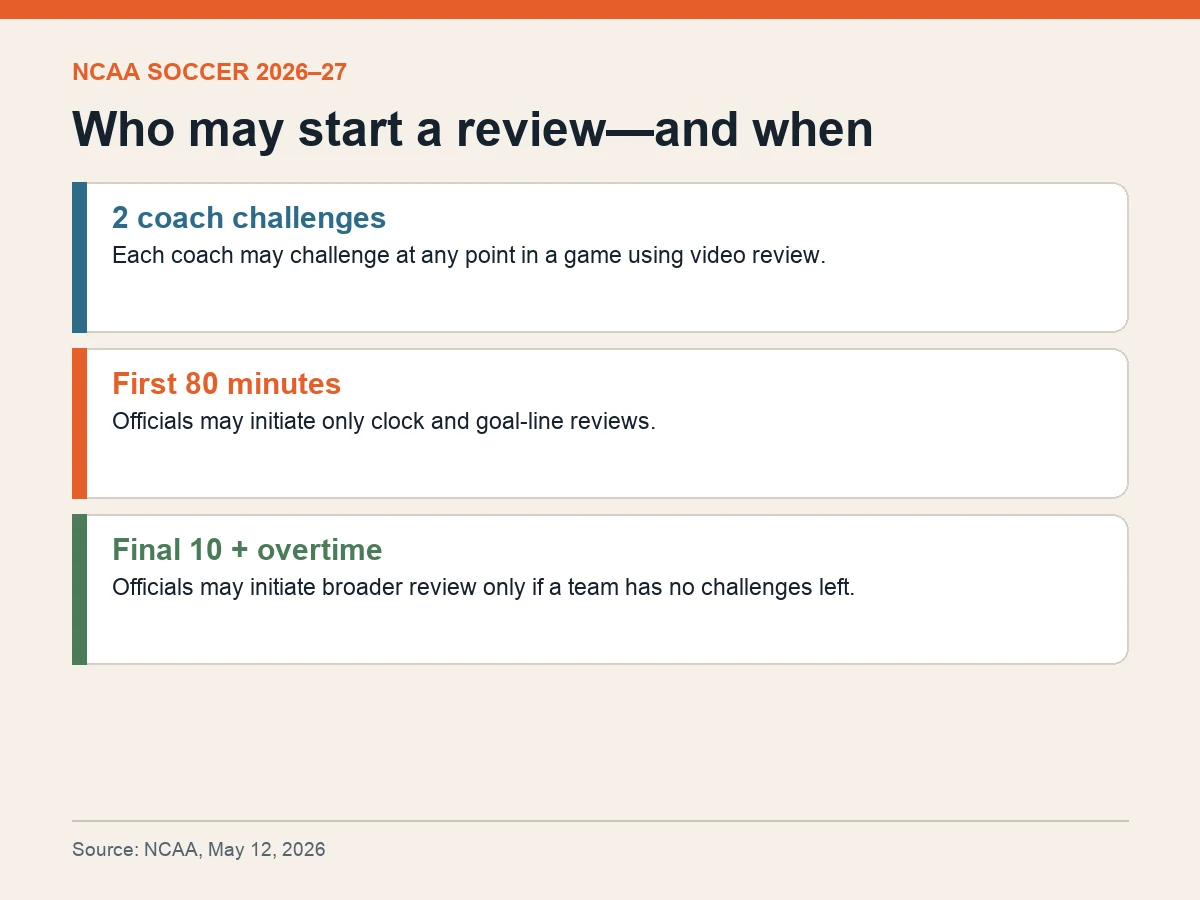
The final 10 minutes and overtime create a different balance. Officials may initiate review of any allowable play, but only when a team has exhausted its challenges. If a team still has a challenge, the coach must decide whether to use it.
The NCAA said the design is intended to improve accuracy without sacrificing pace. It makes the challenge inventory part of match strategy while preserving a late safety valve after that inventory is gone.
A separate goalkeeper rule changes both time and punishment. A goalkeeper will have eight seconds to release the ball after gaining possession, up from six, while officials visibly count the final five seconds.
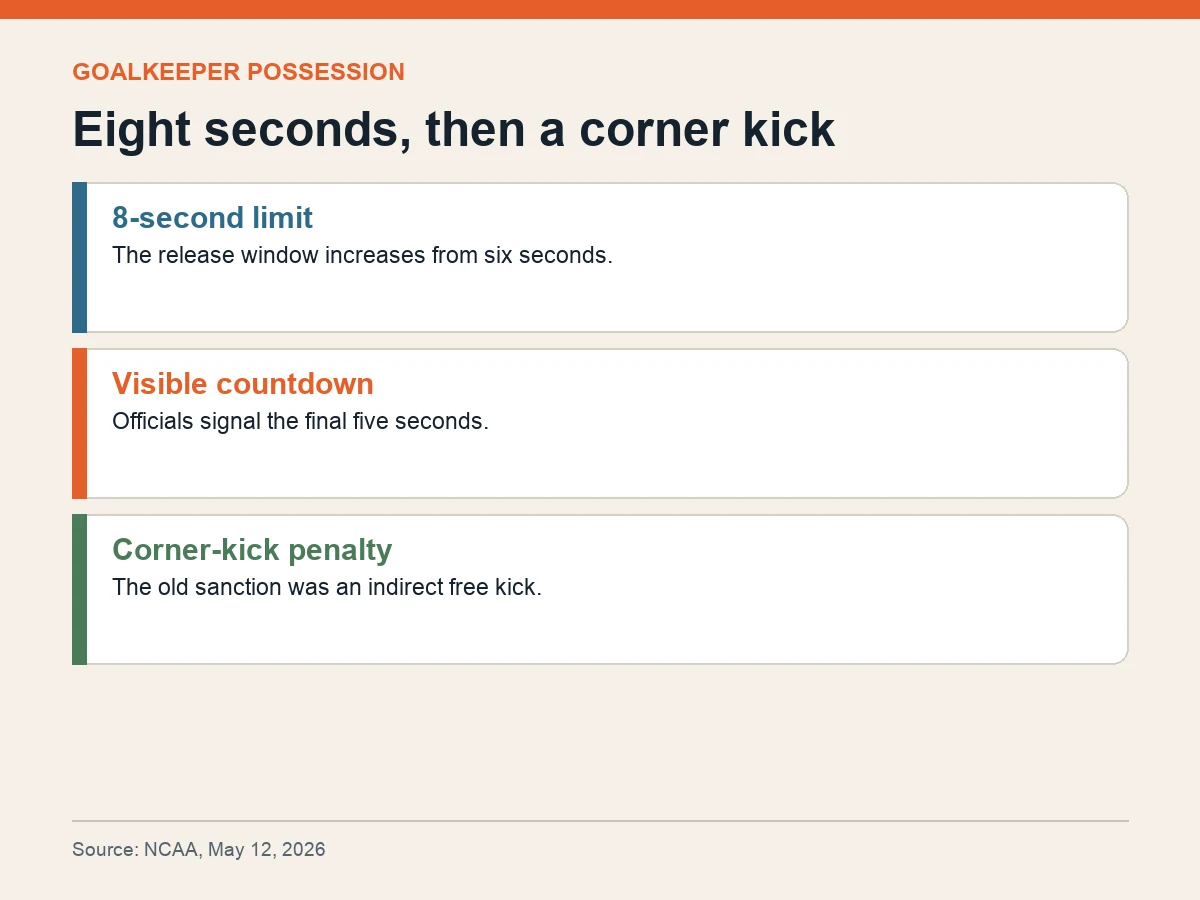
Failure to release within eight seconds gives the opponent a corner kick. Under the previous rule, a six-second violation produced an indirect free kick. The NCAA said the change aligns college play with international rules.
The package also permits broader substitution timing in several divisions, allows video match officials in Division I games using review, mandates a fourth official in Division I and sets a three-hour weather-delay framework with conference oversight.
The most consequential replay change is not simply the number two. It is the sequence of authority: coaches control most review requests, officials retain narrow early powers, and broader late intervention returns only after a team has spent its challenges.