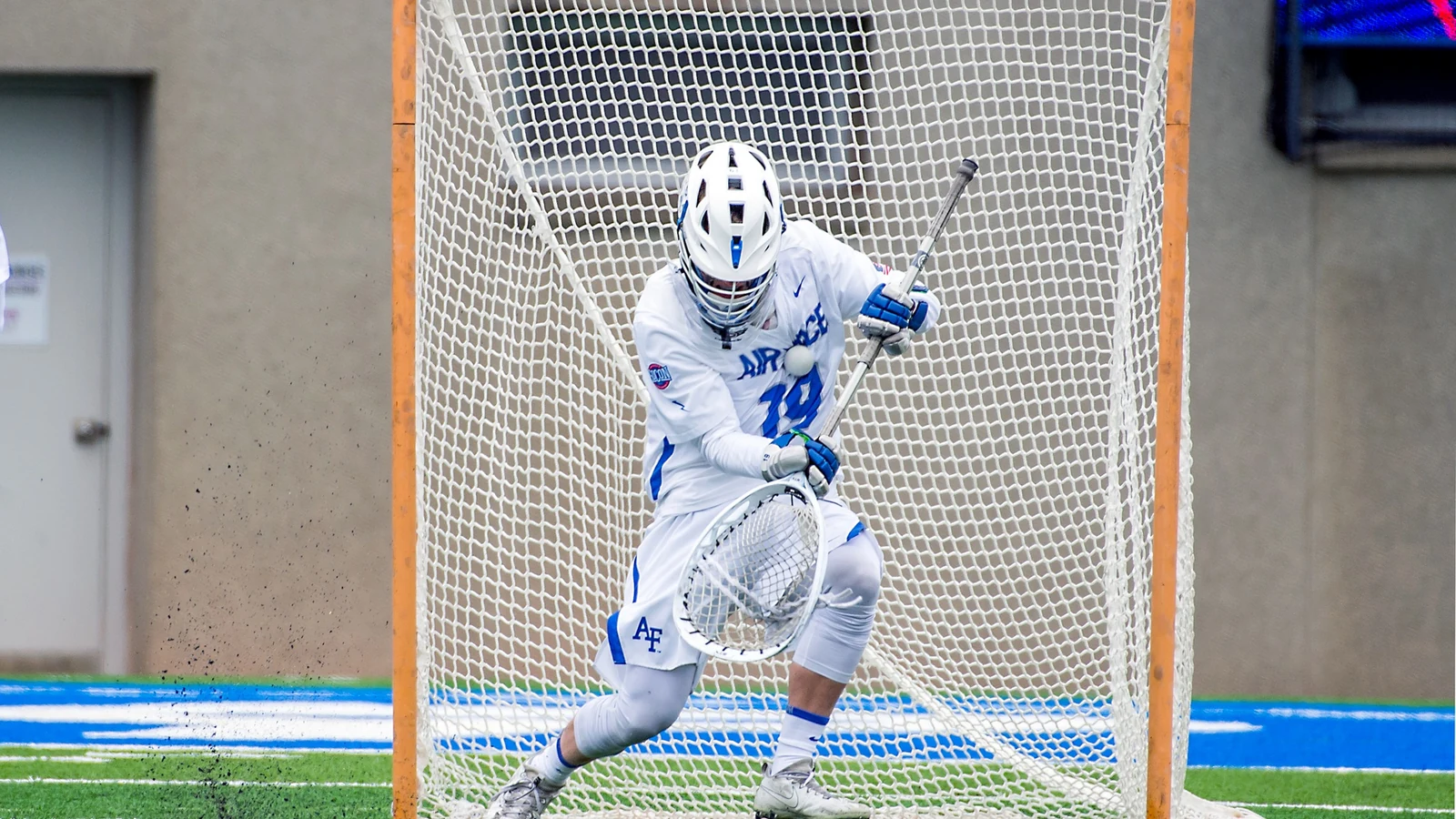
NCAA men’s lacrosse is getting a wider replay rulebook. All three divisions approved new grounds for coaches to challenge goals, broader authority for officials to examine head and neck contact, and a shift from four-minute to 15-minute sudden-death overtime periods.
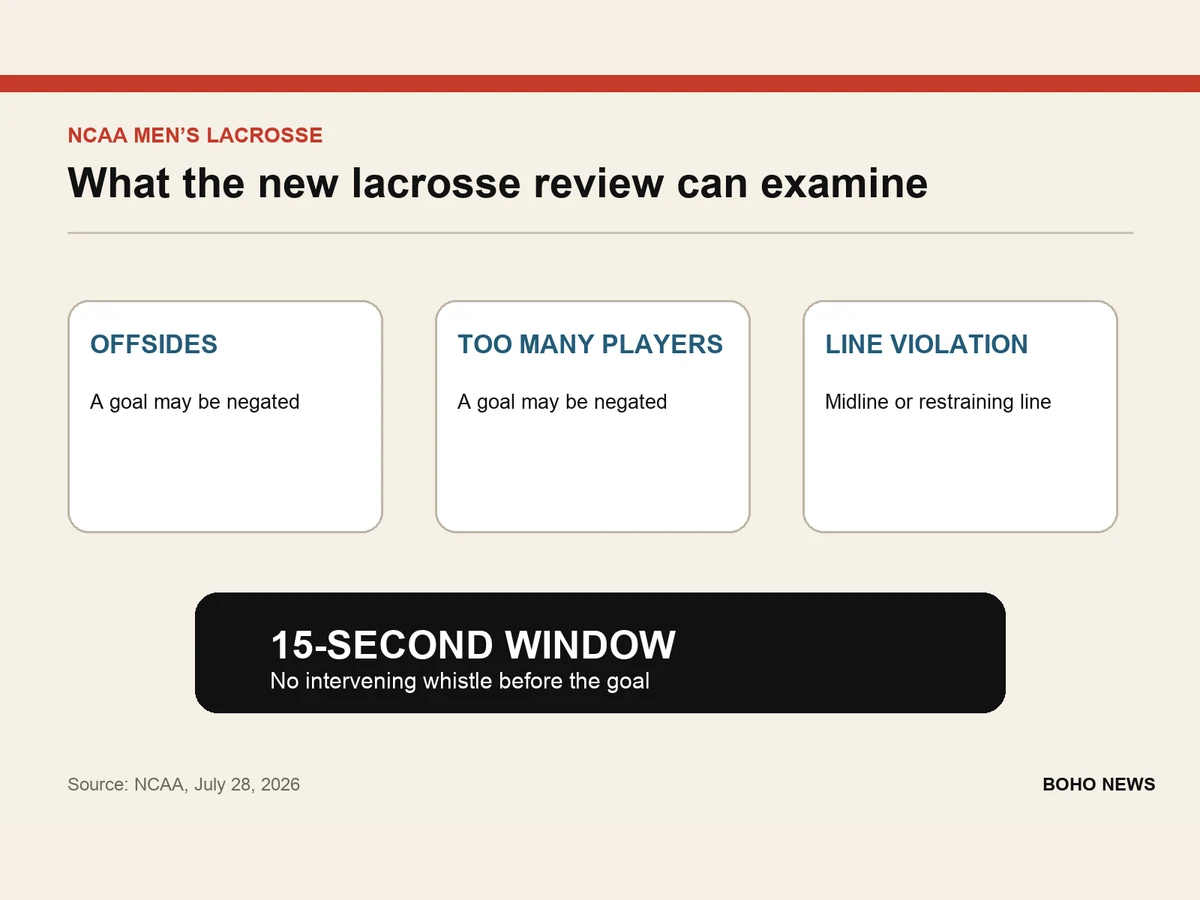
A coach may ask for review when a goal could be erased because the scoring team was offsides, had too many players on the field, or the player carrying the ball stepped on the midline or a restraining line. Those are defined triggers, not a general invitation to replay every disputed possession.
Timing controls the challenge. The possible violation must have happened within 15 seconds of the goal, and no whistle can sound between the violation and the score. If the game clock is not embedded in the video, officials may use a stopwatch while watching the play at actual speed.
Officials also receive separate authority involving player safety. They may initiate a review of possible contact to the head or neck even when no penalty was called on the field. When officials did call such a penalty, they may rescind it if replay confirms there was no illegal contact.
The combination expands review in two directions: coaches can test specific sequence violations that precede a goal, while officials can revisit a narrow safety issue. The NCAA announcement does not authorize an unlimited correction system for routine judgment calls.
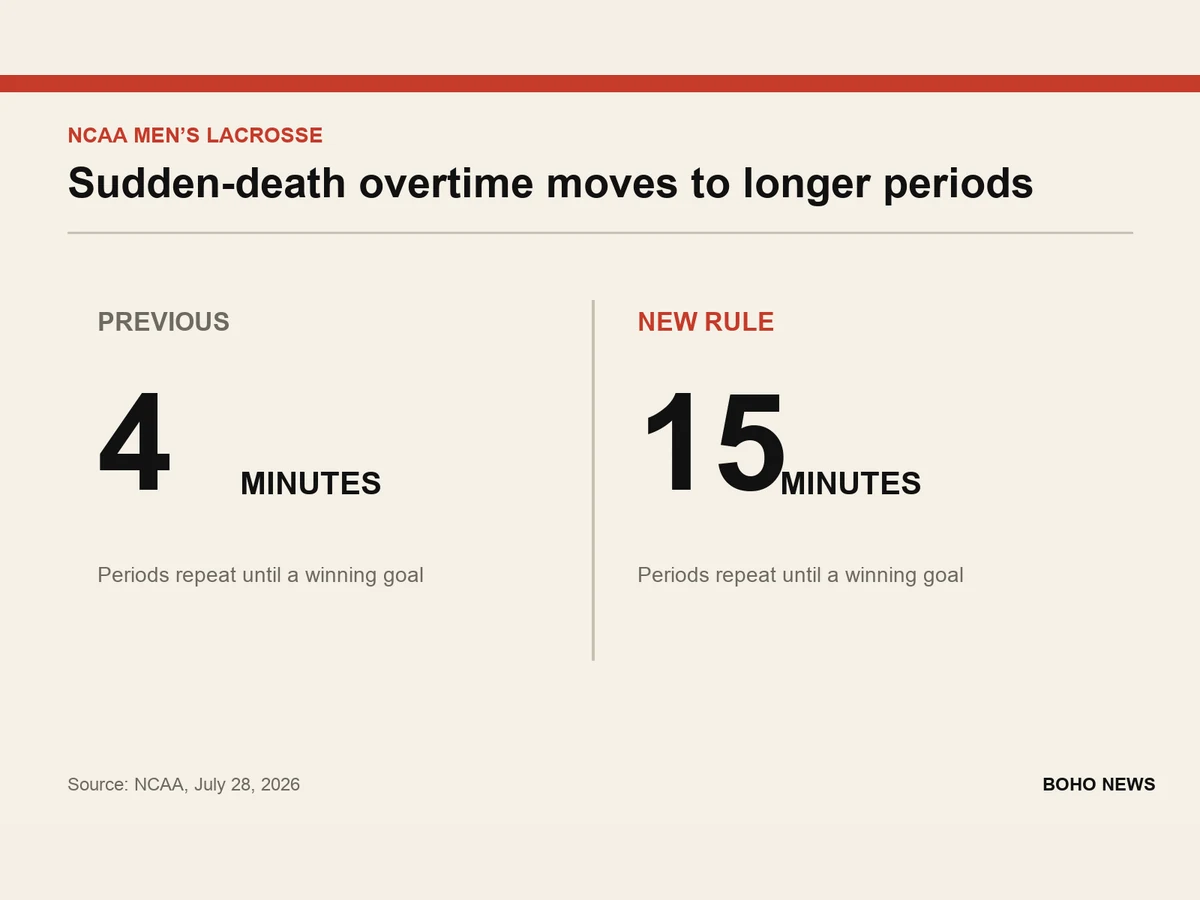
Overtime remains sudden death, but its structure changes sharply. Instead of repeating four-minute periods and switching ends, teams will play 15-minute periods until a winning goal. Timeout and video-challenge rules remain unchanged during overtime.
A separate visibility change starts as a recommendation. Fluorescent green or yellow balls are recommended for the 2026–27 academic year and become mandatory in 2027–28. The NCAA said brighter colors should improve visibility for players, officials, spectators and television audiences.
The rules package also creates a fall experiment aimed at end-of-clock heaves from the defensive end. Participating teams may treat a release from below the defensive restraining line as a legitimate shot only if it becomes a goal or hits the goal frame.
For coaches, the immediate operational task is precise: preserve usable video, identify the triggering violation, and establish the 15-second sequence without an intervening whistle. For viewers, the most visible changes will be longer overtime segments and, eventually, brighter game balls.