
NCAA men’s basketball officials will call a 10-second backcourt violation when the shot clock reaches 19 seconds rather than 20 during the 2026–27 season, a clarification designed for clocks that display tenths of a second.
The rule itself still gives an offense 10 seconds to advance the ball from the backcourt. The administrative marker changes because a display can show 20.9 seconds after ten full seconds have elapsed from a 30-second starting point. Waiting for a visible 20 could add time.
The committees approved a second timing adjustment for broadcasts. When two media timeouts would otherwise occur consecutively, the game clock must run before the second timeout can be granted.
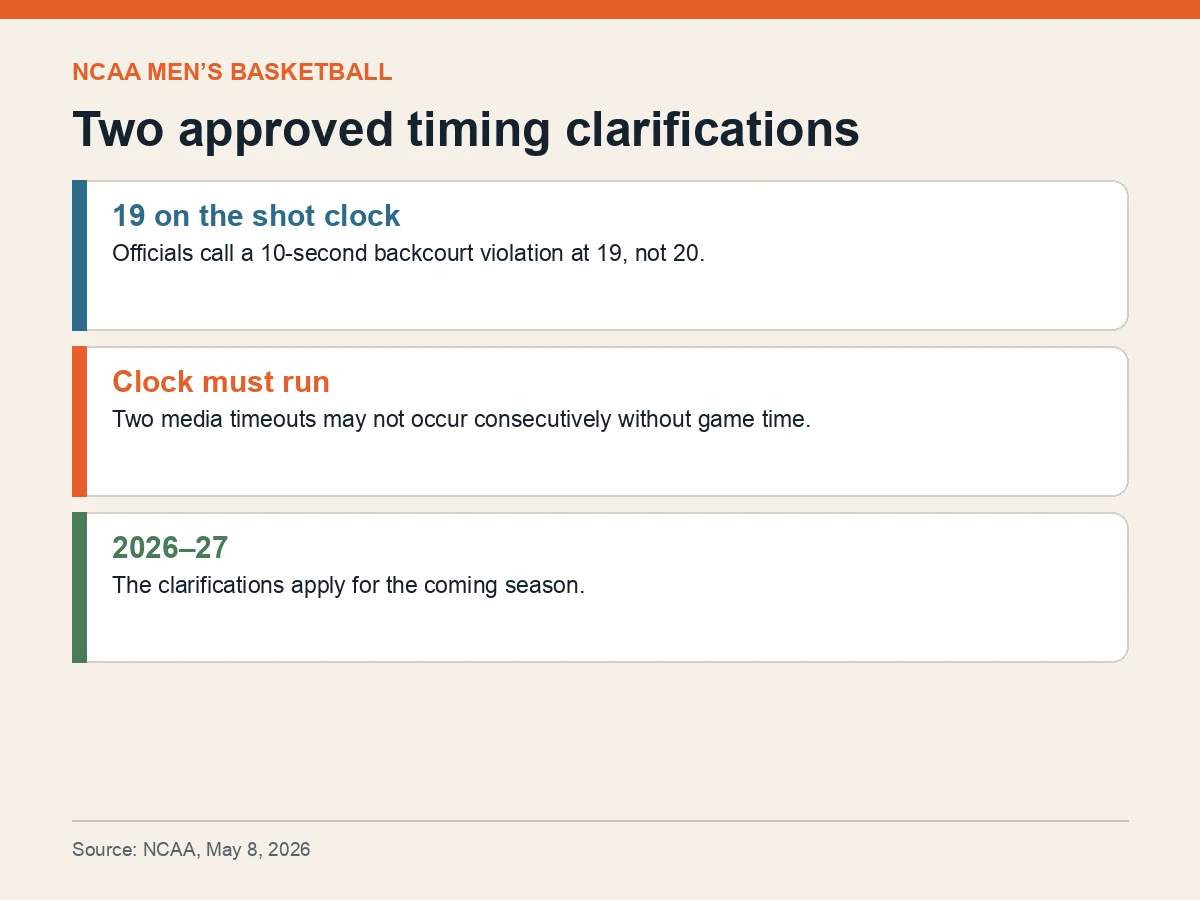
That change addresses a presentation problem rather than adding playing time. It prevents back-to-back scheduled stoppages with no live game action separating them.
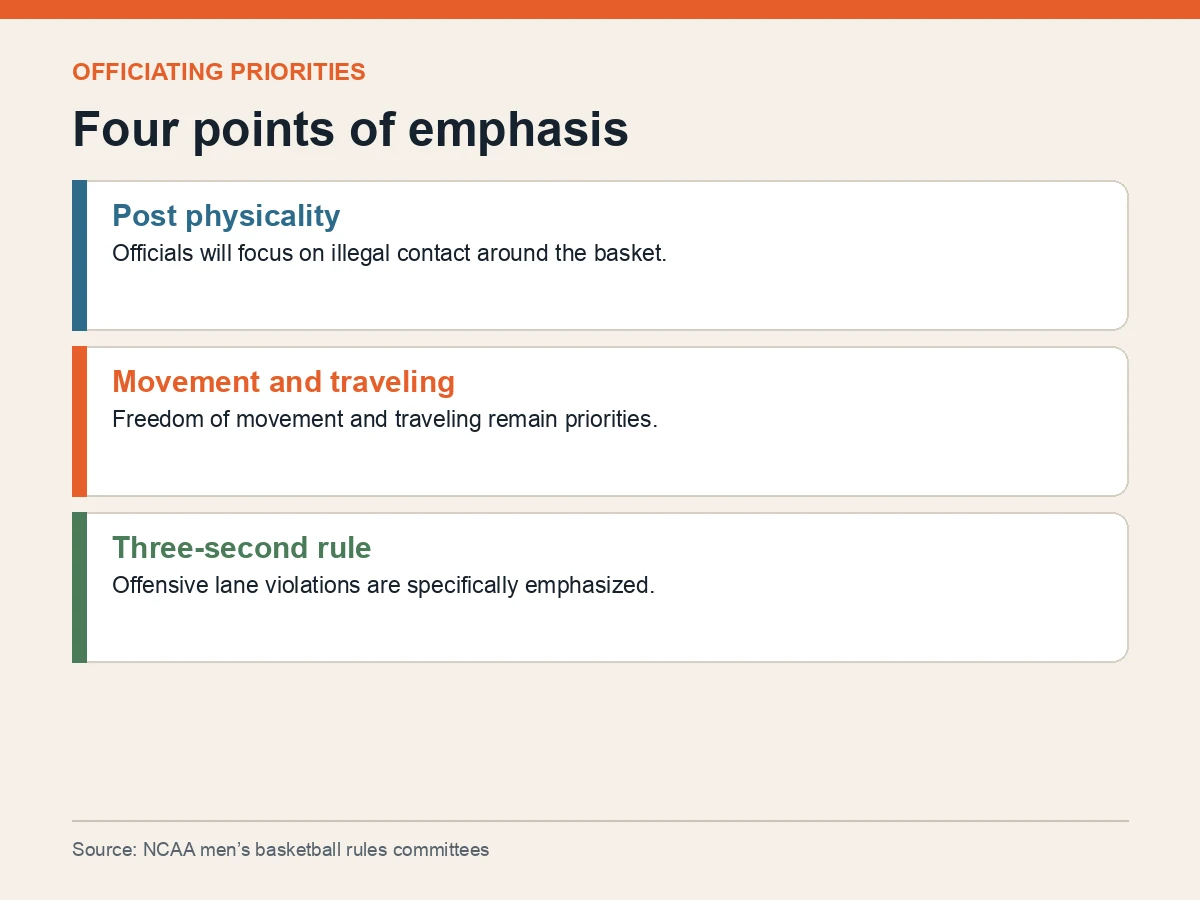
Preseason exhibitions and public scrimmages must be conducted under NCAA playing rules. The committees also identified post-play physicality, offensive three-second violations, freedom of movement and traveling as enforcement priorities.
Points of emphasis are not new rule text. They tell officials and teams where existing rules should receive particular attention, often after committees observe inconsistent enforcement or strategic exploitation.
The groups discussed broader ideas including a four-quarter format and possible changes to team-foul resets, but the announcement describes those as subjects for continued evaluation rather than approved changes.
That distinction matters for teams planning the season. The actionable changes are the 19-second backcourt marker, the requirement for game time between consecutive media timeouts and standard rule compliance in exhibitions.
For viewers, the backcourt call may initially look early if the display is read only as a whole number. The NCAA’s explanation is that the 19-second threshold makes the visible clock match ten fully elapsed seconds when tenths are counted.
The narrow package adjusts administration where technology creates ambiguity, while larger format changes remain under study rather than in the rulebook.