
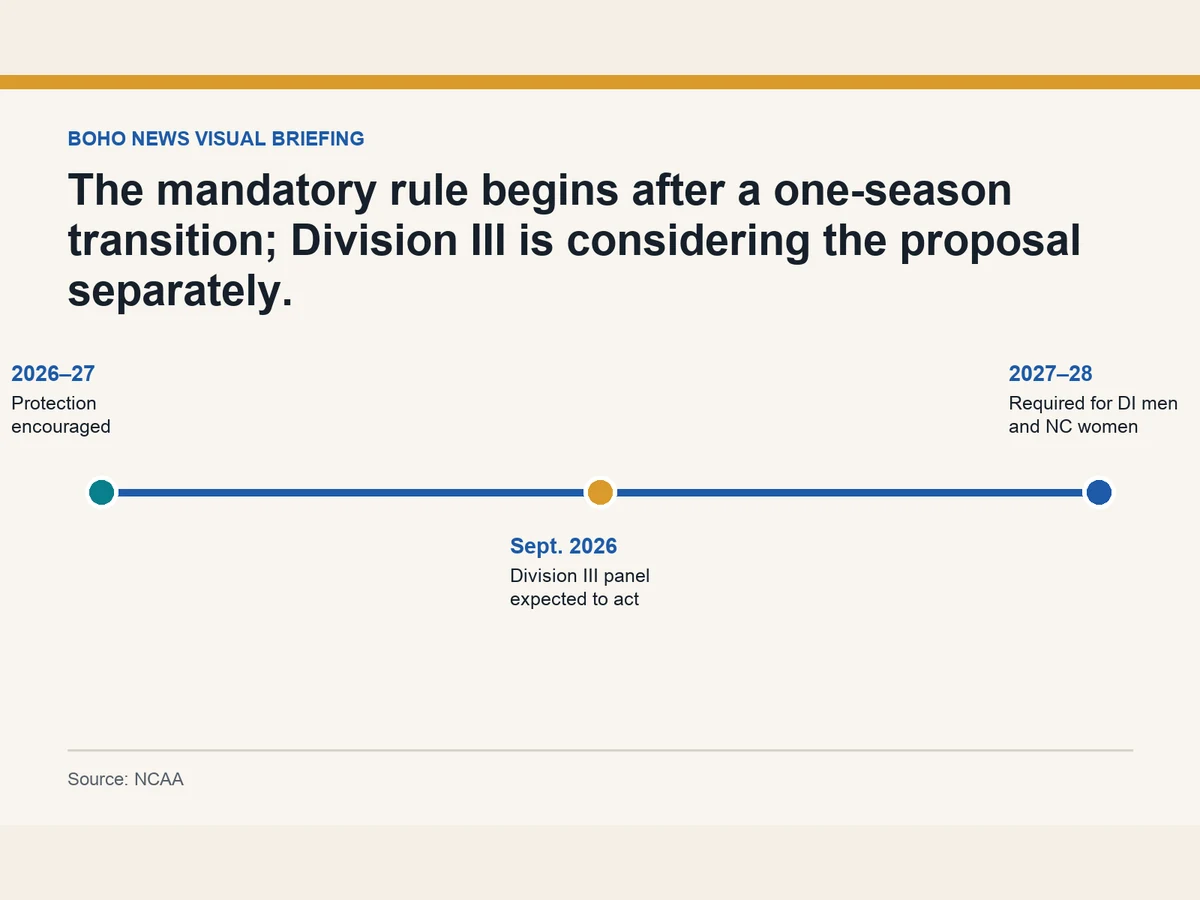
Cut-resistant protective equipment will become mandatory for NCAA Division I men's hockey and National Collegiate women's hockey players beginning with the 2027-28 season, the association announced.
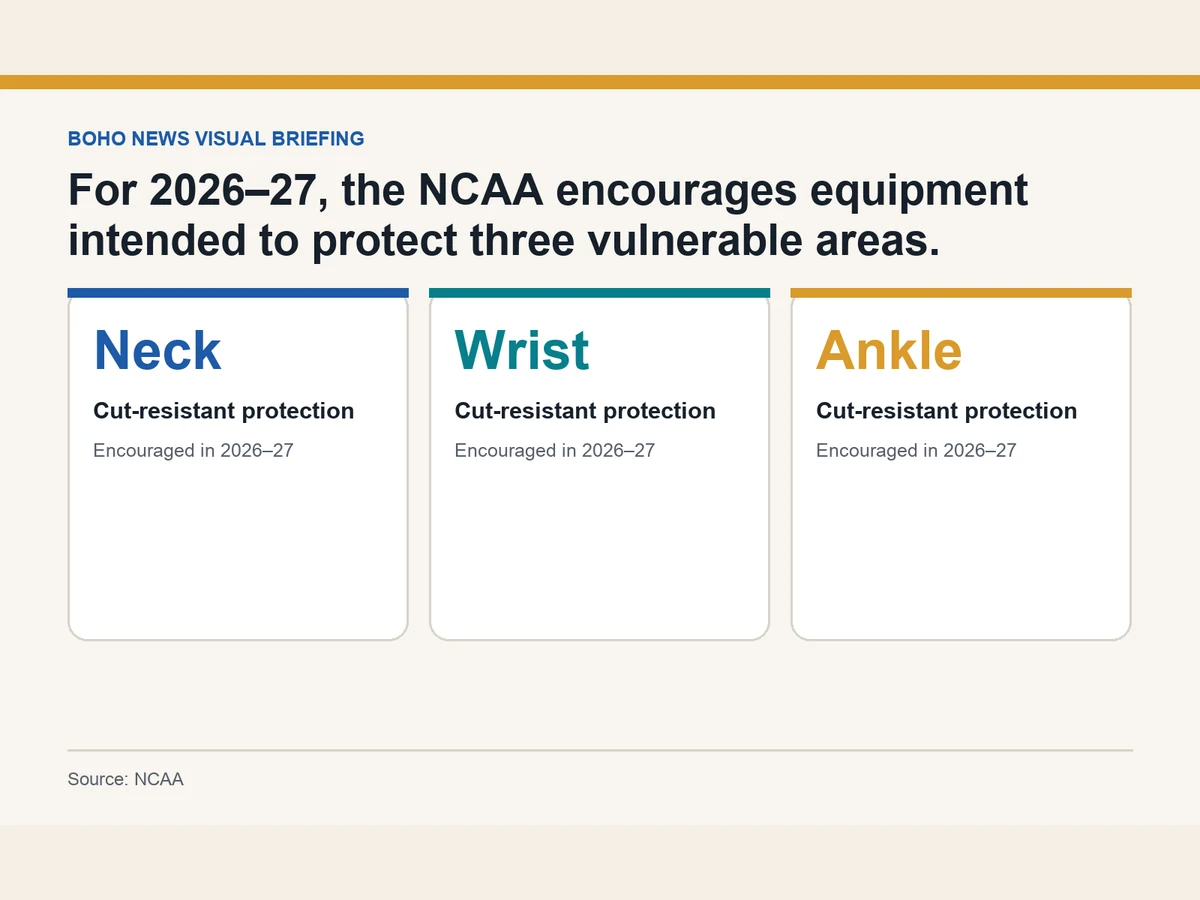
Players currently have the option to wear the equipment. During the 2026-27 academic year, the NCAA is encouraging protection designed for the neck, wrist and ankle areas before the requirement takes effect.
The rule does not yet apply to Division III. Members of the Division II and III Playing Rules Oversight Panel supported sending the proposal out for comment, and the Division III panel is expected to act on it at a September meeting.
The NCAA announcement did not identify approved brands or publish a complete product specification. Schools and equipment managers will need later guidance on standards, certification and enforcement before the mandatory season begins.
The association also approved a clarification allowing audio-communication devices and health-and-safety tracking technology in the bench area for all NCAA hockey. Video may not be used for coaching purposes on the bench.
Other changes arrive sooner. Division I men's hockey will add a trapezoid behind the net in 2026-27, limiting where goalkeepers may play the puck below the goal line. Division III men are scheduled to add the marking in 2027-28.
Regular-season overtime remains five minutes of three-on-three play for both men's and women's hockey. Women's conferences will determine whether a shootout follows a tie, including rules for nonconference and neutral-site games.
Additional approved changes allow defensive-zone hand passes, require both men's faceoff players to place their stick blades flat before the puck drop and restrict timeouts by a Division I men's team that is not allowed to change players after certain stoppages.
The cut-resistant equipment rule is the clearest player-safety change in the package. Its delayed effective date gives programs time to obtain compliant gear and allows Division III to finish its separate governance process.