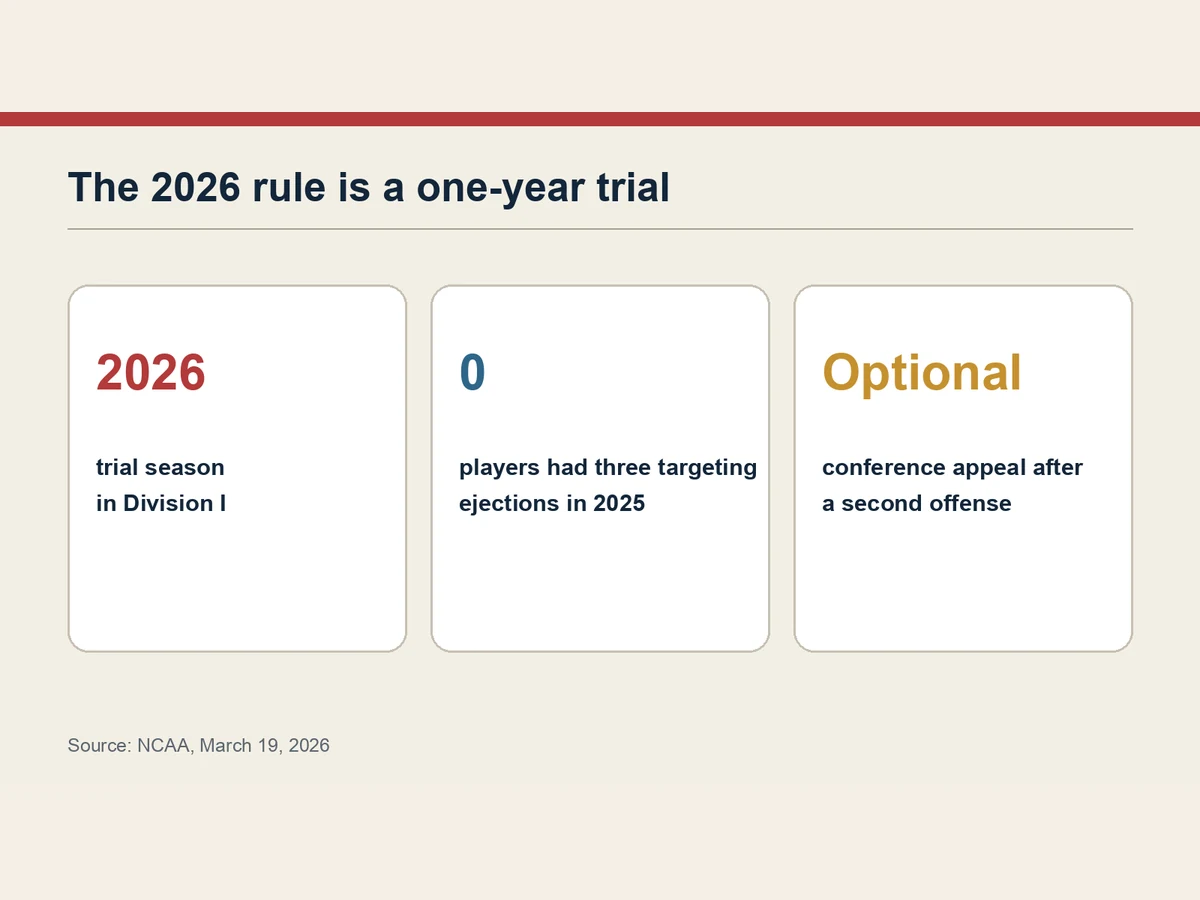
NCAA Division I football will use a one-year targeting penalty trial in 2026 that keeps the in-game ejection for a first offense but removes the automatic suspension from the first half of the player’s next game.
Under the approved structure, a player disqualified for targeting the first time in a season may participate in the next game, regardless of whether the call occurred in the first or second half.
A second targeting disqualification triggers a first-half suspension in the next game. A third requires the player to miss the entire next game.
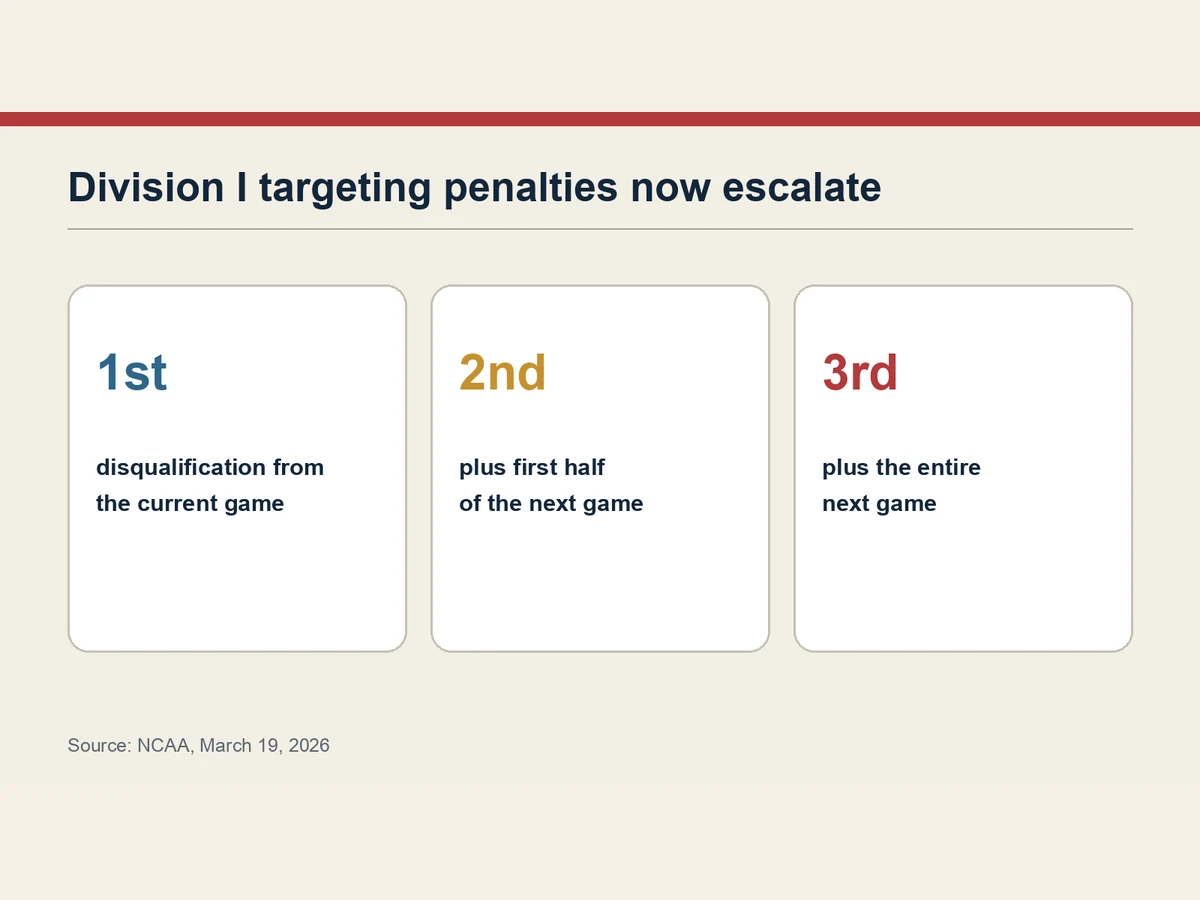
The change moves the carryover consequence from timing within a game to the player’s season record. The immediate disqualification still applies to each targeting call.
The NCAA said no player was disqualified for targeting three times during the 2025 season. That makes the full-game third-offense penalty an escalation for a situation that did not occur in the prior season.
Conferences may establish an appeal process after a player’s second targeting offense. The NCAA release does not require every conference to create one or specify a single national appeals procedure.
The committee also approved guidance intended to align administration of unsportsmanlike-conduct penalties with existing rules, but the targeting trial is the substantive change to next-game eligibility.
A penalty revision cannot by itself measure player safety. Evaluators will need to track calls, replay reversals, repeat offenses, appeals and injury evidence rather than infer effects from ejections alone.
The one-year designation matters. Coaches and players receive a defined 2026 rule, while the NCAA retains the ability to examine the season before making the structure permanent.
For viewers, the clearest practical difference is after a first targeting ejection late in a game: the player is still out of that contest but is not automatically held out of the opening half the following week.
Officials still must apply the underlying targeting standard on the field and through replay. The trial changes the disciplinary ladder across games, not the definition of the prohibited contact that produces a disqualification in the first place.