
NCAA Division I plans to move incoming athletes to an age-based eligibility model beginning with the fall 2027 class, replacing many sport-specific season limits, redshirt rules and extension waivers with a five-year period tied to enrollment age.
Under the Cabinet-approved model, a student can receive up to five years of eligibility if full-time college enrollment begins no later than the academic year after the student’s 19th birthday. The rule changes how the period is defined; it does not promise five seasons to every athlete regardless of enrollment history.
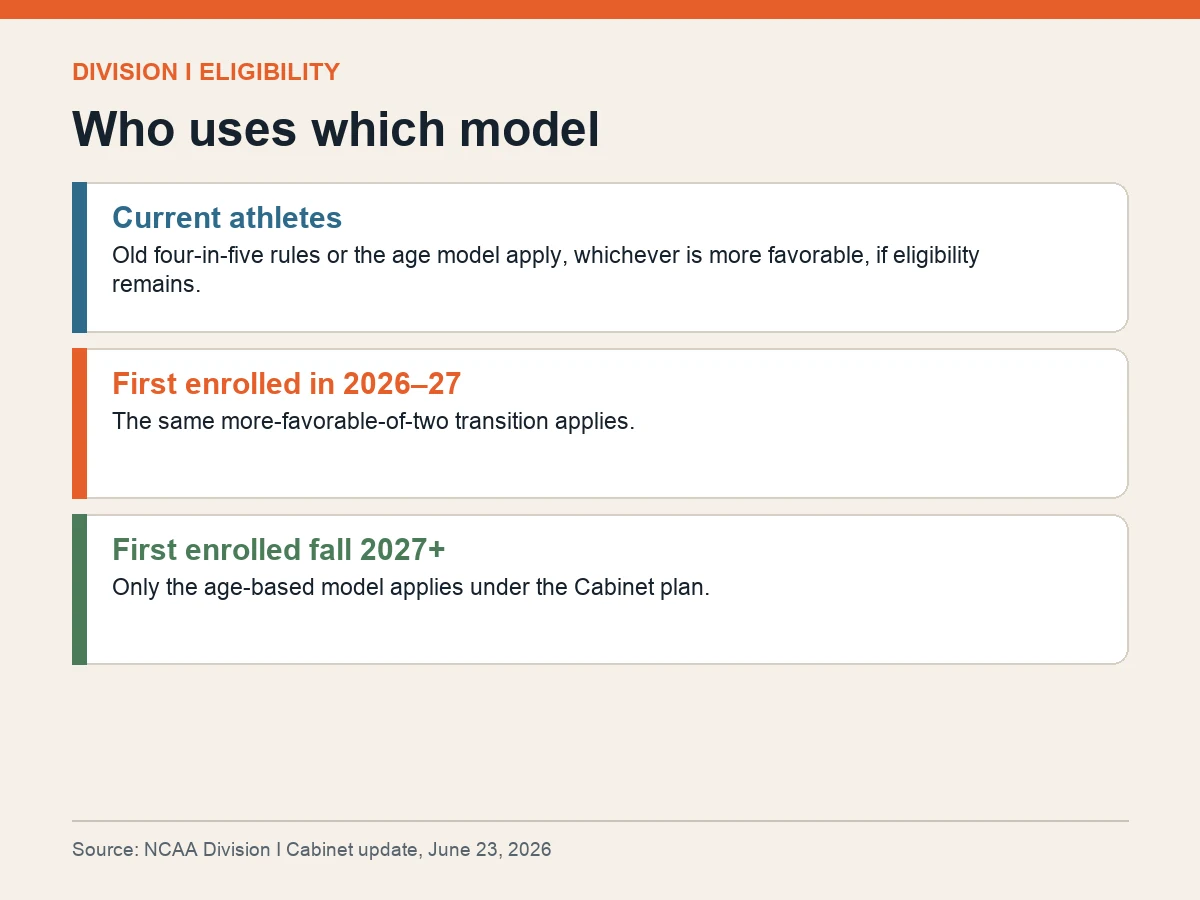
The transition separates three groups. Prospects first enrolling full time in fall 2027 or later use only the age model. Students first enrolling during 2026–27 and current athletes with eligibility remaining after 2025–26 use either the old four-seasons-in-five-years framework or the new model, whichever is more favorable.
Athletes who used their final season under the prior rules during 2025–26 do not receive another season through the transition. That boundary prevents the change from reopening eligibility for everyone whose previous clock already ended.
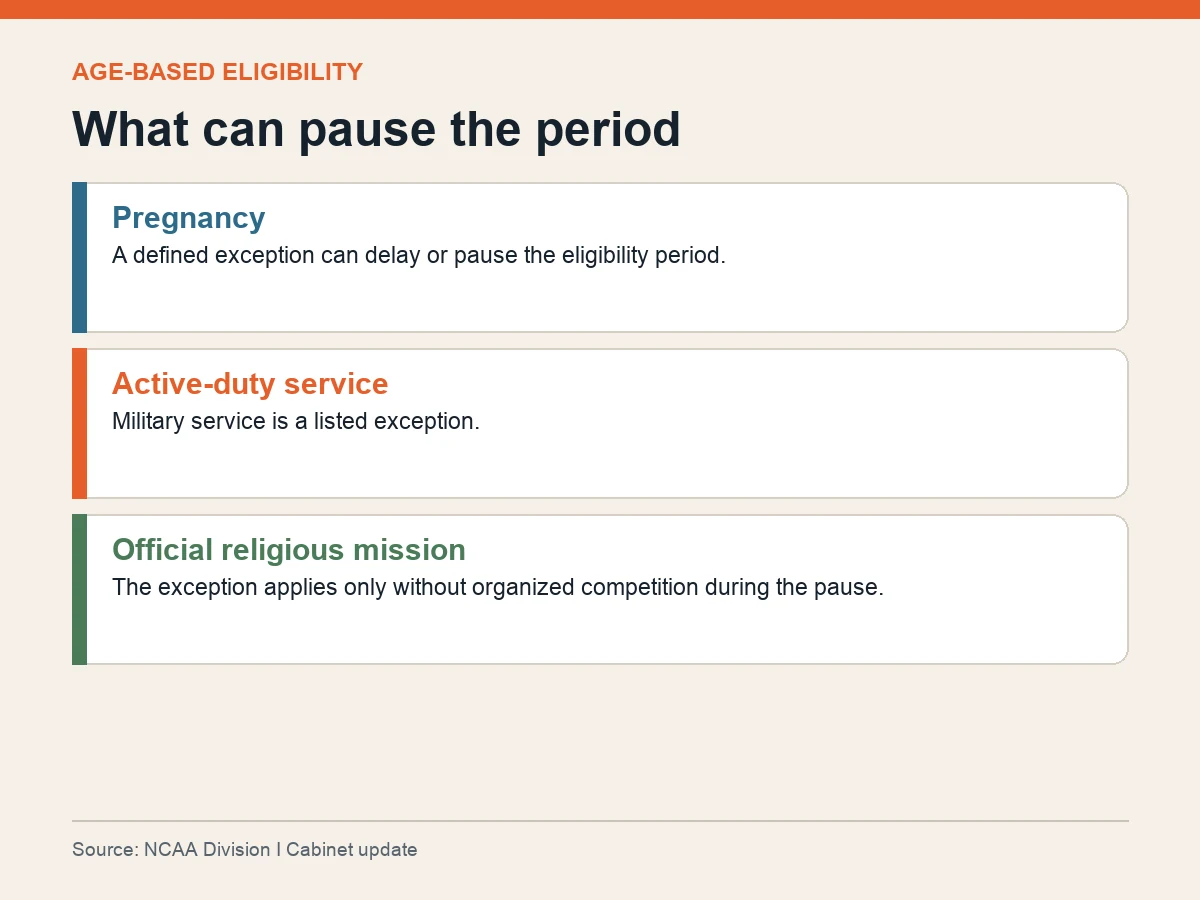
The Cabinet listed pregnancy, active-duty military service and official religious missions as circumstances that can delay or pause the age-based period. The exception applies only when the student does not participate in organized competition during that time, and the NCAA Eligibility Center will administer it.
The new model also removes waivers under the age system, including clock extensions and waivers formerly used for hardship, season-of-competition or delayed-enrollment cases. Legacy waiver requests based on circumstances through 2025–26 had a July 31 submission deadline.
For schools, the change reduces the number of sport-specific calculations but makes age and first full-time enrollment central compliance facts. Roster planning during the transition will require schools to evaluate both systems for eligible current athletes rather than automatically applying only the new one.
The NCAA’s June 23 page states that the Cabinet voted unanimously and presents the change as adopted, while also noting that the action was not final until the meeting concluded the next day. The public record does not describe a later reversal, but that drafting caveat belongs in the implementation record.
The practical question for any athlete is therefore individual: date of birth, first full-time enrollment, participation history, and whether eligibility remained after 2025–26. The broad five-year description cannot replace a school’s fact-specific eligibility determination.