NCAA baseball committees have proposed allowing ball-strike challenges and in-game bat sensors next season while limiting electronic offensive communication, a package that would put more technology into some decisions and less into signal delivery.
In Division I, teams could use a ball-strike challenge system when the technology is available during regular-season and postseason games. Divisions II and III could seek approval to test the system under an experimental rule.
The Southeastern Conference tested pitch challenges during its May tournament. The NCAA announcement does not specify a single vendor, camera configuration or installation standard, so availability could differ across venues.
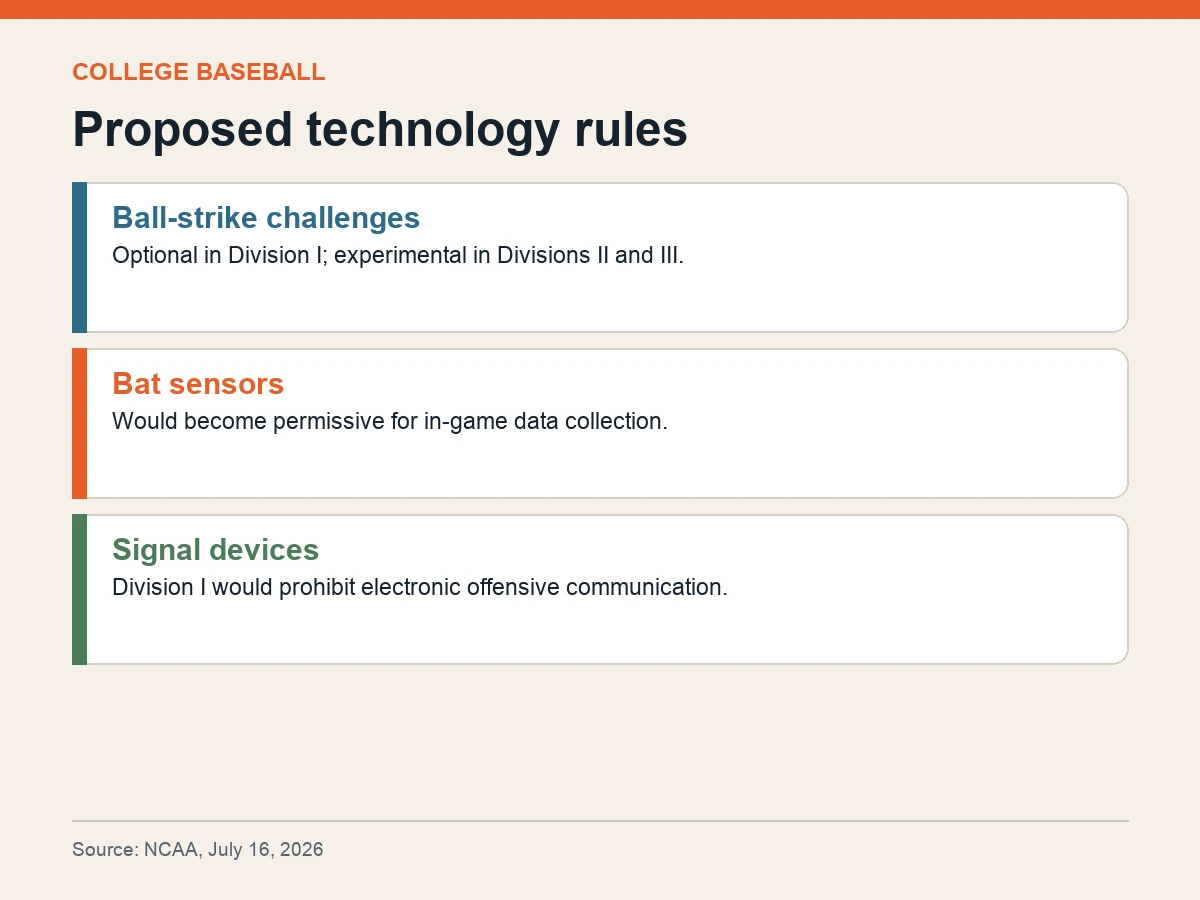
Bat sensor technology would become permissible for in-game data collection in all divisions under the proposal. Division I programs have experimented with sensors for the past two seasons.
The committees drew a boundary around real-time communication. Division I teams would no longer be allowed to use electronic devices to send offensive signals to players before a pitch, reflecting concern that direct instructions could create an unfair advantage.
The proposals also reshape the field. Teams could use 18-inch square bases next season while the existing 15-inch base remains standard, and a double first base would be required for all games.
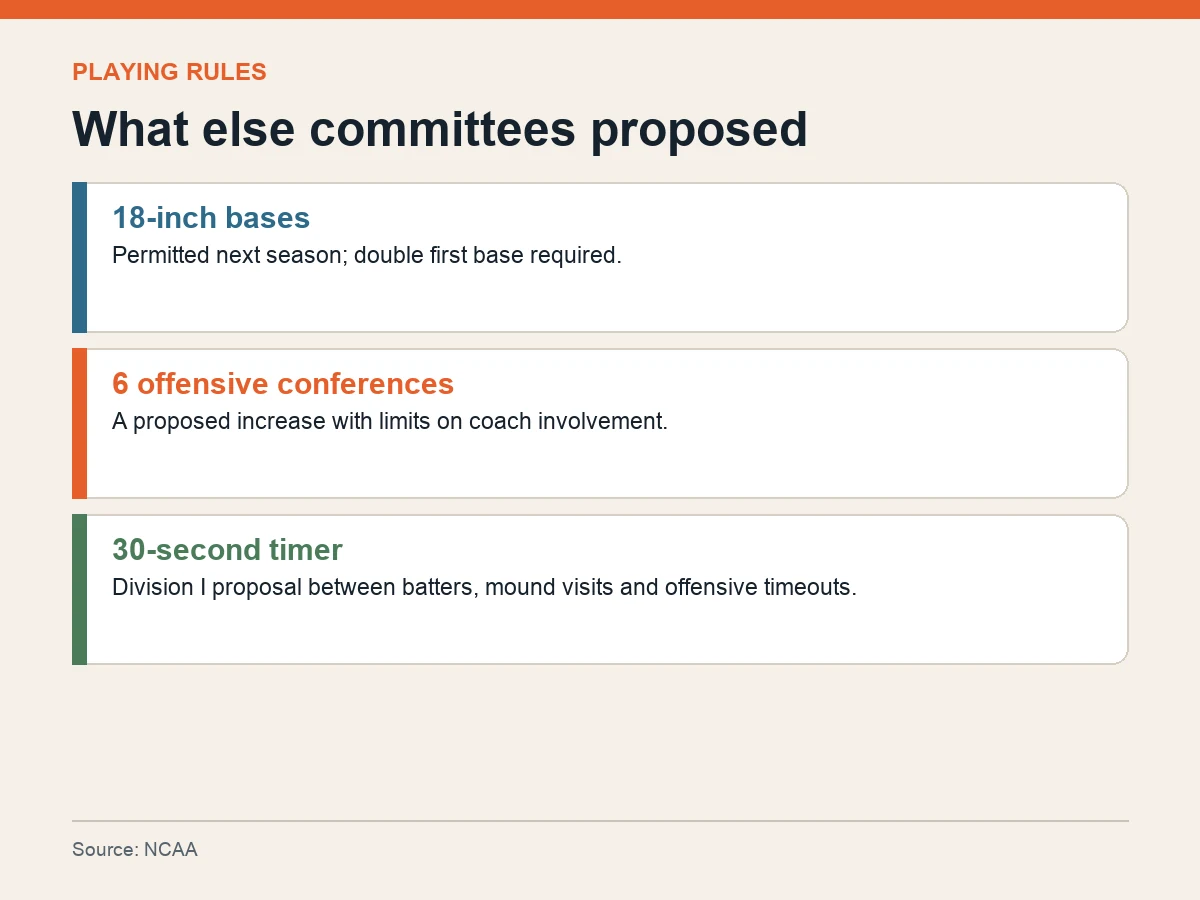
Offensive conferences would increase to six, allowing a batter to request a reset of the action clock. A coach could participate in no more than three charged offensive conferences, with one additional conference in extra innings.
Division I would add a 30-second timer between batters, during mound visits and during offensive timeouts. Video review could expand to certain fair-or-foul decisions and tag plays regardless of field location.
None of those recommendations is final yet. The Division II and III Playing Rules Oversight Panel is scheduled to review the package August 11, and the Division I Baseball Oversight Committee is scheduled for August 24.
The votes will determine whether the 2026–27 rulebook adopts the committees’ balance: automated assistance for narrowly defined calls, more permitted performance data and a tighter prohibition on technology that can direct offense in real time.