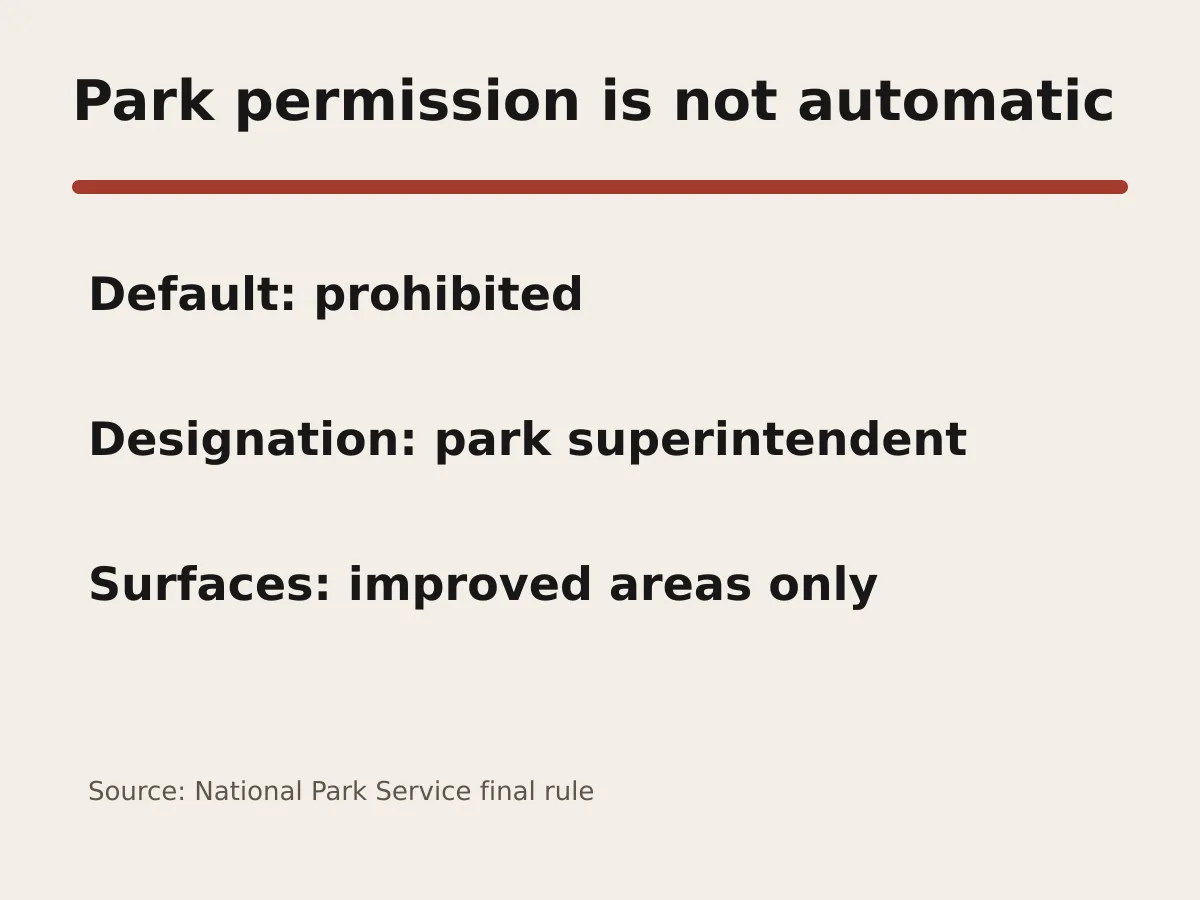
Powered micromobility devices such as e-scooters, hoverboards and Segways will remain prohibited by default in National Park Service areas unless a superintendent affirmatively designates places where they may be used.
The final rule is on Federal Register public inspection for Aug. 12 publication and is scheduled to take effect 30 days after publication. It creates a regulatory category distinct from motor vehicles, bicycles, e-bikes and human-powered coasting devices.
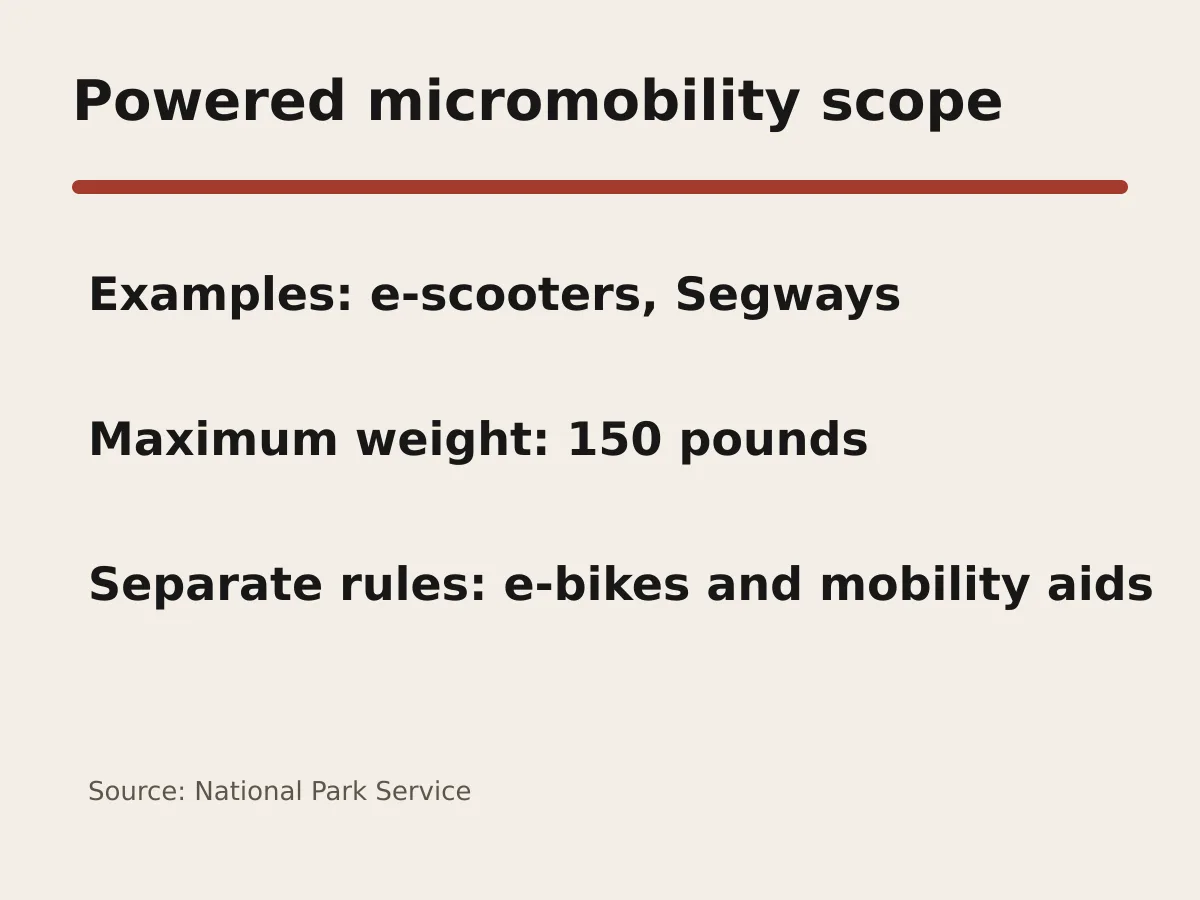
Covered devices have no combustion engine and can weigh up to 150 pounds. E-bikes are governed separately, and wheelchairs or other mobility aids used by people with disabilities are not folded into the same restrictions.
A superintendent can designate roads, parking areas, paved or gravel paths, sidewalks and other improved surfaces through a public compendium notice. Opening terrain that has never been improved requires formal rulemaking.
Possession in statutory wilderness remains prohibited unless another law permits it. A designation elsewhere in a park does not override that wilderness restriction.
Superintendents may set limits on speed, dimensions, weight, device type, parking, time or season. State and local helmet, age, licensing and speed rules also apply unless federal law supersedes them.
The Park Service received 63 comments and says it made no substantive change from the proposal. It cited an industry estimate of 84.9 million shared e-scooter trips in North America in 2024 as context for the rule.
Visitors still need to check the current compendium and alerts for the specific park they plan to enter. The national rule supplies a framework; it is not blanket permission to ride an e-scooter in every park.